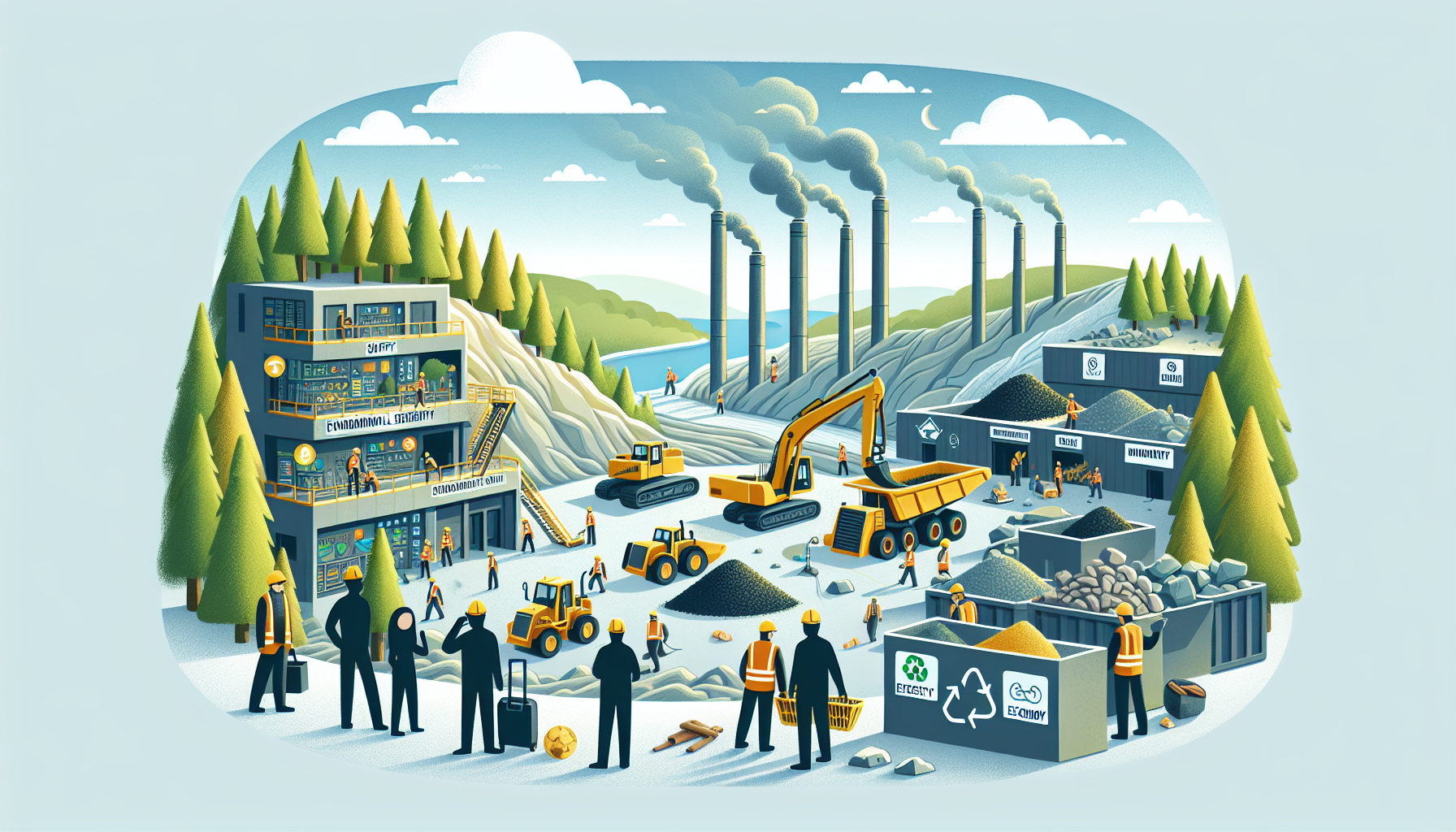
Air quality in the mining industry can be a significant concern due to the various activities and processes involved. These activities can release pollutants into the atmosphere, which can have detrimental effects on both the environment and human health. Here are some of the key factors affecting air quality in the mining industry:
Dust Emissions
Dust emissions refer to the release of fine particles of solid matter into the air. These particles are typically small enough to become suspended and carried by air currents. Dust emissions can originate from various sources, both natural and anthropogenic (human-induced). In the context of industrial activities like mining, construction, and manufacturing, dust emissions are a significant concern due to their potential impacts on air quality, human health, and the environment.
Here are some key points about dust emissions:
Sources: Dust emissions can arise from a wide range of activities, including mining operations, construction and demolition, agricultural tilling, unpaved roads, industrial processes, and natural events like wildfires and dust storms.
Composition: Dust particles can be composed of a variety of materials, such as soil, mineral fragments, pollen, soot, and organic matter. In industrial settings, they can also contain pollutants like heavy metals, asbestos fibres, and other harmful substances.
Particle Size: Dust particles vary in size, with the smallest particles (known as PM2.5) being less than 2.5 micrometres in diameter and capable of penetrating deep into the respiratory system. Larger particles (PM10) have a diameter of 10 micrometres or less.
Health Impacts: Inhaling dust particles can have adverse effects on human health. Fine particles (PM2.5) can lead to respiratory and cardiovascular problems, exacerbate existing conditions like asthma, and even contribute to more severe health issues over time.
Environmental Impacts: Dust emissions can have detrimental effects on the environment. They can settle on soil and water bodies, potentially disrupting ecosystems and aquatic life. Additionally, they can contribute to soil erosion and sedimentation.
Air Quality Regulations: Many countries and regions have established regulations to limit dust emissions from various sources, particularly in industrial and construction activities. These regulations often set standards for acceptable levels of particulate matter in the air.
Control Measures: To mitigate dust emissions, industries implement various control measures. These can include using water for dust suppression, employing dust collectors and filters, implementing proper material handling techniques, and applying stabilizing agents on surfaces.
Technological Solutions: Advancements in technology have led to the development of more efficient dust control systems, such as high-efficiency particulate air (HEPA) filters, electrostatic precipitators, and innovative dust suppression methods.
Best Practices: Employers and industries often provide training to workers on best practices for minimizing dust emissions. This can include techniques for safe handling and containment of materials, as well as proper maintenance of equipment.
Monitoring and Reporting: Regular monitoring of dust levels in industrial settings is crucial for ensuring compliance with regulations and identifying areas where additional control measures may be needed. Transparent reporting of emissions data is also important for regulatory compliance and community awareness.
Overall, managing dust emissions is essential for protecting both human health and the environment in industrial and other activities that generate airborne particulate matter. Effective control measures and adherence to regulatory standards are key components of any comprehensive dust management strategy.
Diesel Exhaust
Diesel exhaust refers to the mixture of gases and fine particles emitted from diesel-powered engines. It is a complex mixture that includes gases such as nitrogen oxides (NOx), carbon monoxide (CO), sulphur dioxide (SO2), and various hydrocarbons. Additionally, diesel exhaust contains fine particulate matter (PM), which consists of tiny particles suspended in the air.
Here are some important points about diesel exhaust:
- Sources: Diesel engines are commonly used in various applications, including transportation (trucks, buses, trains), construction equipment, generators, and in industrial settings. They are known for their efficiency and power, especially in heavy-duty applications.
- Composition: Diesel exhaust is a mixture of gases and particulates, with the exact composition depending on factors like the type of diesel fuel, engine technology, and operating conditions. Nitrogen oxides (NOx) and particulate matter (PM) are two of the most concerning components.
- Health Impacts: Exposure to diesel exhaust can have significant health effects. Fine particulate matter (PM2.5) can penetrate deep into the lungs and contribute to respiratory and cardiovascular problems. It has also been classified as a Group 1 human carcinogen by the International Agency for Research on Cancer (IARC).
- Environmental Impacts: Diesel exhaust emissions can contribute to air pollution and its associated environmental impacts. For instance, nitrogen oxides (NOx) can lead to smog formation and acid rain, while particulate matter (PM) can affect visibility and contribute to soil and water pollution.
- Regulations and Standards: Many countries have established stringent regulations to limit emissions from diesel engines, especially in the transportation sector. These regulations set standards for acceptable levels of pollutants like NOx, PM, and CO.
- Emission Control Technologies: Various technologies have been developed to reduce diesel exhaust emissions. This includes exhaust after-treatment systems like diesel particulate filters (DPF) to trap PM, selective catalytic reduction (SCR) systems to reduce NOx, and exhaust gas recirculation (EGR) systems.
- Alternative Fuels and Technologies: The development of alternative fuels (such as biodiesel) and the advancement of electric and hybrid propulsion systems aim to reduce reliance on traditional diesel engines, ultimately decreasing diesel exhaust emissions.
- Occupational Exposure: Workers in industries where diesel engines are used, such as construction and mining, may be at higher risk of exposure to diesel exhaust. Occupational safety measures, including proper ventilation and personal protective equipment, are crucial for minimizing risks.
- Public Health Concerns: In urban areas, especially those with high traffic volumes, exposure to diesel exhaust from vehicles can be a significant public health concern. Efforts to reduce emissions from transportation are essential for improving air quality and public health.
- Research and Innovation: Ongoing research seeks to further understand the health and environmental impacts of diesel exhaust and develop innovative technologies for cleaner diesel engines.
Overall, addressing diesel exhaust emissions is a critical aspect of efforts to improve air quality, protect human health, and mitigate the environmental impacts associated with combustion engines. This involves a combination of regulatory measures, technological advancements, and shifts towards cleaner alternative fuels and propulsion systems.
Fugitive Emissions
Fugitive emissions refer to the release of pollutants into the atmosphere from various sources that may not have a designated point of discharge. Unlike emissions from stacks or exhaust vents, fugitive emissions occur from leaks, spills, or other unintended releases that can happen at any point along a process or from equipment not designed for controlled emission.
Here are some key points about fugitive emissions:
- Sources: Fugitive emissions can come from a wide range of industrial processes and activities, including oil and gas production, chemical manufacturing, refineries, mining operations, transportation, and storage of hazardous materials.
- Types of Pollutants: Fugitive emissions can include a variety of pollutants, such as volatile organic compounds (VOCs), hazardous air pollutants (HAPs), greenhouse gases (GHGs), particulate matter (PM), and other harmful substances.
- Common Sources:
- Leaks: These can occur from valves, seals, fittings, and connections in pipelines, storage tanks, and processing equipment.
- Open Piles or Surfaces: Materials stored in open areas without containment measures can release dust and particulate matter into the air.
- Vents and Flares: Inadequately maintained or malfunctioning vents and flares can release uncombusted gases and pollutants.
- Equipment Malfunctions: Sudden equipment failures or upsets can lead to unexpected releases of pollutants.
- Environmental and Health Impact: Fugitive emissions can contribute to air pollution, which can have adverse effects on both the environment and human health. Depending on the type of pollutants released, this can lead to respiratory issues, smog formation, and other health problems. Additionally, certain pollutants can contribute to climate change.
- Regulatory Considerations: Many regulatory agencies have established standards and requirements for controlling fugitive emissions. These standards may vary depending on the industry and the type of pollutants involved.
- Monitoring and Detection: Detecting and quantifying fugitive emissions can be challenging due to their intermittent and unpredictable nature. Specialized equipment, such as infrared cameras, gas analyzers, and leak detection systems, are often used to identify and measure fugitive emissions.
- Mitigation and Control Measures:
- Maintenance and Inspection: Regular inspection and maintenance of equipment and infrastructure can help prevent leaks and unintended releases.
- Containment Measures: Using enclosures, covers, or other containment systems can help control emissions from open areas or storage piles.
- Improved Seals and Gaskets: Upgrading or replacing seals and gaskets with more effective materials can reduce the likelihood of leaks.
- Emission Control Devices: Installing devices like vapour recovery units (VRUs) or flares can capture and treat fugitive emissions.
- Community and Stakeholder Concerns: Fugitive emissions can be a source of concern for nearby communities, especially when they are located in close proximity to industrial facilities. Transparency and engagement with local stakeholders are important for addressing these concerns.
Overall, managing fugitive emissions is a critical aspect of environmental stewardship in various industries. Implementing effective control measures and adhering to regulatory requirements are essential for minimizing the impact of these unintended releases on air quality and public health.
Gases and Vapors
Gases and vapours are both forms of matter that have taken on a gaseous state. However, they differ in their physical characteristics and behaviour.
- Gases:
- Definition: Gases are substances that exist in a state where their particles are widely spaced and move freely, filling any container in which they are placed.
- Particle Arrangement: Gas particles have a high degree of kinetic energy and are dispersed with large distances between them. They have no fixed shape or volume.
- Examples: Common gases include oxygen (O2), nitrogen (N2), carbon dioxide (CO2), and noble gases like helium (He) and argon (Ar).
- Properties:
- Compressibility: Gases can be compressed into a smaller volume under pressure.
- Expansibility: Gases expand to fill the available space.
- Diffusion: Gas particles spontaneously mix with other gases, resulting in inhomogeneity.
- Low Density: Gases have a lower density compared to solids and liquids.
- Behavior: Gases follow Boyle’s law (pressure and volume are inversely proportional), Charles’s law (volume and temperature are directly proportional), and Avogadro’s law (volume and number of molecules are directly proportional).
- Vapors:
- Definition: Vapors are substances that are typically in a liquid or solid state at normal room temperature and pressure, but they can evaporate to become gases when heated.
- Particle Arrangement: Vapors arise from the evaporation or sublimation of a substance. When a substance turns into vapour, its particles move freely like a gas.
- Examples: Water vapour is a common example. It is the gaseous form of water, which is typically a liquid at room temperature.
- Formation: Vapors are created when a liquid or solid undergoes phase change due to an increase in temperature. For example, when water is heated, it turns into steam (water vapour).
- Behaviour: Like gases, vapours exhibit properties such as compressibility, expansibility, and diffusion.
- Differences:
- State at Room Temperature: Gases exist in a gaseous state at normal room temperature and pressure, while vapours are typically in a liquid or solid state under these conditions.
- Source: Gases can exist naturally in the atmosphere (e.g., oxygen, nitrogen), while vapours are formed from substances that have undergone a phase change due to heating.
- Examples: Gases include elements like nitrogen and compounds like carbon dioxide. Vapors are typically associated with substances that can undergo a phase change, such as water, alcohol, or volatile organic compounds.
In summary, while both gases and vapours are forms of matter in a gaseous state, gases are naturally occurring in this state, while vapours are the gaseous form of substances that are typically in a liquid or solid state at room temperature and pressure.
Hazardous Substances
Hazardous substances, also known as hazardous chemicals or hazardous materials, are substances that pose a risk to human health, property, or the environment when not handled, stored, or disposed of properly. These substances may have physical, chemical, or toxicological properties that can cause harm if they come into contact with living organisms, the environment, or other materials.
Here are some key points about hazardous substances:
- Types of Hazardous Substances:
- Chemical Hazards: These include substances with toxic, corrosive, flammable, or reactive properties. Examples include acids, bases, solvents, and certain metals.
- Biological Hazards: These include microorganisms, bacteria, viruses, or biological toxins that can cause harm to living organisms.
- Radiological Hazards: These involve ionizing radiation-emitting materials, such as radioactive isotopes, which can cause harm through exposure.
- Classification and Labeling:
- Hazardous substances are often classified according to their potential risks and labelled with standardized symbols and warnings to communicate these risks to users.
- Uses:
- Hazardous substances are commonly used in various industries and applications, including manufacturing, agriculture, healthcare, construction, research, and energy production.
- Examples:
- Chemical Hazardous Substances:
- Corrosives: Strong acids or bases that can cause damage to skin, eyes, and materials (e.g., sulfuric acid).
- Toxic Chemicals: Substances that can cause harm if inhaled, ingested, or come into contact with the skin (e.g., lead, asbestos).
- Flammable or Explosive Materials: Substances that can catch fire easily or undergo rapid combustion (e.g., gasoline, explosives).
- Biological Hazardous Substances:
- Pathogens: Disease-causing microorganisms (e.g., bacteria, viruses).
- Biological Toxins: Naturally occurring substances produced by living organisms that can be toxic (e.g., botulinum toxin).
- Radiological Hazardous Substances:
- Radioactive Isotopes: Unstable atoms that emit ionizing radiation (e.g., uranium-235, cesium-137).
- Chemical Hazardous Substances:
- Handling and Storage:
- Proper handling, storage, and disposal of hazardous substances are crucial to minimize risks. This may involve using protective equipment, storing chemicals in designated areas, and following specific protocols for handling and transporting hazardous materials.
- Regulation and Compliance:
- Many countries have regulations and agencies governing the handling and transportation of hazardous substances. These regulations may require training, labelling, reporting, and the use of specific equipment.
- Emergency Response:
- Preparedness for accidents or incidents involving hazardous substances is essential. This includes having spill response plans, emergency equipment, and trained personnel.
- Environmental Impact:
- Improper disposal or accidental release of hazardous substances can have severe environmental consequences, including soil and water contamination, air pollution, and harm to ecosystems.
- Occupational Health and Safety:
- Workers who handle hazardous substances must receive proper training and have access to protective equipment to minimize exposure risks.
- Waste Management:
- Hazardous waste generated from the use of these substances must be properly managed and disposed of according to regulatory guidelines.
Overall, the safe handling and management of hazardous substances are critical to protect human health, the environment, and property from potential harm and hazards. This requires a combination of proper training, regulatory compliance, and effective risk mitigation measures.
Open Pit Mining and Quarries
Open pit mining and quarries are two distinct methods of extracting minerals and other geological materials from the earth. They are commonly used in the mining industry to access valuable resources, including metals, minerals, and construction aggregates.
Open Pit Mining:
- Definition:
- Open pit mining is a surface mining technique where a large excavation, or “pit,” is made in the ground in order to extract valuable minerals or materials. It is one of the most common methods used for mining metals and minerals.
- Process:
- The process begins with the removal of overburden, which is the layer of earth or rock covering the valuable deposit. This is typically done using heavy machinery like bulldozers and excavators.
- Once the overburden is removed, the valuable minerals or ores are extracted using drills, explosives, and large shovels or loaders.
- The extracted material is then transported away from the pit for processing.
- Advantages:
- Allows for the efficient extraction of valuable resources from large, near-surface deposits.
- Can be more cost-effective for large-scale operations compared to underground mining methods.
- Provides easy access to the deposit, making it feasible for large-scale operations.
- Challenges:
- Environmental Impact: Open pit mining can have significant environmental impacts, including habitat disruption, water pollution, and visual scarring of the landscape.
- Safety Concerns: Working in large open pits can pose safety risks for miners, and specialized safety measures are necessary.
- Closure and Reclamation: Proper closure and reclamation of open pit mines are essential to restore the land after mining operations cease.
Quarries:
- Definition:
- A quarry is a type of open-pit mine that is specifically used for extracting construction materials, such as dimension stone, rock, gravel, sand, and clay. Quarries are typically used for non-metallic resources.
- Process:
- Similar to open pit mining, the process begins with the removal of overburden to access the desired materials.
- Once the valuable materials are reached, they are extracted using various methods, including drilling, blasting, and excavation.
- Types of Materials:
- Quarries are primarily used for extracting construction materials like limestone, granite, sandstone, and other types of stone. They are crucial sources of raw materials for the construction industry.
- Advantages:
- Provides a steady and reliable supply of construction materials for various industries.
- Supports local economies and construction projects by providing accessible and cost-effective building materials.
- Challenges:
- Environmental Impact: Quarries can have environmental impacts similar to open pit mining, including habitat disruption and potential water pollution.
- Rehabilitation: Effective rehabilitation and reclamation of quarries after extraction is essential to restore the land for other uses.
Both open-pit mining and quarries play significant roles in the extraction of valuable resources for various industries. However, they come with environmental and safety challenges that require careful planning, regulation, and responsible mining practices to mitigate their impact on the environment and local communities.
Tailings and Waste Rock Handling
Tailings and waste rock are byproducts of mining operations, and their proper handling is crucial to minimize environmental impacts and ensure the safety of surrounding communities. Here’s an overview of tailings and waste rock handling:
Tailings Handling:
- Definition:
- Tailings are the finely ground rock and mineral waste materials that remain after the valuable minerals have been extracted from ore during mining and processing.
- Formation:
- Tailings are produced as a slurry during the processing of ore. The ore is typically crushed and ground to release the valuable minerals, and then chemicals are used to separate the valuable minerals from the waste material.
- Characteristics:
- Tailings are typically fine-grained and can contain residual chemicals, such as reagents and processing agents used in the extraction process.
- Storage and Disposal:
- Tailings are stored in specially designed facilities, often referred to as tailings dams or impoundments. These structures are engineered to safely contain the tailings and prevent their release into the environment.
- Environmental Considerations:
- Proper tailings management is critical to prevent environmental contamination. If not managed properly, tailings can pose risks of water pollution, habitat disruption, and potential harm to aquatic ecosystems.
- Treatment and Rehabilitation:
- Depending on the mineral processing methods, tailings may undergo further treatment to remove residual chemicals before being stored or discharged. After mining operations cease, tailings facilities must be rehabilitated and monitored to ensure long-term environmental stability.
Waste Rock Handling:
- Definition:
- Waste rock refers to the overburden, or non-valuable rock, that is removed during mining operations to access the ore. This material does not contain economically significant concentrations of minerals.
- Characteristics:
- Waste rock can vary widely in composition and may include various types of rock, soil, and other geological materials.
- Handling and Disposal:
- Waste rock is typically transported and placed in designated waste rock piles or dumps. These areas are constructed to safely contain the waste rock and prevent it from eroding into surrounding areas.
- Environmental Considerations:
- Proper handling of waste rock is important to prevent erosion, habitat disruption, and potential contamination of soil and water resources.
- Rehabilitation and Reclamation:
- After mining operations are completed, waste rock piles must be rehabilitated. This can involve reshaping and contouring the piles, re-vegetating the area, and implementing erosion control measures.
- Utilization:
- In some cases, waste rock may have secondary uses, such as for construction materials, road building, or as aggregate in concrete production. However, this requires careful assessment to ensure that any potential environmental risks are mitigated.
Overall, responsible handling and management of tailings and waste rock are critical aspects of sustainable mining practices. Proper engineering, monitoring, and rehabilitation measures are essential to minimize environmental impacts and ensure the safety of communities and ecosystems surrounding mining operations.
Smelting and Refining Operations
Smelting and refining operations are essential steps in the process of extracting and processing raw materials, particularly metals, to obtain usable products for various industries. Here’s an overview of smelting and refining operations:
Smelting:
- Definition:
- Smelting is a metallurgical process that involves heating ore or other raw materials to extract metal in a molten form. It’s a crucial step in the production of metals like iron, copper, and lead.
- Process:
- Smelting involves heating the raw material (ore) in a furnace to high temperatures. This causes the metal within the ore to melt and separate from impurities and gangue minerals.
- The molten metal, now in its metallic form, can be further processed or cast into various shapes for use in manufacturing.
- Types of Smelting:
- Pyrometallurgical Smelting: Involves high-temperature processes using furnaces, often with the addition of chemical agents to aid in the separation of metal from impurities.
- Hydrometallurgical Smelting: Utilizes aqueous solutions to dissolve and separate metals from their ores. It’s often used for metals like gold and uranium.
- Environmental Considerations:
- Smelting can release various pollutants, including sulphur dioxide (SO2), nitrogen oxides (NOx), and particulate matter. Proper emission control technologies and practices are crucial to minimize environmental impacts.
Refining:
- Definition:
- Refining is the process of purifying and further processing raw materials obtained through smelting or other extraction methods. It aims to remove impurities and achieve the desired level of purity.
- Process:
- Refining methods vary depending on the material and desired end product. Common refining processes include electrolysis, distillation, chemical precipitation, and filtration.
- For metals, refining can involve further purification through processes like electrolytic refining or zone refining.
- Environmental Considerations:
- Refining processes can generate waste products and emissions, including gases, liquids, and solids. Proper waste management and pollution control measures are essential.
Applications:
- Metal Production:
- Smelting and refining are integral to the production of a wide range of metals, including iron, aluminium, copper, gold, silver, and platinum.
- Non-Metallic Materials:
- Refining processes are also used in the production of non-metallic materials like petroleum products, chemicals, and various industrial materials.
- Quality Control:
- Refining ensures that the final product meets industry specifications and standards for purity, strength, and other critical properties.
- Resource Conservation:
- Effective smelting and refining processes can help maximize the recovery of valuable metals and materials from raw resources, reducing waste and resource depletion.
It’s important to note that both smelting and refining operations must be conducted in compliance with environmental regulations and with consideration for worker safety. Proper waste management and pollution control measures are critical to ensure sustainable and responsible operations in the mining and metallurgical industries.
Blowing and Drifting Dust
Blowing and drifting dust refers to the dispersion of fine particulate matter in the air due to natural or anthropogenic factors. These phenomena can have environmental, health, and safety implications, particularly in areas prone to arid conditions, industrial activities, or construction sites. Here’s an overview of blowing and drifting dust:
Blowing Dust:
- Definition:
- Blowing dust occurs when loose, fine particles of soil, sand, or other materials are lifted from the ground by strong winds. These particles are then carried through the air, reducing visibility and potentially impacting the environment.
- Causes:
- Blowing dust is often associated with arid or semi-arid regions where the soil is dry and loose. It can also occur in areas with disturbed or exposed surfaces, such as construction sites, mining areas, or agricultural fields.
- Environmental Impact:
- Blowing dust can lead to soil erosion, which can degrade soil quality and impact vegetation. It can also contribute to air pollution and reduce air quality, potentially affecting human health and ecosystems.
- Health Implications:
- Inhaling fine dust particles can be harmful to human health, especially for individuals with respiratory conditions like asthma or chronic obstructive pulmonary disease (COPD). Fine particles can exacerbate respiratory symptoms and lead to health issues over time.
- Mitigation:
- Measures to mitigate blowing dust may include vegetation cover, mulching, windbreaks, and the use of erosion control materials. Additionally, proper construction and mining practices can help minimize dust generation.
Drifting Dust:
- Definition:
- Drifting dust refers to the movement of fine particles suspended in the air over relatively short distances, often occurring near the ground. Unlike blowing dust, drifting dust may not be directly associated with strong winds.
- Causes:
- Drifting dust can be caused by various activities that disturb the ground, such as vehicle traffic on unpaved roads, agricultural tilling, and construction activities. It can also occur naturally in arid or semi-arid environments.
- Environmental Impact:
- Drifting dust can contribute to soil degradation and erosion. It can also have localized environmental impacts, such as the deposition of dust on nearby surfaces, including vegetation and bodies of water.
- Health Implications:
- Similar to blowing dust, drifting dust can pose health risks, particularly when fine particles are inhaled. Implementing dust control measures is essential to protect the health of individuals in affected areas.
- Mitigation:
- Dust control measures for drifting dust may include the use of water sprays, chemical stabilizers, gravel or stone coverings on roads, and windbreaks.
Both blowing and drifting dust are significant concerns in regions with arid climates or in areas where human activities disturb the ground surface. Implementing effective dust control measures and best practices is essential for minimizing the environmental, health, and safety risks associated with these phenomena.
Ventilation and Enclosures
Ventilation and enclosures are crucial components in various industries, especially in settings where air quality, temperature control, and safety are paramount. They play a vital role in maintaining a safe and healthy work environment. Here’s an overview of ventilation and enclosures:
Ventilation:
- Definition:
- Ventilation refers to the process of providing fresh air and removing stale or contaminated air from an enclosed space. It helps maintain a safe and comfortable environment for workers, as well as controls pollutants and temperature.
- Purpose:
- Supply Ventilation: Introduces fresh outdoor air into the workspace, ensuring a sufficient supply of oxygen for breathing and diluting contaminants.
- Exhaust Ventilation: Removes contaminated air, which may contain pollutants, fumes, dust, or heat, and expels it outside the workspace.
- Types of Ventilation:
- Natural Ventilation: Utilizes natural airflow, such as windows, vents, or other openings, to exchange indoor and outdoor air.
- Mechanical Ventilation: Relies on mechanical systems, including fans, blowers, and ductwork, to actively move and control air circulation.
- Components:
- Fans and Blowers: Generate airflow by either pulling or pushing air into or out of a space.
- Ductwork: Channels air to specific areas, ensuring even distribution and efficient ventilation.
- Air Filters: Remove particulate matter and contaminants from the air, enhancing indoor air quality.
- Benefits:
- Improved Air Quality: Ventilation helps reduce indoor air pollutants, including dust, chemicals, and airborne pathogens, safeguarding respiratory health.
- Temperature Regulation: Proper ventilation can help maintain a comfortable working environment by controlling temperature and humidity levels.
- Safety: Ventilation is essential in environments where hazardous substances or fumes may be present, preventing buildup to dangerous levels.
Enclosures:
- Definition:
- Enclosures refer to structures or barriers that physically contain a specific area or process. They are used to confine or isolate certain operations or materials for safety, environmental, or security reasons.
- Types of Enclosures:
- Physical Barriers: Walls, fences, or barriers constructed of materials like concrete, steel, or other durable materials, provide a physical barrier to restrict access or contain materials.
- Containment Structures: Designed to prevent the release of hazardous substances, such as chemical storage tanks or containment berms around storage areas.
- Noise Enclosures: Used to contain or reduce noise levels generated by machinery or industrial processes.
- Applications:
- Enclosures are widely used in industries like manufacturing, construction, chemical processing, and healthcare. Examples include cleanrooms, containment chambers, equipment enclosures, and isolation booths.
- Benefits:
- Safety and Security: Enclosures help prevent unauthorized access to hazardous areas or materials, ensuring worker safety and protecting against theft or tampering.
- Environmental Protection: Containment structures prevent the release of hazardous substances into the environment, safeguarding air, water, and soil quality.
- Noise Control: Enclosures can reduce noise pollution, creating a more comfortable and productive work environment.
Both ventilation and enclosures are critical aspects of workplace safety, environmental protection, and overall operational efficiency. Implementing effective ventilation systems and utilizing appropriate enclosures are essential for maintaining a healthy and safe work environment in various industries.
Discover more from AllMinings
Subscribe to get the latest posts sent to your email.