


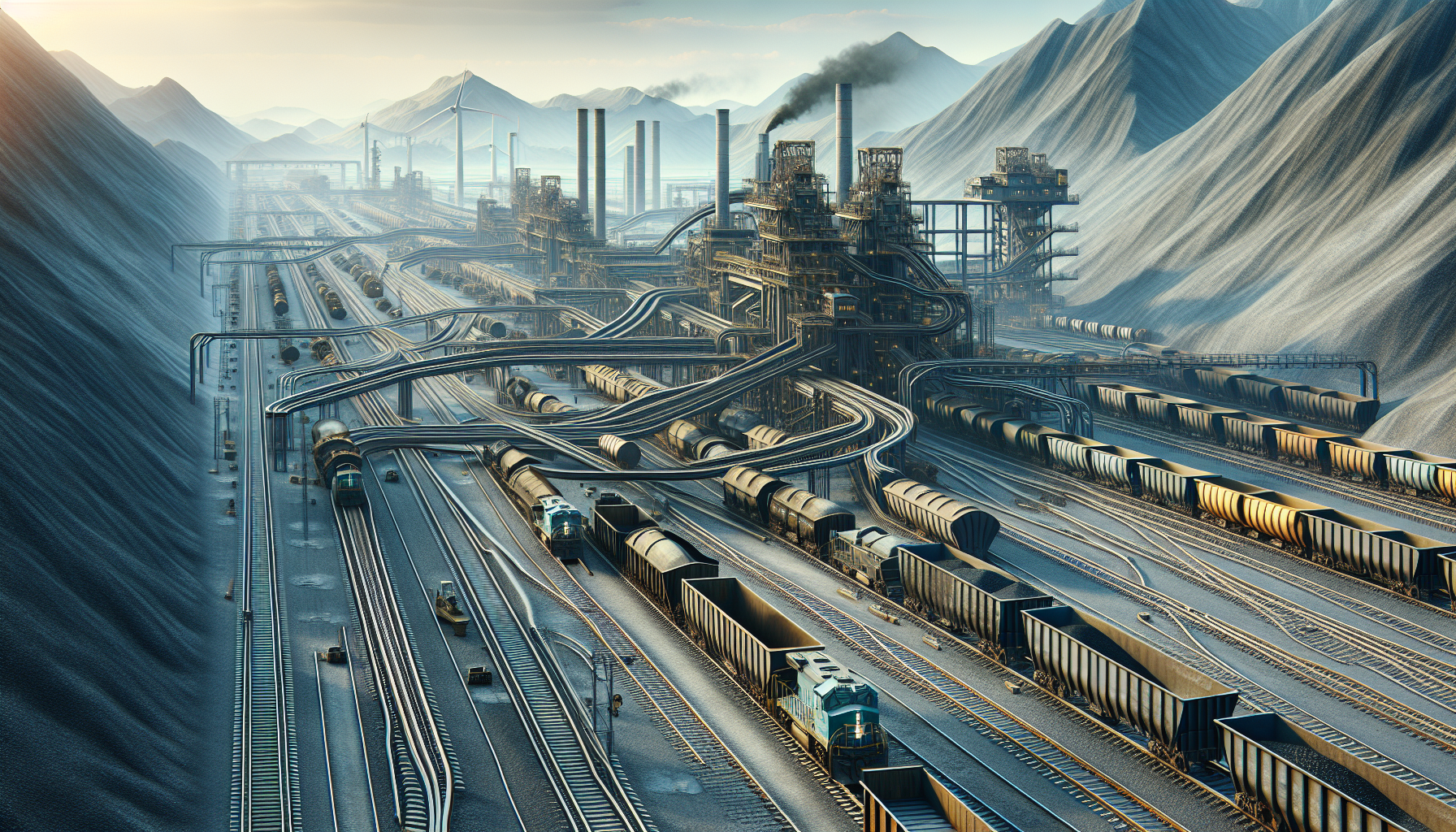
Rail facilities play a crucial role in the mining industry, facilitating the transportation of raw materials, equipment, and personnel. These facilities are essential for efficient and cost-effective operations. Here’s an overview of key rail facilities in mining:
Main Haulage Railroads
Main Haulage Railroads in mining refer to the primary rail infrastructure responsible for the transportation of bulk commodities from the mining site to processing plants, distribution points, or other designated destinations. Here are key points about Main Haulage Railroads:
- Bulk Material Transport:
- Main Haulage Railroads are designed to efficiently transport large quantities of bulk materials such as coal, ore, and minerals extracted from the mining site.
- Connectivity:
- These railroads typically connect the mining site to key facilities, including processing plants, where raw materials undergo beneficiation or refining processes.
- Heavy-Duty Construction:
- Constructed with heavy-duty materials to withstand the weight of loaded railcars and the continuous transportation of substantial quantities of minerals over long distances.
- Efficient Logistics:
- They are designed to optimize logistics by providing a direct and streamlined route for transporting mined materials to their intended destinations, reducing transportation costs and time.
- Material Handling Infrastructure:
- Loading docks are often integrated into Main Haulage Railroads, equipped with conveyor systems and equipment to efficiently load raw materials onto railcars.
- Integration with Processing Plants:
- These railroads play a crucial role in integrating the mining operation with processing facilities, ensuring a smooth flow of materials from extraction to refinement.
- Multiple Stops:
- Main Haulage Railroads may have multiple stops or loading points within the mining complex to collect materials from various extraction points before transporting them to centralized processing facilities.
- Maintenance Considerations:
- Regular maintenance is essential to ensure the continuous and safe operation of Main Haulage Railroads. Maintenance yards may be established for the upkeep of railcars and tracks.
- Safety Measures:
- Incorporates safety measures such as signalling systems to manage train movements, prevent collisions and ensure the safety of personnel working around the rail infrastructure.
- Strategic Planning:
- The planning and layout of Main Haulage Railroads require careful consideration of the mining site’s geography, material flow, and processing plant locations to optimize transportation efficiency.
Branch Lines
Branch lines in the context of mining refer to secondary railroads that connect various parts of the mining complex, facilitating the movement of materials within the site. Here are key points about Branch Lines:
- Internal Connectivity:
- Branch lines provide internal connectivity within the mining complex, linking extraction points, processing plants, storage areas, and other crucial facilities.
- Material Distribution:
- These railroads distribute raw materials from extraction points to different areas within the mining operation, ensuring an organized flow of materials for processing or storage.
- Flexibility in Transport:
- Branch lines offer flexibility in transporting materials over short distances, allowing for efficient movement between different stages of the mining process.
- Optimizing Operations:
- By connecting various components of the mining operation, branch lines contribute to the optimization of overall mining operations, reducing the need for long-distance transportation of materials.
- Strategic Layout:
- The layout of branch lines is strategically planned to facilitate the movement of materials to and from key areas, minimizing congestion and streamlining the overall logistics of the mining complex.
- Integration with Main Haulage Railroads:
- Branch lines often intersect with the main haulage railroads, allowing for the transfer of materials between the internal branches and the main transportation network.
- Material Sorting Points:
- Branch lines may include sorting points where materials are organized based on their characteristics or intended destinations, ensuring efficient routing to processing plants or storage facilities.
- Maintenance and Inspection:
- Regular maintenance and inspection of branch lines are essential to prevent disruptions in material flow. Maintenance yards may be established to address any issues with tracks or railcars.
- Adaptability to Site Changes:
- Branch lines are designed to be adaptable to changes in the mining operation’s layout, allowing for the addition of new extraction points or processing facilities without significant alterations.
- Enhanced Efficiency:
- The presence of branch lines enhances the overall efficiency of the mining complex by providing a dedicated and organized rail network for the movement of materials within the site.
Loading Docks
Loading docks in mining operations are critical facilities designed for the efficient loading of raw materials onto railcars. These docks are equipped with various tools and equipment to streamline the process. Here are key points about loading docks in mining:
- Material Loading Point:
- Loading docks serve as the primary point where raw materials, such as coal, ore, or minerals, are loaded onto railcars for transportation to processing plants or distribution points.
- Conveyor Systems:
- Loading docks are often equipped with conveyor systems that transport mined materials from extraction points or storage areas to the loading area, minimizing manual handling.
- Loading Equipment:
- Specialized loading equipment, such as front-end loaders, conveyor belts, or bucket loaders, is employed to efficiently transfer materials from storage piles to railcars.
- Hopper Cars:
- Loading docks are designed to accommodate hopper cars, which are commonly used in mining operations. These cars have openings at the bottom for easy unloading at processing plants.
- Material Quality Control:
- Loading docks may incorporate quality control measures to ensure that the loaded materials meet specified standards before transportation. This can include screening or sampling procedures.
- Safety Features:
- Safety features, such as railings, signage, and designated walkways, are implemented to ensure the safety of personnel working in the loading dock area.
- Loading Efficiency:
- The layout and design of loading docks are optimized for efficiency, allowing for the quick and systematic loading of railcars to minimize downtime and maximize throughput.
- Operational Scheduling:
- Loading docks are often part of a broader operational schedule, coordinating the arrival of trains with the availability of materials to maintain a steady flow of production.
- Environmental Considerations:
- Loading docks may implement measures to control dust emissions during the loading process, addressing environmental concerns associated with mining operations.
- Integration with Rail Network:
- Loading docks are strategically located to integrate seamlessly with the rail network, allowing loaded railcars to join the main haulage railroads or branch lines for further transportation.
Efficient loading docks are essential components of mining operations, ensuring a smooth and continuous flow of materials from extraction points to processing plants or distribution points. Their design and functionality play a crucial role in optimizing the overall logistics of the mining complex.
Unloaders
Unloaders in mining operations are facilities dedicated to efficiently removing materials from railcars at destination points such as processing plants, ports, or storage facilities. These facilities are crucial for the smooth transition of materials from the transportation phase to subsequent stages in the production or distribution process. Here are key points about unloaders in mining:
- Material Unloading Point:
- Unloaders serve as the designated points where raw materials, previously transported via rail, are efficiently unloaded from railcars for further processing or distribution.
- Conveyor Systems:
- Unloaders are often equipped with conveyor systems that transport the unloaded materials from the railcars to subsequent processing or storage areas, minimizing manual handling.
- Unloading Equipment:
- Specialized unloading equipment, such as conveyor belts, unloaders, or mechanical arms, is employed to efficiently transfer materials from railcars to designated processing or storage areas.
- Hopper Cars Handling:
- Unloaders are designed to handle hopper cars efficiently, with mechanisms to open the bottom of the cars for controlled and systematic unloading of materials.
- Material Distribution:
- Unloaders may include systems for distributing materials to different processing lines or storage bins based on the specific characteristics or requirements of the materials.
- Quality Control Checks:
- Quality control measures may be implemented at the unloading point to ensure that the materials meet specified standards before entering the subsequent stages of processing.
- Safety Features:
- Unloading facilities incorporate safety features such as railings, warning signs, and designated walkways to ensure the safety of personnel involved in the unloading process.
- Efficiency Optimization:
- The design and layout of unloaders are optimized for efficiency, allowing for the rapid unloading of railcars to minimize downtime and ensure a continuous flow of materials.
- Environmental Considerations:
- Unloading facilities may implement measures to control dust emissions during the unloading process, addressing environmental concerns associated with mining operations.
- Integration with Processing Plants or Storage:
- Unloaders are strategically located to integrate seamlessly with the subsequent stages of the production process or storage facilities, allowing for a smooth transition of materials.
Efficient unloaders play a critical role in the overall logistics of mining operations, ensuring that materials transported by rail reach their intended destinations for further processing or distribution in a timely and organized manner.
Sorting Yards
Sorting yards in mining operations are facilities designed to organize and manage the movement of railcars based on their destinations, material characteristics, or other criteria. These yards play a crucial role in optimizing the transportation and logistics within the mining complex. Here are key points about sorting yards in mining:
- Railcar Organization:
- Sorting yards organize incoming and outgoing trains, categorizing railcars based on their intended destinations, material types, or other specified criteria.
- Destination Sorting:
- Sorting yards facilitate the separation of railcars destined for different processing plants, storage areas, or distribution points within the mining operation.
- Material Characteristics:
- Railcars carrying materials with different characteristics (e.g., varying grades of ore) may be sorted in the yard to ensure that they are directed to the appropriate processing or storage facilities.
- Flexibility:
- Sorting yards are designed to be flexible, allowing for changes in sorting criteria based on operational needs, production schedules, or alterations in the mining complex layout.
- Strategic Layout:
- The layout of sorting yards is strategically planned to allow for efficient movement and organization of railcars, minimizing congestion and optimizing material flow.
- Integration with Main Haulage Railroads:
- Sorting yards are typically integrated with main haulage railroads and branch lines, allowing for seamless transitions and transfers of railcars between different sections of the rail network.
- Switching and Turnouts:
- Sorting yards feature switching and turnout systems that enable the diversion of trains onto different tracks, directing railcars to their designated sorting areas.
- Efficient Traffic Flow:
- The primary goal of sorting yards is to facilitate efficient traffic flow within the rail network, ensuring that materials reach their intended destinations in a timely and organized manner.
- Coordination with Operational Schedule:
- Sorting yards operate in coordination with the overall operational schedule, aligning the movement of railcars with the availability of processing facilities and the demand for materials.
- Maintenance and Inspection:
- Regular maintenance and inspection of sorting yards are essential to prevent disruptions in material flow and to ensure that the sorting mechanisms operate smoothly.
Sorting yards are integral to the smooth functioning of mining rail infrastructure, providing a pivotal role in the coordination and organization of railcar movements. Their strategic placement and efficient operation contribute to the overall optimization of mining logistics.
Maintenance Yards
Maintenance yards in mining operations are dedicated facilities designed for the maintenance, repair, and servicing of railcars and associated equipment. These yards play a crucial role in ensuring the safe and reliable operation of the rail infrastructure within the mining complex. Here are key points about maintenance yards in mining:
- Railcar Maintenance Hub:
- Maintenance yards serve as central hubs for the maintenance and repair of railcars, locomotives, and other rail-related equipment used in the mining operation.
- Routine Inspections:
- Regular inspections of railcars and equipment are conducted in maintenance yards to identify and address potential issues before they lead to operational disruptions.
- Scheduled Maintenance:
- Maintenance yards are responsible for executing scheduled maintenance activities, including lubrication, replacement of worn components, and other preventive measures to ensure the longevity of rail assets.
- Repair Facilities:
- Equipped with repair bays and workshops, maintenance yards enable the repair of damaged or malfunctioning railcars, locomotives, and associated components.
- Track Maintenance:
- Maintenance yards may extend their services to include the maintenance and repair of tracks within the mining complex, ensuring the safety and efficiency of the rail infrastructure.
- Spare Parts Inventory:
- Maintenance yards typically maintain an inventory of spare parts and components to facilitate swift repairs and replacements, minimizing downtime in rail operations.
- Safety Protocols:
- Strict safety protocols are implemented in maintenance yards to protect personnel and ensure that maintenance activities are conducted in compliance with safety standards.
- Diagnostic Equipment:
- Advanced diagnostic tools and equipment are utilized in maintenance yards to assess the condition of railcars and identify potential issues that may require attention.
- Personnel Training:
- Maintenance yard staff undergo specialized training to perform maintenance and repairs on rail equipment, ensuring they have the skills and knowledge necessary for the task.
- Integration with Operational Schedule:
- Maintenance activities in the yard are coordinated with the overall operational schedule, ensuring that railcars are serviced during planned maintenance intervals to minimize disruptions to mining operations.
Maintenance yards are critical components of a mining operation’s infrastructure, contributing to the overall reliability, safety, and efficiency of the rail transportation system. By providing a dedicated space for maintenance activities, these yards help extend the lifespan of rail assets and reduce the likelihood of unexpected failures or breakdowns.
Railway Infrastructure
Railway infrastructure in mining operations encompasses the physical elements and systems that support the transportation of materials, equipment, and personnel within the mining complex. This infrastructure includes tracks, turnouts, switches, bridges, and tunnels. Here are key points about railway infrastructure in mining:
- Tracks:
- The foundation of railway infrastructure, tracks are laid throughout the mining complex to create a network for the movement of railcars. Tracks are designed to support heavy loads and ensure smooth transportation.
- Turnouts and Switches:
- Turnouts and switches are components of railway infrastructure that allow for the diversion of trains onto different tracks. They facilitate efficient movement and organization of railcars within the mining complex.
- Rail Bridges:
- Rail bridges are constructed to enable trains to traverse natural obstacles such as rivers, valleys, or uneven terrain. These structures are designed to support the weight of loaded railcars.
- Rail Tunnels:
- In hilly or mountainous terrain, rail tunnels may be constructed to allow trains to pass through, maintaining a continuous rail network. Tunnels provide an alternative to bridges in challenging geographic conditions.
- Maintenance of Way (MOW) Equipment:
- Maintenance of Way equipment, including specialized vehicles and machinery, is part of railway infrastructure. These tools are used for track maintenance, repair, and construction activities.
- Railway Ballast:
- The track is typically laid on a bed of railway ballast, which provides stability, drainage, and support for the tracks. Ballast helps distribute the load of the railcars and ensures the integrity of the track structure.
- Signaling Systems:
- Signaling systems are implemented to manage the safe movement of trains within the rail network. They include signals, lights, and communication systems that help prevent collisions and regulate traffic.
- Safety Barriers:
- Safety barriers are installed along railway infrastructure to protect personnel and equipment from moving trains. These barriers enhance safety in areas where railcars are loaded, unloaded, or moved within the mining complex.
- Grade Crossings:
- Where roads intersect with railway tracks, grade crossings may be constructed. These crossings incorporate safety features such as gates and warning signals to control vehicular and pedestrian traffic when a train is approaching.
- Electrification (if applicable):
- In some mining operations, especially those with extensive rail networks, electrification may be implemented to power trains. This involves the installation of overhead wires or electrified rails to provide the necessary electrical energy for locomotives.
Railway infrastructure is fundamental to the efficiency and productivity of mining operations. Its design, construction, and maintenance are essential aspects of creating a reliable and safe transportation network within the mining complex.
Turnouts and Switches
Turnouts and switches are critical components of railway infrastructure in mining operations. They are designed to enable the diversion of trains onto different tracks, facilitating efficient movement and organization of railcars within the mining complex. Here are key points about turnouts and switches:
- Definition:
- Turnouts and switches are mechanisms that allow trains to change tracks at specific points along the rail network. They provide flexibility in directing railcars to different destinations or facilities within the mining operation.
- Functionality:
- Turnouts allow for the divergence or convergence of tracks, while switches are movable sections of the track that can be adjusted to guide trains onto a different path.
- Strategic Placement:
- Turnouts and switches are strategically placed at junctions, intersections, or key points in the rail network to facilitate the efficient flow of rail traffic.
- Diverging and Straight Routes:
- Turnouts can create diverging routes, where trains move onto a different track, or straight routes, allowing trains to continue along the same path.
- Yards and Sorting Areas:
- Turnouts are commonly found in rail yards and sorting areas where trains need to be directed to specific tracks based on their destinations or the types of materials they are transporting.
- Main Haulage Railroads:
- Turnouts are often incorporated into main haulage railroads to provide access to different processing plants, loading docks, or storage areas within the mining complex.
- Branch Lines:
- Switches are crucial for the functionality of branch lines, allowing railcars to be directed to various internal destinations within the mining site.
- Maintenance Considerations:
- Turnouts and switches require regular inspection and maintenance to ensure proper functioning. Maintenance activities may include lubrication, adjustment, and replacement of worn components.
- Control Systems:
- Modern turnouts and switches may be equipped with electronic or automated control systems that allow for remote operation, enhancing efficiency and safety.
- Safety Features:
- Safety features, such as signaling systems and warning signs, are implemented to alert train operators about the position of turnouts and switches, preventing collisions and ensuring safe rail operations.
Turnouts and switches play a crucial role in optimizing the rail infrastructure within mining operations. Their strategic placement and proper maintenance contribute to the overall efficiency, safety, and organization of the transportation network, allowing for the seamless movement of materials and equipment within the mining complex.
Rail Bridges and Tunnels
Rail bridges and tunnels are essential components of railway infrastructure in mining operations, providing solutions for overcoming natural obstacles and challenging terrain. Here are key points about rail bridges and tunnels:
Rail Bridges:
- Purpose:
- Rail bridges are constructed to allow trains to traverse obstacles such as rivers, valleys, or uneven terrain where a direct track connection is not feasible.
- Design Considerations:
- Bridges are designed to support the weight of loaded railcars and the dynamic forces generated by moving trains. They may come in various types, including beam bridges, truss bridges, or arch bridges, depending on the specific engineering requirements.
- Materials:
- The construction materials for rail bridges vary but commonly include steel and reinforced concrete. The choice of materials depends on factors such as the span length, load capacity, and environmental conditions.
- Maintenance:
- Regular inspection and maintenance are crucial for ensuring the structural integrity of rail bridges. Inspection routines may include assessments of the bridge’s superstructure, substructure, and foundations.
- Environmental Considerations:
- Rail bridges are designed to withstand environmental factors such as wind, water flow, and temperature variations. Corrosion-resistant materials may be used in locations with exposure to harsh weather conditions.
- Integration into the Rail Network:
- Bridges are strategically placed to seamlessly integrate into the overall rail network, allowing for the continuous flow of rail traffic across various sections of the mining complex.
Rail Tunnels:
- Purpose:
- Rail tunnels are constructed through mountains, hills, or other geological formations to provide a direct and efficient route for trains, avoiding the need for lengthy detours around obstacles.
- Excavation Methods:
- Tunnel construction methods may include drilling and blasting, tunnel boring machines (TBMs), or a combination of these techniques, depending on the geological characteristics of the terrain.
- Ventilation:
- Tunnels require ventilation systems to ensure a safe environment for train operators and to remove exhaust gases generated by locomotives. Ventilation shafts may be incorporated into the tunnel design.
- Lighting and Safety:
- Rail tunnels are equipped with lighting systems to ensure visibility for train operators. Safety features such as emergency exits and fire suppression systems are also integrated into tunnel designs.
- Maintenance:
- Regular inspection and maintenance of tunnel structures, track conditions, and safety systems are essential to ensure the continued safe operation of rail traffic through the tunnel.
- Integration with the Rail Network:
- Tunnels are strategically positioned within the rail network to provide efficient connections between different areas of the mining complex, allowing for a continuous flow of materials and personnel.
Both rail bridges and tunnels are critical elements of railway infrastructure in mining, enabling the development of rail networks in challenging terrains and ensuring the efficient movement of materials and personnel within the mining operation.
Personnel Transport
Personnel transport within mining operations involves the movement of workers and staff between various locations within the mining complex. Rail transportation is often utilized for this purpose, providing a safe and efficient means of commuting. Here are key points regarding personnel transport in mining:
- Passenger Trains:
- Dedicated passenger trains or railcars are employed to transport personnel between different sections of the mining operation, such as accommodation areas, offices, and work sites.
- Designated Passenger Platforms:
- Mining complexes may have designated platforms or stations for passenger trains, ensuring organized boarding and disembarking of personnel.
- Scheduled Services:
- Personnel transport services are typically scheduled to align with shift changes, ensuring that workers arrive and depart at the appropriate times for their assigned work shifts.
- Accommodations:
- Passenger trains may be equipped with comfortable seating, climate control, and other amenities to enhance the comfort and well-being of personnel during transit.
- Safety Measures:
- Safety features such as railings, warning signs, and emergency protocols are implemented to ensure the safety of personnel during boarding, travel, and disembarkation.
- Coordination with Work Shifts:
- Personnel transport services are coordinated with the mining operation’s work schedule, aligning with the starting and ending times of shifts to facilitate efficient workforce management.
- Integration with Rail Network:
- Personnel transport services are integrated into the overall rail network, utilizing existing tracks and infrastructure to connect different areas of the mining complex.
- Remote Site Access:
- In mining operations located in remote areas, rail transport provides a reliable and cost-effective means of accessing work sites, especially when road infrastructure may be limited.
- Efficiency and Time Management:
- Rail transport for personnel is chosen for its efficiency, allowing large numbers of workers to be transported simultaneously, minimizing delays and optimizing time management.
- Customization for Workforce Size:
- The scale and capacity of personnel transport services can be customized to accommodate the size of the workforce, ensuring that transportation needs align with the number of employees.
Personnel transport via rail in mining operations offers a reliable and organized solution for efficiently moving workers within the mining complex. It contributes to improved logistics, enhances safety, and provides a cost-effective means of managing workforce transportation needs.
Discover more from AllMinings
Subscribe to get the latest posts sent to your email.


