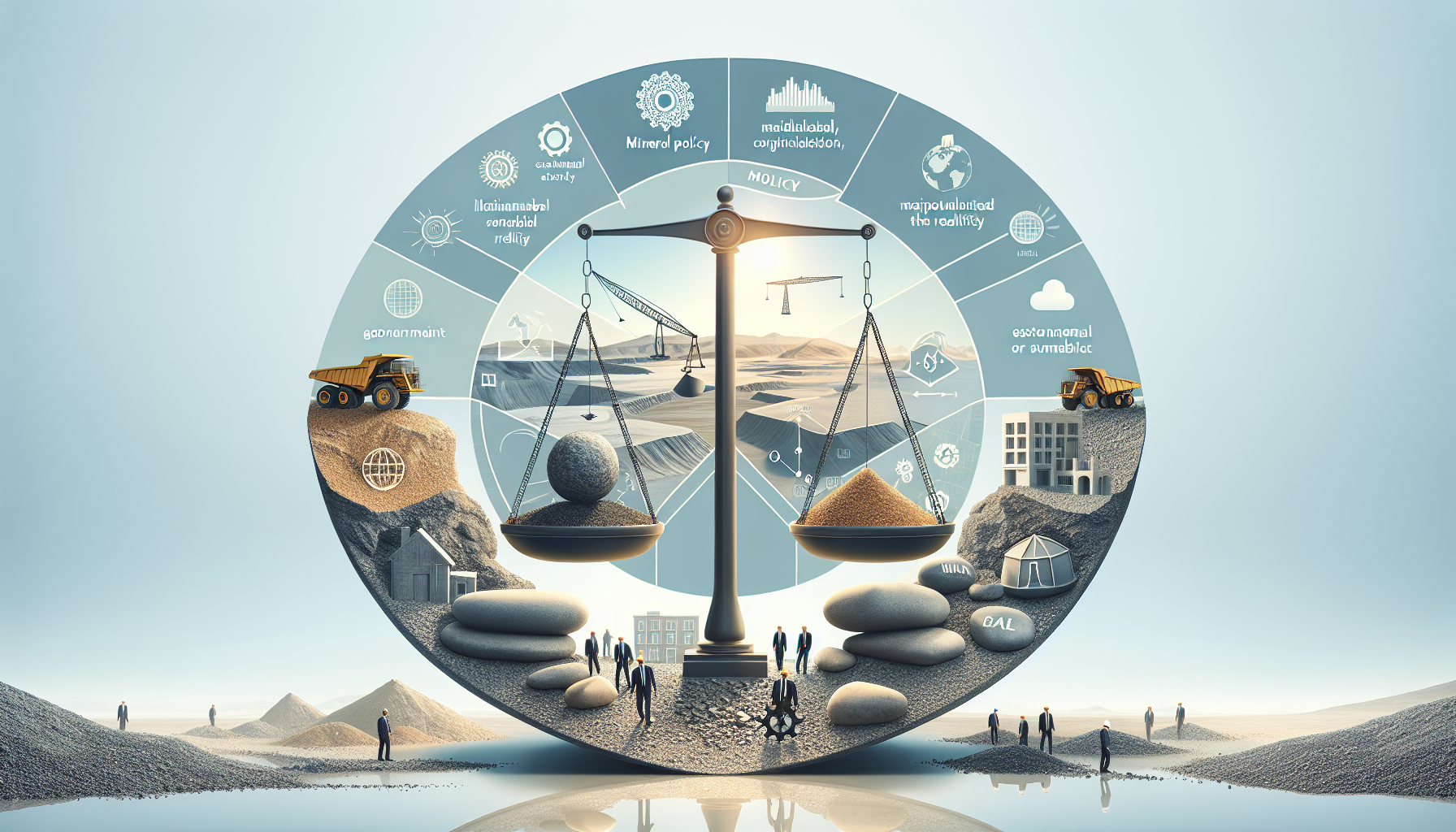
A Mineral Policy in the context of mining refers to a comprehensive framework that outlines the principles, and goals. It is also a strategy governing the extraction, management, and utilization of mineral resources within a specific jurisdiction. This policy is typically formulated by government authorities to ensure sustainable and responsible mining practices while balancing economic, environmental, and social considerations. Below are key elements commonly found in a Mineral Policy:
Objectives and Goals
Objectives and goals are fundamental elements of any policy or strategic framework. They provide a clear direction and purpose for the actions and initiatives outlined within the policy. In the context of a Mineral Policy in mining, the objectives and goals typically encompass a range of economic, environmental, and social considerations. Here are examples of objectives and goals that might be included in a Mineral Policy:
Objectives:
- Promote Sustainable Resource Management: Ensure that mineral resources are extracted, utilized, and managed in a manner that maintains ecological balance and allows for long-term availability.
- Stimulate Economic Growth and Development: Foster a thriving mining sector that contributes to economic diversification, job creation, and increased revenue streams for the government.
- Enhance Environmental Protection and Conservation: Minimize negative environmental impacts associated with mining activities through responsible practices, reclamation efforts, and biodiversity preservation.
- Empower Local Communities and Indigenous Groups: Foster partnerships with affected communities, providing opportunities for participation, benefit-sharing, and capacity-building.
- Foster Innovation and Technological Advancements: Encourage the adoption of modern technologies and best practices to improve efficiency, reduce environmental footprints, and promote sustainable resource use.
- Prioritize Health and Safety Standards: Ensure the well-being of workers, local communities, and the environment by implementing rigorous health, safety, and emergency response protocols.
- Optimize Mineral Resource Value Chains: Promote downstream value addition and beneficiation processes to maximize the economic benefits derived from mineral resources.
- Foster Transparency, Accountability, and Good Governance: Establish mechanisms for transparent and accountable management of mining operations, including effective regulatory oversight and anti-corruption measures.
Goals:
- Achieve a Balanced Resource Extraction Ratio: Strive for an extraction rate that allows for resource renewal and regeneration, maintaining a sustainable balance between extraction and replenishment.
- Increase Local Employment and Skills Development: Aim to create job opportunities and invest in training programs to enhance the skills and employability of the local workforce.
- Reduce Environmental Footprint: Set targets for reducing or mitigating the environmental impacts of mining activities, including targets for land reclamation, water quality improvement, and air pollution control.
- Promote Social Inclusion and Equity: Work towards an inclusive mining sector that benefits all segments of society, with specific attention to marginalized and vulnerable groups.
- Foster Research and Development in the Mining Sector: Encourage innovation, research, and development in mining technologies, processes, and practices to drive sustainable improvements.
- Improve Compliance and Enforcement Measures: Set goals for enhancing compliance with mining regulations, reducing incidents of non-compliance, and strengthening enforcement mechanisms.
- Enhance International Collaboration and Cooperation: Foster partnerships with international organizations, neighbouring countries, and the global mining community to exchange knowledge, and best practices, and promote responsible resource management.
- Achieve Positive Socioeconomic Impacts: Monitor and measure the socioeconomic benefits generated by the mining sector, including contributions to GDP, revenue generation, and community development indicators.
It’s worth noting that the specific objectives and goals of a Mineral Policy will be tailored to the unique characteristics, priorities, and challenges of the jurisdiction in which it is implemented. Additionally, periodic review and adjustment of these objectives and goals are essential to ensure alignment with evolving industry standards and changing circumstances.
Sustainable Development
Sustainable development is a holistic approach to economic, social, and environmental progress that seeks to meet the needs of the present without compromising the ability of future generations to meet their own needs. It aims to balance economic growth, social inclusion, and environmental protection in a way that ensures long-term viability and resilience. Here are the key components and principles of sustainable development:
- Integration of Economic, Social, and Environmental Dimensions:
- Sustainable development considers economic, social, and environmental factors as interdependent and equally important. It seeks to achieve a harmonious balance between these dimensions.
- Long-Term Perspective:
- It looks beyond short-term gains and considers the potential impacts of actions on future generations, emphasizing the need for responsible resource management.
- Inclusivity and Equity:
- Sustainable development aims to ensure that benefits and opportunities are distributed equitably among all segments of society, including marginalized and vulnerable groups.
- Respect for Planetary Boundaries:
- It acknowledges the finite nature of Earth’s resources and sets limits on resource consumption, waste generation, and environmental degradation to stay within ecological carrying capacities.
- Precautionary Principle:
- It advocates for cautious decision-making in the face of uncertainty. When an activity or policy poses a threat to the environment or public health, precautionary measures should be taken, even if cause-and-effect relationships are not fully understood.
- Promotion of Innovation and Technology:
- Sustainable development encourages the development and adoption of innovative technologies and practices that enhance efficiency, reduce environmental impacts, and promote responsible resource use.
- Cultural and Social Considerations:
- It respects and values cultural diversity and local knowledge, recognizing that communities have unique perspectives and solutions for sustainable development.
- Good Governance and Institutions:
- Effective governance structures, transparent decision-making processes, and accountable institutions are essential for achieving and maintaining sustainable development goals.
- Education and Capacity Building:
- Empowering individuals, communities, and organizations with knowledge and skills is crucial for fostering a culture of sustainability and ensuring active participation in sustainable practices.
- Adaptability and Resilience:
- Sustainable development anticipates and prepares for changes and challenges, including those brought about by climate change, technological advancements, and shifting societal needs.
- Measurable Indicators and Reporting:
- Clear metrics and indicators are used to monitor progress toward sustainable development goals, ensuring accountability and providing a basis for informed decision-making.
- Global Collaboration:
- Given the interconnectedness of global challenges, sustainable development requires international cooperation, knowledge-sharing, and joint efforts to address issues like climate change, biodiversity loss, and resource management.
- Local Solutions with Global Impacts:
- Recognizing that sustainable development is context-specific, solutions are often best found at the local level. However, local actions contribute to global efforts to achieve a sustainable future.
Sustainable development is a dynamic concept that evolves with new knowledge, technologies, and societal values. It is a guiding principle for addressing the complex challenges facing humanity, from environmental conservation and poverty alleviation to economic prosperity and social justice.
Resource Assessment and Management
Resource assessment and management are critical components of any sustainable and responsible approach to utilizing natural resources. This process involves evaluating the availability, quality, and potential of resources, as well as implementing strategies to ensure their sustainable use. In the context of mining, resource assessment and management specifically pertain to the evaluation and sustainable utilization of mineral resources. Here’s a breakdown of these two components:
Resource Assessment:
- Geological Surveys and Studies:
- Conduct comprehensive geological surveys and studies to identify and characterize mineral deposits. This includes mapping geological formations, analyzing mineralogy, and estimating resource volumes.
- Exploration and Sampling:
- Carry out exploration activities to locate potential mineral deposits. This involves drilling, sampling, and analyzing rock and soil samples to determine the presence and quantity of economically viable minerals.
- Resource Estimation:
- Utilize statistical and mathematical models to estimate the size, grade, and tonnage of mineral deposits. This involves using data from drilling, sampling, and geological studies to create models of the deposit’s characteristics.
- Reserve Classification:
- Categorize mineral resources into various classifications based on their level of geological certainty and economic viability. This may include categories like measured, indicated, and inferred resources.
- Technological Assessment:
- Evaluate the technological feasibility and economic viability of extracting and processing the identified mineral resources using current or potential future technologies.
- Market Analysis:
- Consider market demand, pricing trends, and potential market outlets for the identified minerals. This helps in determining the economic feasibility of mining operations.
- Environmental Impact Assessment (EIA):
- Assess the potential environmental impacts of mining activities, including habitat disruption, water and air pollution, and soil degradation. This is crucial for understanding and mitigating potential negative effects.
Resource Management:
- Mineral Rights and Tenure:
- Establish legal and regulatory frameworks for granting mineral rights, leases, and tenures to mining companies. This defines ownership and access rights to mineral resources.
- Licensing and Permitting:
- Develop a system for granting licenses and permits for mining operations, which includes compliance with environmental, health, safety, and community engagement standards.
- Land Use Planning:
- Integrate mineral resource considerations into broader land use planning to balance mining activities with other land uses, such as agriculture, forestry, and conservation.
- Regulatory Oversight:
- Implement regulatory agencies responsible for overseeing mining activities, ensuring compliance with laws and regulations, and monitoring environmental and social impacts.
- Reclamation and Closure Planning:
- Require mining companies to develop and implement plans for the responsible closure and rehabilitation of mining sites, including land reclamation, water management, and ecological restoration.
- Monitoring and Reporting:
- Establish mechanisms for ongoing monitoring of mining operations to track compliance with regulations, assess environmental impacts, and ensure that resource extraction remains within sustainable limits.
- Community Engagement and Benefit Sharing:
- Promote meaningful consultation with affected communities and ensure that they share in the benefits generated by mining activities through mechanisms such as revenue-sharing agreements, community development projects, and employment opportunities.
- Research and Technological Advancements:
- Encourage research and development in mining technologies and practices to improve efficiency, reduce environmental impacts, and promote responsible resource utilization.
Resource assessment and management are iterative processes that require ongoing monitoring, evaluation, and adaptation to changing circumstances, technological advancements, and evolving best practices in the mining industry.
Legal and Regulatory Framework
The legal and regulatory framework is a crucial aspect of any mining industry, providing the structure and guidelines within which mining activities can be conducted. It encompasses a range of laws, regulations, policies, and administrative procedures that govern various aspects of mineral resource exploration, extraction, and utilization. Here’s an overview of the key components of a legal and regulatory framework in mining:
**1. Mineral Rights and Ownership:
- Define the legal ownership of mineral resources, specifying whether they are owned by the state, private entities, or a combination of both. Clarify the process for acquiring mineral rights and the terms under which they are granted.
**2. Licensing and Permitting:
- Outline the procedures and requirements for obtaining licenses and permits for exploration, mining, and related activities. This includes details on application processes, fees, environmental impact assessments (EIAs), and compliance with health and safety standards.
**3. Land Tenure and Access Rights:
- Specify the legal arrangements for accessing and using land for mining purposes. This may involve leasing, permitting, or other forms of land tenure agreements, as well as procedures for acquiring access rights.
**4. Environmental Regulations:
- Define the environmental standards and requirements that mining operations must adhere to. This includes regulations related to air and water quality, waste management, land reclamation, and biodiversity conservation.
**5. Health and Safety Standards:
- Establish regulations and guidelines to ensure the health and safety of workers and communities affected by mining activities. This covers aspects such as safety training, protective equipment, emergency response plans, and mine closure protocols.
**6. Community Engagement and Social Responsibility:
- Specify the requirements for engaging with local communities, indigenous groups, and other stakeholders affected by mining operations. This may include consultation processes, benefit-sharing arrangements, and mechanisms for addressing community concerns.
**7. Revenue and Royalty Structures:
- Outline the fiscal arrangements governing the extraction of mineral resources, including taxation, royalty rates, and revenue-sharing agreements. These mechanisms determine how economic benefits derived from mining activities are distributed.
**8. Regulatory Agencies and Authorities:
- Identify the government agencies responsible for overseeing and regulating mining activities. This includes roles and responsibilities, enforcement powers, and procedures for granting approvals and licenses.
**9. Legal Framework for Environmental Remediation and Closure:
- Specify the legal requirements for mine closure, reclamation, and environmental remediation. This includes obligations for restoring the site to a condition that is safe, stable, and ecologically sustainable.
**10. Conflict Resolution and Dispute Mechanisms:
- Establish procedures for resolving conflicts, disputes, and grievances related to mining operations. This may include mechanisms for mediation, arbitration, and legal recourse.
**11. International Agreements and Obligations:
- Address how the legal framework aligns with international agreements, treaties, and conventions related to mining and environmental protection. Ensure compliance with global standards and best practices.
**12. Compliance and Enforcement:
- Define the mechanisms for monitoring and enforcing compliance with mining regulations. This includes inspection protocols, penalties for non-compliance, and dispute resolution procedures.
A robust legal and regulatory framework is essential for providing clarity, stability, and accountability in the mining sector. It helps to ensure that mining activities are conducted responsibly, in a manner that safeguards the environment, protects the rights of stakeholders, and contributes to sustainable development.
Environmental Protection and Conservation
Environmental protection and conservation are vital components of responsible and sustainable resource management, including in the context of mining. These principles aim to mitigate the adverse impacts of mining activities on the environment and natural ecosystems. Here are key elements of environmental protection and conservation in mining:
1. Impact Assessments:
- Environmental Impact Assessment (EIA): Require mining companies to conduct comprehensive assessments of potential environmental impacts before commencing operations. This includes evaluating effects on air and water quality, soil health, biodiversity, and local ecosystems.
2. Pollution Prevention and Control:
- Air Quality Management: Implement measures to control dust emissions, mitigate air pollutants, and monitor air quality in and around mining operations.
- Water Management: Establish systems for treating and managing water discharge from mining sites to prevent contamination of rivers, lakes, and groundwater.
3. Land Reclamation and Rehabilitation:
- Reclamation Plans: Mandate mining companies to develop and implement plans for restoring disturbed lands to a condition that supports natural ecosystems and sustainable land use.
4. Biodiversity Conservation:
- Habitat Protection: Identify and protect ecologically sensitive areas, critical habitats, and biodiversity hotspots within and around mining sites.
- Species Protection: Implement measures to safeguard endangered or threatened species that may be affected by mining activities.
5. Waste Management:
- Tailings Management: Regulate the handling, storage, and disposal of mining waste, including tailings, to prevent the leaching of harmful substances into the environment.
- Solid Waste Management: Establish procedures for the responsible handling and disposal of non-mineral waste generated by mining operations.
6. Water Resource Protection:
- Water Conservation: Encourage efficient water use in mining operations and implement strategies to minimize water consumption.
- Water Quality Monitoring: Require regular monitoring of water quality to detect and address any pollution resulting from mining activities.
7. Noise and Vibration Control:
- Noise Abatement Measures: Implement strategies to mitigate noise pollution from mining operations, including through the use of sound barriers and scheduling of activities to minimize impacts on local communities.
8. Rehabilitation Bonds and Financial Assurances:
- Require mining companies to provide financial guarantees or bonds to cover the costs of environmental rehabilitation and closure, ensuring that funds are available for reclamation efforts.
9. Ecosystem Services Valuation:
- Consider the economic value of ecosystem services provided by natural environments (e.g., clean air, clean water, pollination) in decision-making processes.
10. Research and Monitoring:
- Support scientific research to understand and address the environmental impacts of mining. Establish monitoring programs to track environmental indicators and assess the effectiveness of mitigation measures.
11. Compliance and Enforcement:
- Enforce strict adherence to environmental regulations through regular inspections, penalties for non-compliance, and enforcement actions.
12. Stakeholder Engagement:
- Involve local communities, indigenous groups, and environmental organizations in the decision-making process and in initiatives related to environmental protection and conservation.
Environmental protection and conservation in mining are essential for minimizing the industry’s ecological footprint and ensuring that mining activities do not compromise the integrity and sustainability of ecosystems, both in the short and long term. It also contributes to the broader goal of sustainable development by safeguarding natural resources for future generations.
Community Engagement and Social Responsibility
Community engagement and social responsibility are crucial aspects of responsible and sustainable mining practices. They involve actively involving and benefiting local communities, as well as addressing their concerns and needs. Here are key elements of community engagement and social responsibility in mining:
1. Communication and Consultation:
- Establish effective channels of communication to keep local communities informed about mining activities, potential impacts, and opportunities for involvement.
- Conduct meaningful consultations with community members to gather their input, address concerns, and incorporate their perspectives into decision-making processes.
2. Inclusive Participation:
- Ensure that all segments of the community, including marginalized groups, have the opportunity to participate in discussions and decisions related to mining activities.
3. Socioeconomic Benefits:
- Maximize the positive socioeconomic impacts of mining on local communities by creating employment opportunities, providing skills training, and supporting local businesses and industries.
4. Infrastructure and Services:
- Contribute to the development of essential infrastructure, such as roads, schools, healthcare facilities, and clean water supply, to improve the quality of life for community members.
5. Cultural Sensitivity and Respect:
- Recognize and respect the cultural heritage, traditions, and practices of local communities. Avoid activities that may infringe upon sacred or culturally significant sites.
6. Health and Safety:
- Prioritize the health and safety of community members and workers through the implementation of rigorous safety standards, training programs, and emergency response plans.
7. Human Rights and Social Justice:
- Uphold human rights principles, ensuring that the rights and dignity of community members are respected, protected, and upheld throughout mining operations.
8. Environmental Stewardship:
- Engage with communities in environmental conservation efforts and support initiatives that promote sustainable land use and biodiversity conservation.
9. Grievance Mechanisms:
- Establish transparent and accessible mechanisms for community members to raise concerns, file complaints, and seek resolution for any issues related to mining activities.
10. Benefit Sharing and Revenue Allocation:
- Implement mechanisms for sharing the economic benefits generated by mining operations with local communities. This may include revenue-sharing agreements, community development funds, or other benefit-sharing arrangements.
11. Capacity Building and Education:
- Invest in education and skills development programs to enhance the capacity and empowerment of community members, enabling them to participate in the local economy and make informed decisions.
12. Legacy Planning and Closure:
- Develop plans for post-mining activities that prioritize the long-term well-being of the community. This includes strategies for sustainable land use, alternative economic opportunities, and ongoing benefits after mining operations cease.
13. Transparent Reporting and Accountability:
- Provide regular, transparent, and accessible reporting on the social and economic impacts of mining operations, as well as on the implementation of community engagement and social responsibility initiatives.
Community engagement and social responsibility are critical for building trust, fostering positive relationships, and ensuring that mining activities contribute to the well-being and prosperity of local communities. These practices also align with broader principles of corporate social responsibility and sustainable development.
Health and Safety
Health and safety in mining is paramount, as it involves potentially hazardous activities that can impact the well-being of workers, local communities, and the environment. Rigorous health and safety standards and practices are essential to protect individuals and ensure responsible mining operations. Here are key elements of health and safety in mining:
1. Risk Assessment and Management:
- Identify, assess, and manage potential hazards associated with mining operations. This includes geological risks, equipment-related risks, and potential exposure to harmful substances.
2. Training and Education:
- Provide comprehensive training programs for all personnel involved in mining activities. This includes training on safety protocols, emergency response procedures, and the proper use of equipment.
3. Personal Protective Equipment (PPE):
- Mandate the use of appropriate PPE, including helmets, gloves, goggles, respiratory protection, and other safety gear to minimize the risk of injuries and exposure to harmful substances.
4. Emergency Response and Preparedness:
- Develop and regularly practice emergency response plans, including procedures for evacuation, first aid, and coordination with local authorities in the event of accidents or emergencies.
5. Ventilation and Air Quality:
- Implement ventilation systems to control dust and ensure adequate air quality within underground mines. Monitor air quality to prevent exposure to harmful gases or particulate matter.
6. Hazardous Materials Management:
- Establish protocols for the safe handling, storage, and disposal of hazardous substances, including chemicals used in mining operations.
7. Ground Control and Stability:
- Conduct geotechnical assessments and implement measures to prevent rockfalls, ground collapses, and other geological hazards that may endanger workers.
8. Equipment Safety and Maintenance:
- Regularly inspect and maintain mining equipment to ensure it is in safe working condition. Implement lockout-tagout procedures to prevent accidental equipment activation.
9. Health Surveillance and Monitoring:
- Conduct regular health assessments and medical examinations for workers to monitor their health and detect any occupational health issues early.
10. Fatigue Management:
- Implement policies and practices to manage worker fatigue, including reasonable working hours, rest breaks, and rotation schedules for tasks that require high levels of concentration and alertness.
11. Psychological Well-being:
- Recognize and address mental health concerns among workers, providing access to support services and resources for managing stress, anxiety, and other mental health challenges.
12. Safety Culture and Reporting:
- Foster a safety-conscious work culture that encourages employees to report hazards, near-miss incidents, and unsafe practices without fear of reprisal.
13. Regulatory Compliance and Audits:
- Ensure compliance with all relevant health and safety regulations, and conduct regular audits and inspections to assess and improve compliance levels.
14. Safety Leadership and Accountability:
- Assign clear responsibilities for health and safety at all levels of the organization, and hold individuals accountable for implementing and upholding safety protocols.
Prioritizing health and safety in mining operations is not only a legal and ethical obligation, but it also contributes to a productive and motivated workforce, reduces accidents and incidents, and helps to create a positive and sustainable working environment.
Economic Benefits and Revenue Sharing
Economic benefits and revenue sharing are crucial aspects of responsible resource management, especially in the context of mining. These principles aim to ensure that the economic gains from mining activities are distributed fairly and contribute to the overall well-being of society. Here are key elements of economic benefits and revenue sharing in mining:
1. Economic Diversification:
- Mining activities should contribute to economic diversification by creating new industries, supporting local businesses, and stimulating growth in related sectors.
2. Job Creation:
- Provide employment opportunities for local communities, thereby improving livelihoods and reducing unemployment rates.
3. Skills Development and Training:
- Offer training and capacity-building programs to enhance the skills and employability of local workers, enabling them to participate effectively in the mining industry and other sectors.
4. Local Procurement and Supply Chain Development:
- Encourage mining companies to source goods and services locally, thereby stimulating the growth of local industries and supporting the broader economy.
5. Infrastructure Development:
- Contribute to the development of essential infrastructure such as roads, ports, energy facilities, and water supply systems, which benefits both the mining operation and the broader community.
6. Taxation and Royalties:
- Implement a fair and transparent taxation system, including royalties and other levies, to ensure that the government receives a fair share of the economic benefits generated by mining activities.
7. Revenue Sharing Agreements:
- Establish agreements between mining companies, local communities, and the government to allocate a portion of mining revenues to local development projects and community initiatives.
8. Community Development Funds:
- Create funds dedicated to community development projects, which may include infrastructure improvements, education and healthcare initiatives, and other programs that directly benefit local communities.
9. Social Investment Programs:
- Allocate a portion of mining revenues towards programs that address specific social needs, such as healthcare, education, housing, and poverty alleviation.
10. Transparent Financial Reporting:
- Require mining companies to provide clear, accessible, and regular reporting on their financial contributions to government revenues and local communities.
11. Benefit Agreements with Indigenous and Local Communities:
- Establish agreements that outline the specific benefits, opportunities, and safeguards provided to indigenous and local communities affected by mining activities.
12. Small-scale and Artisanal Mining Support:
- Promote the formalization and support of small-scale and artisanal mining operations, providing them with access to markets, resources, and training.
13. Equitable Distribution of Benefits:
- Ensure that economic benefits are distributed equitably among all stakeholders, including the government, local communities, and the mining company.
14. Accountability and Oversight:
- Establish mechanisms to track and monitor the allocation and utilization of mining-related revenues, ensuring transparency and accountability in the distribution of economic benefits.
Economic benefits and revenue-sharing mechanisms are critical for ensuring that mining activities contribute to sustainable development, poverty reduction, and improved living standards in affected communities. These practices also foster positive relationships between mining companies, governments, and local communities, promoting a more inclusive and responsible approach to resource extraction.
Innovation and Technology
Innovation and technology play pivotal roles in modernizing and optimizing mining operations while minimizing environmental impacts. They are essential for ensuring the sustainability, efficiency, and safety of the mining industry. Here are key elements of innovation and technology in mining:
1. Exploration and Surveying:
- Utilize advanced geological and geophysical techniques, including remote sensing, GIS (Geographic Information Systems), and 3D modeling, to enhance the accuracy and efficiency of mineral exploration.
2. Automation and Robotics:
- Integrate autonomous vehicles, drones, and robotic systems for tasks such as drilling, excavation, and transportation, reducing reliance on manual labor and improving safety.
3. Data Analytics and Artificial Intelligence (AI):
- Apply advanced analytics and AI algorithms to process vast amounts of data for better resource estimation, predictive modeling, and optimization of mining processes.
4. Predictive Maintenance:
- Implement IoT (Internet of Things) technologies and sensors to monitor equipment conditions in real-time, enabling predictive maintenance and reducing downtime.
5. Sustainable Mining Practices:
- Develop and adopt eco-friendly mining technologies, such as water recycling systems, renewable energy sources, and low-impact extraction methods, to reduce environmental footprints.
6. Digital Twin Technology:
- Create digital replicas of mining operations to simulate processes, optimize workflows, and test scenarios, allowing for more efficient resource management.
7. Mine Planning and Optimization Software:
- Utilize specialized software for mine planning, scheduling, and optimization, which helps in maximizing resource recovery while minimizing costs.
8. Virtual Reality (VR) and Augmented Reality (AR):
- Implement VR and AR technologies for training, simulation, and visualizing complex mining processes, aiding in education and decision-making.
9. Safety and Health Monitoring:
- Employ wearable technologies and IoT sensors to monitor worker health and safety conditions, ensuring compliance with safety protocols.
10. Remote Monitoring and Control:
- Use remote monitoring systems to oversee and control operations in real-time, allowing for safer and more efficient management of mining activities.
11. Advanced Drilling and Blasting Techniques:
- Incorporate precision drilling and blasting technologies, including directional drilling and controlled blasting, to reduce environmental impacts and increase resource recovery.
12. Waste Management and Recycling:
- Implement innovative waste management solutions, such as advanced tailings management technologies and recycling of waste materials, to minimize environmental impact.
13. Energy Efficiency and Renewable Energy Integration:
- Integrate renewable energy sources like solar, wind, and hydropower to reduce the carbon footprint of mining operations and enhance energy efficiency.
14. Research and Development (R&D):
- Invest in ongoing R&D efforts to continuously develop and refine innovative technologies and practices for sustainable and efficient mining.
By embracing innovation and technology, the mining industry can achieve higher levels of productivity, safety, and environmental responsibility. This not only benefits the industry itself but also contributes to broader goals of sustainable resource management and economic development.
Monitoring, Reporting, and Enforcement
Monitoring, reporting, and enforcement are critical components of effective resource management and regulatory compliance within the mining industry. They ensure that mining activities adhere to established standards, safeguard the environment, and fulfil legal obligations. Here are key elements of monitoring, reporting, and enforcement in mining:
1. Environmental Monitoring:
- Implement regular assessments of air quality, water quality, soil conditions, and other environmental parameters to track the impacts of mining activities.
2. Compliance Audits and Inspections:
- Conduct routine audits and inspections to verify that mining operations are in compliance with applicable laws, regulations, and permits.
3. Health and Safety Inspections:
- Inspect mining sites to assess compliance with health and safety regulations, including the use of personal protective equipment (PPE) and adherence to safety protocols.
4. Reporting Requirements:
- Establish clear guidelines for mining companies to submit regular reports on their activities, including production volumes, environmental monitoring data, and health and safety records.
5. Transparent Data Sharing:
- Make monitoring data and reports available to the public and relevant stakeholders, promoting transparency and accountability.
6. Enforcement of Regulations:
- Institute mechanisms for taking corrective action in cases of non-compliance, which may include issuing fines, revoking permits, or pursuing legal action.
7. Closure and Reclamation Oversight:
- Monitor and enforce compliance with closure and reclamation plans to ensure that mining sites are properly rehabilitated and restored after operations cease.
8. Community Feedback and Complaint Mechanisms:
- Establish channels for local communities, indigenous groups, and stakeholders to provide feedback, report concerns, and file complaints related to mining activities.
9. Remote Sensing and Technology Integration:
- Leverage remote sensing technologies, drones, and satellite imagery to monitor mining activities, assess environmental impacts, and detect potential violations.
10. Third-Party Audits and Independent Reviews:
- Conduct independent assessments of mining operations by third-party organizations or experts to verify compliance with regulations and standards.
11. Performance Metrics and Key Performance Indicators (KPIs):
- Define measurable indicators to track the performance of mining operations in terms of environmental, health, safety, and social impacts.
12. Capacity Building for Regulatory Authorities:
- Provide training and resources to regulatory agencies to enhance their capacity for effective monitoring, reporting, and enforcement.
13. Cross-Agency Collaboration:
- Facilitate collaboration between different government agencies and departments responsible for monitoring and enforcing mining regulations.
14. Whistleblower Protection:
- Implement mechanisms to protect whistleblowers who report non-compliance or unethical practices within the mining industry.
Effective monitoring, reporting, and enforcement mechanisms are essential for holding mining companies accountable and ensuring that mining activities are conducted in a manner that is safe, environmentally responsible, and compliant with legal requirements. They contribute to the overall integrity and sustainability of the mining industry.
Discover more from AllMinings
Subscribe to get the latest posts sent to your email.