


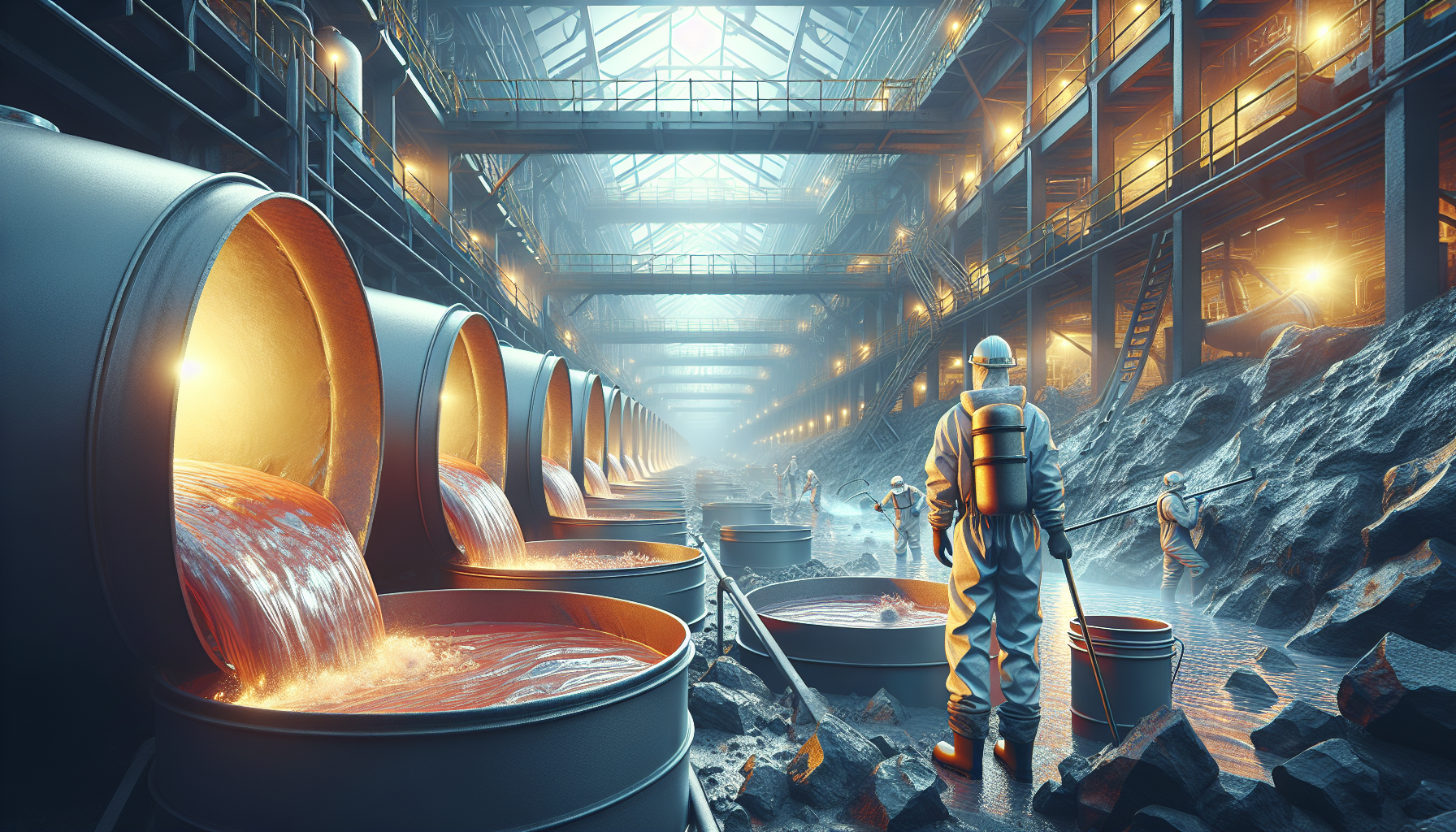
Hydrometallurgy involves the use of aqueous solutions to extract, purify, and recover metals and minerals from their ores. It is an important process in the mining industry, particularly for the extraction of valuable metals from low-grade ores or from ores that are not amenable to traditional smelting and roasting methods.
Aqueous Extraction
Aqueous extraction refers to a process in which water, often in the form of a solution, is used as the primary medium for extracting valuable compounds, such as metals or minerals, from a solid material, typically an ore. This method is commonly employed in various industries including mining, agriculture, and pharmaceuticals. Here are some key aspects of aqueous extraction:
- Medium of Extraction: Water serves as the solvent or medium for the extraction process. It is chosen for its ability to dissolve a wide range of substances, making it highly versatile.
- Applicability: Aqueous extraction is widely used in industries such as mining, where it forms the basis of hydrometallurgical processes. It is also utilized in agricultural practices to extract plant-derived compounds and in pharmaceuticals to isolate active ingredients from plants.
- Dissolution Mechanism: Water’s unique molecular structure allows it to interact with various compounds through hydrogen bonding and other intermolecular forces. This facilitates the dissolution of various substances.
- Selective Extraction: Depending on the specific properties of the solute (the substance being extracted) and the solvent (water), aqueous extraction can be designed to dissolve certain compounds while leaving others behind selectively.
- Controlled Conditions: Factors such as temperature, pressure, and pH levels can be controlled to optimize the extraction process. These parameters are adjusted based on the solubility characteristics of the target compound.
- Leaching in Hydrometallurgy: In mining and metallurgical processes, aqueous extraction is fundamental to the leaching step. This involves dissolving metals from ores using acidic or alkaline solutions.
- Recycling and Sustainability: Aqueous extraction is often favoured for its environmental benefits, especially in contrast to more energy-intensive processes like smelting. Additionally, it plays a crucial role in recycling metals from secondary sources like electronic waste.
- Post-Extraction Processing: After extraction, the resulting solution may undergo further processing steps, such as separation, purification, and recovery of the target compounds.
- Environmental Considerations: The environmental impact of aqueous extraction is a critical consideration. Proper management of wastewater and tailings, as well as adherence to environmental regulations, are essential.
- Applications Beyond Mining: Aqueous extraction is not limited to mining and metallurgy. It is also extensively used in fields like agriculture for extracting nutrients from soil and in pharmaceuticals for isolating active ingredients from natural sources.
Overall, aqueous extraction is a versatile and environmentally conscious method used across various industries to recover valuable compounds from solid materials. It plays a particularly crucial role in the mining industry through processes like hydrometallurgy.
Suitable for Complex Ores
Hydrometallurgy, as a method for extracting metals from ores, is especially well-suited for dealing with complex ores. Here’s why:
Low-Grade Ores: Hydrometallurgy is effective for ores that have a low metal content. It allows for the extraction of valuable metals from ore grades that might be uneconomical to process through other methods like smelting.
Refractory Ores: Some ores have properties that make them resistant to traditional extraction methods like roasting or smelting. Hydrometallurgy provides an alternative approach to recover metals from such refractory ores.
Variable Mineralogy: Complex ores often have a varied mineralogical composition. Hydrometallurgical processes can be adapted to accommodate this variability, making it a flexible option.
High Sulfur or Arsenic Content: Ores with high sulphur or arsenic content can be problematic for smelting processes due to the environmental and safety concerns associated with emissions. Hydrometallurgy offers a cleaner alternative for extracting metals from such ores.
Diverse Metal Content: Complex ores may contain multiple metals, each requiring different extraction methods. Hydrometallurgy allows for the selective extraction of specific metals, even when they are present in a mixture.
Chemical Stability: Some ores contain minerals that are chemically stable and resistant to heat. This can make smelting or other high-temperature processes impractical. Hydrometallurgy operates at relatively lower temperatures, making it suitable for these ores.
Fine Particle Size: Ores with fine particle size or complex mineralogical structures can be challenging to process through traditional methods. Hydrometallurgy, with its focus on leaching, can effectively handle these characteristics.
Environmental Considerations: As environmental regulations become more stringent, the use of hydrometallurgy is favoured over smelting in many cases due to its lower environmental impact.
Secondary Sources: Hydrometallurgy is also employed in recycling efforts, especially for electronic waste and scrap metal. These sources can contain a mix of different metals, which is well-suited to the selective extraction capabilities of hydrometallurgical processes.
Continuous Improvement and Adaptability: Researchers and engineers are continually developing and refining hydrometallurgical techniques to handle even more complex ores. This adaptability ensures that it remains a viable option for a wide range of ore types.
In summary, hydrometallurgy is a versatile and adaptable approach to extracting metals from ores, making it well-suited for ores with complex characteristics. It offers an efficient and environmentally conscious alternative for processing ores that may be challenging to handle through other methods.
Ore Preparation
Ore preparation is a crucial step in the extraction of metals from their ores, particularly in hydrometallurgical processes. It involves various mechanical and physical processes to ensure that the ore is in a suitable form for subsequent treatment. Here are the key aspects of ore preparation:
- Particle Size Reduction: The primary goal of ore preparation is to reduce the size of the ore particles. This is typically achieved through crushing and grinding. Crushing involves reducing large chunks of ore to smaller pieces while grinding further reduces the particle size to increase the surface area available for chemical reactions.
- Liberation of Minerals: Crushing and grinding help to liberate valuable minerals from the host rock. This is essential because metals are typically locked within the mineral matrix of the ore and need to be made accessible for extraction.
- Optimal Particle Size: The ore is ground to a specific particle size range based on the characteristics of the ore and the requirements of the subsequent extraction process. The optimal size varies depending on factors like mineralogy, leaching kinetics, and downstream processing methods.
- Uniformity and Consistency: Achieving a consistent particle size distribution is crucial for ensuring uniform leaching and extraction rates. Uniformity helps in controlling the kinetics of the leaching process.
- Minimization of Fines: Fines, or very small particles, can pose challenges in subsequent processing steps, including filtration and separation. Therefore, efforts are made to minimize the generation of fines during ore preparation.
- Avoidance of Overgrinding: Overgrinding can lead to excessive energy consumption and unnecessary wear on equipment. Proper control of grinding processes is essential to avoid this.
- Energy Efficiency Considerations: Engineers aim to optimize the energy input required for ore preparation. This involves selecting appropriate crushing and grinding equipment and optimizing operating conditions.
- Dry and Wet Processing: Depending on the characteristics of the ore and the extraction process, ore preparation can be conducted using either dry or wet methods. Dry processing is generally more energy-intensive but may be preferred for certain ores.
- Screening and Classification: In addition to crushing and grinding, screening and classification processes may be employed to segregate particles of different sizes. This helps in achieving a more controlled particle size distribution.
- Adaptability to Ore Characteristics: Ore preparation methods are tailored to the specific characteristics of the ore being processed. This includes considerations such as hardness, mineral composition, and liberation characteristics.
Overall, ore preparation is a critical step that sets the stage for successful metal extraction. It ensures that the ore is in an optimal form for subsequent chemical processes, allowing for efficient and effective extraction of valuable metals.
Leaching Process
The leaching process is a fundamental step in hydrometallurgy, where a liquid solvent (usually water-based) is used to dissolve minerals from an ore. This process is crucial for extracting valuable metals and minerals from ores that may not be suitable for traditional smelting methods. Here’s an overview of the leaching process:
- Introduction of Solvent: The process begins by introducing a leaching agent, which is typically a liquid (such as water) containing a chemical reagent, to the finely ground ore. The choice of leaching agent depends on the specific ore and the target metal.
- Contact between Solvent and Ore: The solvent interacts with the ore, dissolving the target minerals. This interaction is facilitated by chemical reactions that occur at the surface of the ore particles.
- Selective Leaching: Depending on the nature of the ore and the leaching agent, the process can be designed to selectively dissolve specific minerals, leaving others behind. This selectivity is crucial for isolating the desired metal from the ore mixture.
- Leaching Kinetics: The rate at which leaching occurs is influenced by factors such as temperature, pressure, particle size, and the concentration of the leaching agent. Engineers carefully control these parameters to optimize the leaching process.
- pH Control: The pH of the leaching solution is an important factor. It can influence the solubility of different minerals and affect the overall efficiency of the leaching process. Adjusting and maintaining the pH within a specific range is often necessary.
- Redox Potential: In some cases, especially with complex ores, controlling the redox potential (oxidation-reduction potential) of the leaching environment is critical for successful mineral dissolution.
- Duration of Leaching: The leaching process may take place over some time, ranging from hours to days or even longer, depending on factors like ore composition, leaching agent, and desired extraction rate.
- Solution Collection: The leach solution, now enriched with the dissolved minerals, is collected and transported for further processing. This solution is often referred to as the pregnant solution.
- Impurity Management: Along with the target minerals, the leach solution may also contain impurities. These impurities can be unwanted minerals or elements that were also dissolved during the leaching process. Additional steps may be required to remove or separate them.
- Post-Leaching Processing: Following leaching, further steps may be needed to recover the target metal from the pregnant solution. This can include methods like precipitation, solvent extraction, ion exchange, or electrowinning, depending on the specific extraction process.
The leaching process is highly adaptable and can be tailored to suit various types of ores and metals. Engineers and metallurgists carefully design and monitor leaching processes to maximize efficiency, minimize environmental impact, and ensure worker safety. Additionally, stringent environmental regulations play a significant role in shaping the practices of leaching in modern mining operations.
Leaching Agents
Leaching agents are chemical substances used in the hydrometallurgical process to dissolve and extract valuable minerals or metals from ores. The choice of leaching agent depends on the specific ore composition, the target metal, and the desired extraction process. Here are some common leaching agents:
- Sulfuric Acid (H2SO4): Sulfuric acid is one of the most widely used leaching agents in hydrometallurgy. It is highly effective for extracting metals like copper, nickel, uranium, and zinc from their ores. Sulfuric acid is known for its strong oxidizing properties.
- Hydrochloric Acid (HCl): Hydrochloric acid is used for leaching certain ores, particularly those containing metals like iron, manganese, and aluminium. It is also employed in the pickling of steel and in various chemical processes.
- Nitric Acid (HNO3): Nitric acid is used in selective leaching processes, often for the extraction of metals like gold and platinum. It is a strong oxidizing agent and can dissolve noble metals.
- Acetic Acid (CH3COOH): Acetic acid, commonly known as vinegar, is used for leaching metals like aluminium and copper. In some cases, it is employed as a mild leaching agent, particularly for secondary sources.
- Ammonium Carbonate ((NH4)2CO3): This leaching agent is used in some cases for the extraction of metals like uranium and thorium. It is particularly effective for ores with complex mineralogy.
- Cyanide (CN-): Cyanide solutions, such as sodium cyanide (NaCN) or potassium cyanide (KCN), are used for leaching gold and silver from their ores. This process is known as cyanidation and is widely used in gold mining operations.
- Thiourea (NH2CSNH2): Thiourea is an alternative to cyanide for gold leaching. It is less toxic and environmentally friendlier, but it is less commonly used due to its higher cost.
- Halides (Chlorine, Bromine, Iodine): Halides can be used as leaching agents for certain metals like gold and silver. Chlorine gas (Cl2) or solutions of hypochlorite (ClO-) are sometimes employed.
- Organic Acids: Organic acids like citric acid, oxalic acid, and malic acid can be used for leaching certain metals, especially in bioleaching processes where microorganisms assist in the extraction.
- Complexing Agents: Compounds like EDTA (ethylenediaminetetraacetic acid) and DTPA (diethylenetriaminepentaacetic acid) can form stable complexes with metal ions, aiding in their dissolution.
It’s important to note that the choice of leaching agent depends on factors such as the type of ore, the desired metal, environmental considerations, and safety regulations. Engineers and metallurgists carefully select and optimize leaching agents to ensure efficient and effective extraction processes while minimizing environmental impact and ensuring worker safety.
Separation and Purification
Separation and purification are critical steps in the hydrometallurgical process, following leaching. These steps are essential for isolating the desired metal from impurities and ensuring a high-purity final product. Here are the key aspects of separation and purification:
- Precipitation: This method involves the addition of a chemical reagent to the solution obtained from leaching. The reagent reacts with specific ions in the solution, causing them to form a solid precipitate. The precipitate can then be separated from the solution through methods like filtration or settling.
- Filtration: Filtration is a common technique for separating solids from liquids. In hydrometallurgy, it is used to separate precipitated solids from the leach solution. This ensures that impurities are effectively removed.
- Sedimentation: Sedimentation is a process where solid particles settle at the bottom of a container due to gravity. This method is often used in conjunction with precipitation to allow the separation of precipitated solids from the solution.
- Centrifugation: Centrifugation involves spinning a mixture at high speeds. The centrifugal force generated causes denser particles to move outward and settle, facilitating separation from the solution.
- Solvent Extraction: Solvent extraction is a process where specific metal ions are selectively transferred from an aqueous phase into an organic solvent. This is achieved by using an organic extractant that forms a complex with the metal ions. The organic phase is then separated from the aqueous phase, allowing for further processing.
- Ion Exchange: Ion exchange involves passing the leach solution through a resin or other material containing specific ions. These ions are exchanged with ions of the same charge in the solution. This process is used for selectively removing impurities from the solution.
- Membrane Technologies: Membrane filtration methods, such as ultrafiltration and reverse osmosis, are employed for separating molecules based on size or charge. These technologies can be used to concentrate and purify the leach solution.
- Crystallization: By controlling temperature and concentration, it is possible to induce the crystallization of specific compounds from a solution. This technique is used for separating certain salts and minerals from the solution.
- Electrolysis: Electrolysis is used for the purification and recovery of metals from solutions. It involves passing an electric current through a solution to cause the deposition of metal ions onto an electrode.
- Evaporation: Evaporation is employed to concentrate a solution by removing the solvent (usually water) through heating. This process is used in cases where increasing the concentration of metal ions is necessary before further processing.
- Drying and Calcination: After separation, the isolated product may undergo drying or calcination to remove residual moisture or solvents, and to prepare it for further processing or final use.
These separation and purification methods are chosen based on the specific characteristics of the leach solution and the target metal. Engineers and metallurgists carefully design and optimize these processes to ensure high-purity final products for various industrial applications. Additionally, environmental considerations and safety regulations play a significant role in shaping the practices of separation and purification in modern mining operations.
Metal Recovery
Metal recovery is the final step in the hydrometallurgical process, where the target metal is isolated from the purified solution obtained after leaching and subsequent separation processes. This step is crucial for obtaining a high-purity metal suitable for further processing or final use. Here are the key aspects of metal recovery:
- Precipitation: In many cases, metal recovery starts with the precipitation of the target metal from the purified solution. A chemical reagent is added to the solution, causing the metal ions to form a solid compound. This precipitate can then be separated from the solution.
- Filtration or Sedimentation: The precipitate obtained from the precipitation process is typically separated from the solution through filtration or sedimentation. Filtration involves passing the mixture through a porous medium to capture the solid particles, while sedimentation relies on gravity to allow the solid particles to settle at the bottom.
- Smelting or Melting: Depending on the nature of the metal and the desired final form, the precipitate may undergo smelting or melting. Smelting involves heating the precipitate to high temperatures to separate the metal from impurities, while melting involves heating the precipitate to its melting point to obtain a liquid metal.
- Electrowinning: Electrowinning is an electrochemical process used to recover metals from a solution. It involves passing an electric current through the solution, causing the metal ions to plate out onto an electrode. This method is particularly effective for metals like copper and nickel.
- Electrorefining: Electrorefining is a variation of electrowinning used to purify metals. It involves passing a current through an impure metal anode and a cathode of the same metal. The metal ions from the anode dissolve and deposit on the cathode, resulting in a higher-purity metal.
- Cementation: Cementation is a process where a more reactive metal is used to replace a less reactive metal in a solution. The more reactive metal bonds with the metal ions in the solution, forming a solid compound that can be easily separated.
- Crystallization: For certain metals, particularly those that form salts, crystallization can be used for recovery. By carefully controlling factors like temperature and concentration, the metal can be induced to form crystals, which can then be separated from the solution.
- Refining and Alloying: Depending on the desired final product, the recovered metal may undergo further refining processes to achieve the desired purity. Additionally, metals may be alloyed with other elements to create materials with specific properties.
- Environmental Considerations: Metal recovery processes must be designed to minimize environmental impact. This includes managing and treating any residues or by-products generated during the recovery process.
- Final Product Form: The recovered metal may be obtained in various forms, such as ingots, sheets, powders, or custom shapes, depending on its intended use.
Metal recovery is a critical step in the overall hydrometallurgical process, and the specific methods employed depend on factors like the target metal, the characteristics of the leach solution, and the desired final product. Engineers and metallurgists carefully design and optimize these processes to ensure high-purity metal recovery for various industrial applications. Additionally, adherence to environmental regulations and safety considerations is of paramount importance in modern mining operations.
Applicable to Secondary Sources
Hydrometallurgy is highly applicable to secondary sources, which refer to materials that have already been used or discarded and can be a potential source of valuable metals. These secondary sources can include scrap metal, electronic waste (e-waste), spent batteries, and other materials containing recoverable metals. Here’s why hydrometallurgy is well-suited for these materials:
- Diverse Metal Content: Secondary sources often contain a mix of different metals. Hydrometallurgy’s selective extraction capabilities allow for the recovery of specific metals from this heterogeneous mixture.
- Complex Composition: Materials like e-waste can be complex, with a wide range of components. Hydrometallurgical processes can be tailored to effectively dissolve and recover metals from this varied composition.
- Low Environmental Impact: Compared to high-temperature processes like smelting, hydrometallurgy typically has a lower environmental impact. It produces fewer emissions and can be more energy-efficient, making it a more sustainable choice for secondary sources.
- Reduced Energy Consumption: Many secondary sources do not require the high temperatures associated with smelting. Hydrometallurgy often operates at lower temperatures, which can lead to significant energy savings.
- Avoidance of Toxic Emissions: Secondary sources, such as e-waste, can contain hazardous substances. Hydrometallurgical processes can be designed to minimize the release of these toxins into the environment.
- Recovery of Precious Metals: Secondary sources, particularly electronic waste, can contain precious metals like gold, silver, and platinum. Hydrometallurgy provides an effective means of recovering these valuable metals.
- Selective Recovery of Specific Metals: Depending on the composition of the secondary source, hydrometallurgical processes can be fine-tuned to selectively recover specific metals of interest, maximizing resource utilization.
- Compatibility with Recycling Initiatives: As the demand for recycling and sustainable resource management increases, hydrometallurgy aligns well with these initiatives. It facilitates the recovery of valuable metals from discarded materials.
- Safety Considerations: Handling secondary sources, especially e-waste, requires careful consideration of safety due to potential hazards. Hydrometallurgical processes can be designed with safety protocols in mind.
- Waste Reduction and Circular Economy: Hydrometallurgy supports the principles of the circular economy by reusing and recycling materials. It reduces the need for extracting metals from primary ores, thereby conserving natural resources.
Overall, hydrometallurgy is a versatile and sustainable approach for recovering metals from secondary sources. Its adaptability, lower environmental impact, and compatibility with recycling efforts make it an important tool in the pursuit of sustainable resource management.
Environmental Considerations
Environmental considerations are paramount in hydrometallurgy and mining operations in general. The industry recognizes the importance of minimizing environmental impact and adhering to sustainable practices. Here are some key environmental considerations in hydrometallurgy:
- Waste Management: Proper management of waste materials, including tailings and residues from the leaching and separation processes, is crucial. This includes containment, treatment, and disposal methods to prevent environmental contamination.
- Water Usage and Quality: Hydrometallurgical processes often require substantial amounts of water. It’s essential to manage water resources responsibly, employing measures like recycling, treating wastewater, and ensuring that discharged water meets regulatory standards.
- Chemical Usage and Handling: The choice and handling of chemicals, including leaching agents and reagents, are critical. Environmentally-friendly alternatives and safe handling practices help minimize potential harm to ecosystems.
- Energy Efficiency: Optimizing energy usage is crucial for reducing the carbon footprint of hydrometallurgical operations. This includes the use of energy-efficient equipment and the implementation of energy-saving technologies.
- Air Quality and Emissions: Controlling emissions, particularly those related to smelting or other high-temperature processes, is vital. Employing emission control technologies helps minimize air pollution and reduce the impact on local air quality.
- Biodiversity and Habitat Protection: Mining operations can potentially disrupt local ecosystems and habitats. Environmental assessments and mitigation measures are conducted to minimize the impact on biodiversity and protect sensitive areas.
- Reclamation and Rehabilitation: Responsible mining companies engage in reclamation efforts, which involve restoring mined areas to a condition that is compatible with natural ecosystems. This includes re-vegetation, soil restoration, and habitat reconstruction.
- Compliance with Regulations: Adherence to local, national, and international environmental regulations is non-negotiable. This includes obtaining the necessary permits, reporting requirements, and following best practices outlined by regulatory bodies.
- Community Engagement and Social Responsibility: Engaging with local communities and respecting their concerns is integral to sustainable mining practices. Establishing positive relationships with communities can lead to better environmental stewardship and overall project success.
- Research and Innovation for Sustainability: Ongoing research and development efforts focus on finding innovative technologies and processes that further enhance the environmental performance of hydrometallurgical operations.
- Life Cycle Assessment (LCA): Conducting a comprehensive LCA helps evaluate the environmental impact of a mining operation from the initial exploration phase to closure and reclamation.
By prioritizing these environmental considerations, mining companies can contribute to sustainable practices, minimize their ecological footprint, and ensure that operations are conducted in a responsible and environmentally friendly manner. Adherence to these principles is essential for the long-term viability and acceptance of mining activities.
Tailings Management
Tailings management is a critical aspect of mining operations, aiming to safely store and manage the residues produced during the extraction and processing of ores. Proper management of tailings is essential to prevent environmental harm and protect local communities. Here are the key aspects of tailings management:
- Definition of Tailings: Tailings are the finely ground rock and mineral waste materials that remain after valuable metals or minerals have been extracted from the ore during processing.
- Impoundment Design: Tailings are typically stored in impoundments, which are constructed with engineered embankments and containment structures. These impoundments are designed to safely contain and manage the tailings.
- Liner Systems: To prevent seepage and potential contamination of groundwater, modern tailings impoundments are often lined with impermeable materials such as clay, plastic liners, or geosynthetic liners.
- Water Management: Water is often used in the processing of ores and can be present in tailings. Proper water management strategies, including the collection and treatment of excess water, are crucial to prevent leakage and maintain stability in the impoundment.
- Monitoring and Surveillance: Regular monitoring of tailings facilities is essential to detect any signs of potential failure or environmental risks. This includes the use of instrumentation, inspections, and periodic assessments of the impoundment’s integrity.
- Emergency Response Plans: Tailings facilities should have detailed emergency response plans in place in case of unexpected events, such as extreme weather, seismic activity, or equipment failure, to ensure the safety of nearby communities and the environment.
- Closure and Rehabilitation: Tailings facilities have a finite operational life. Proper planning for the closure and rehabilitation of the facility is essential. This involves activities such as covering and contouring the impoundment, stabilizing the site, and implementing vegetation and habitat restoration.
- Geotechnical Considerations: Understanding the geotechnical properties of the tailings, including factors like density, compaction, and stability, is crucial in designing and managing impoundments.
- Dust and Air Quality Management: Dust emissions from dry tailings can be a concern for air quality. Dust control measures, such as vegetation cover or dust suppressants, may be employed to mitigate potential impacts.
- Community Engagement and Communication: Transparency and open communication with local communities and stakeholders about tailings management practices and safety measures are essential for building trust and addressing concerns.
- Regulatory Compliance: Adherence to local and national regulations governing tailings management is mandatory. This includes obtaining permits, conducting environmental impact assessments, and meeting specific safety and environmental standards.
- Advancements in Tailings Technology: Ongoing research and development efforts aim to improve tailings management technologies and practices, with a focus on minimizing environmental impact and enhancing safety.
By implementing effective tailings management practices, mining companies can mitigate potential environmental risks and ensure the long-term sustainability of their operations. Adherence to best practices and continuous improvement in tailings management is critical for the responsible and ethical conduct of mining activities.
Discover more from AllMinings
Subscribe to get the latest posts sent to your email.


