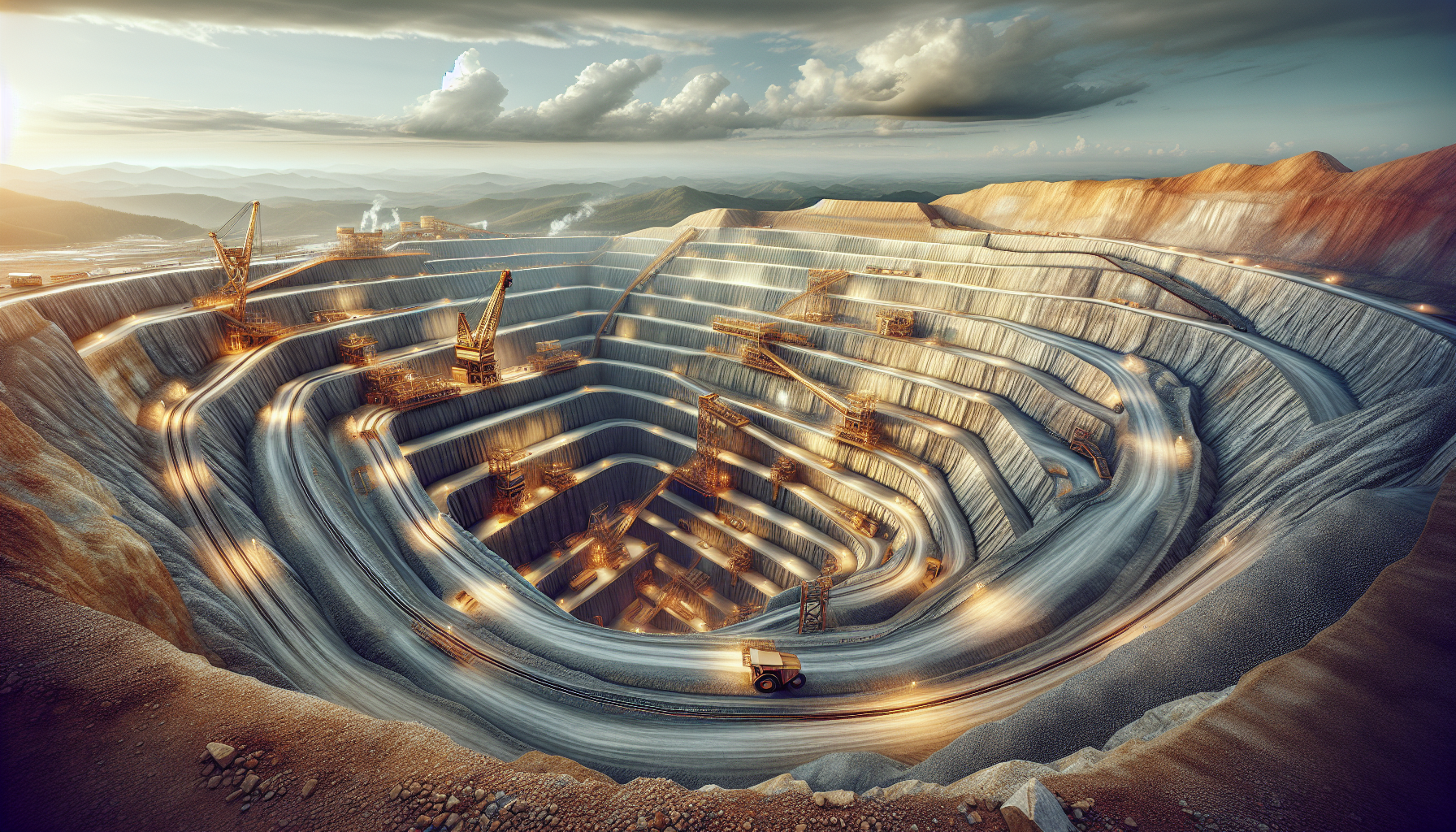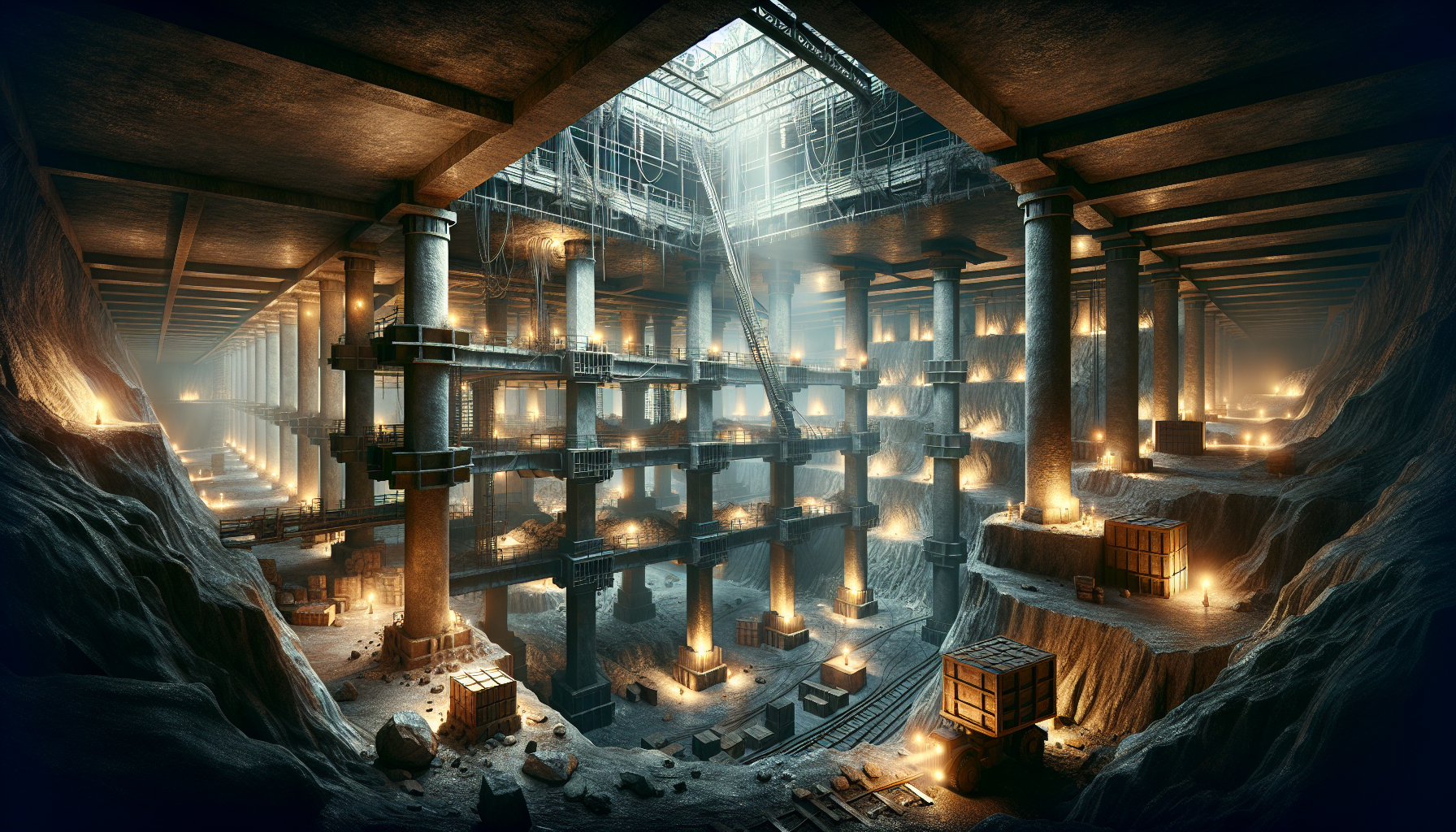
Weak rocks refer to geological formations or strata that have lower mechanical strength and stability compared to surrounding rock formations. These rocks can be problematic for mining operations because they are more prone to fracturing, collapsing, or shifting under stress. Dealing with weak rocks requires careful planning and engineering techniques to ensure the safety of workers and the stability of the mine.
Here are some common types of weak rocks encountered in mining:
Shale
Shale is a fine-grained sedimentary rock characterized by its composition primarily of clay minerals. It is one of the most abundant types of sedimentary rocks in the Earth’s crust. Shale forms from the compaction of mud and clay-sized mineral particles over long periods of time.
Key characteristics of shale include:
- Texture: Shale has a very fine-grained texture, meaning that its individual mineral particles are too small to be easily seen with the naked eye.
- Color: Shale can vary widely in color, depending on the mineral content. It can range from gray and black to brown, red, and green. Organic material and minerals like iron oxide can also give shale distinctive colors.
- Composition: Shale is primarily composed of clay minerals such as illite, kaolinite, montmorillonite, and others. It may also contain small amounts of other minerals like quartz, feldspar, and calcite.
- Layering: Shale often exhibits distinct layering, or bedding planes, which are a result of the fine layers of sediment that accumulate over time. These layers can sometimes be split along the bedding planes, making shale useful for roofing and other applications.
- Fossil Content: Shale is known for preserving fossils exceptionally well. This is because its fine-grained nature allows for fine details to be captured, and the compacting process helps to retain the shape of organic remains.
- Formation: Shale is typically formed in environments with slow-moving water, such as lakes, river deltas, or marine basins. It can also form in deeper oceanic environments, where fine particles settle over time.
- Uses: Shale has several practical applications. It’s used in the construction industry for making bricks, tiles, and ceramics. In some regions, it’s used as a source of natural gas through a process called hydraulic fracturing, or “fracking.”
- Challenges in Mining: Shale is considered a weak rock, which means it can be prone to fracturing or crumbling under pressure. This can present challenges in mining operations, requiring additional support measures for stability.
Overall, shale plays a significant role in Earth’s geological history, preserving valuable information about past environments and life forms. Additionally, its economic and industrial applications make it a rock of considerable importance in various industries.
Siltstone
Siltstone is a sedimentary rock characterized by its fine-grained composition, primarily consisting of silt-sized particles. It forms through the accumulation and compaction of very fine mineral and organic particles, primarily silicates, in depositional environments.
Here are some key characteristics of siltstone:
- Texture: Siltstone has a fine-grained texture, with individual mineral particles being smaller than those found in sandstone but larger than those in shale. This gives it a smooth, often slightly gritty feel.
- Color: Siltstone can exhibit a wide range of colors, including gray, brown, red, green, and even purple. These colors are influenced by the mineral content and environmental conditions during its formation.
- Composition: Siltstone is primarily composed of silt-sized particles, which are finer than sand but coarser than clay. These particles are usually composed of minerals like quartz, feldspar, mica, and clay minerals.
- Layering: Similar to shale, siltstone often displays distinct layering due to the accumulation of fine layers of sediment. This characteristic makes it relatively easy to split along these bedding planes.
- Formation: Siltstone forms in environments with slow-moving water, such as riverbanks, floodplains, and shallow marine settings. It can also develop in lakes and lagoons where fine sediments settle over time.
- Fossil Content: Like shale, siltstone can preserve fossils, especially in fine detail. However, the preservation may not be as remarkable as in shale due to the slightly coarser grain size.
- Uses: Siltstone is utilized in various applications. It can be used as a building material for structures like walls and paving. Some types of siltstone, due to their durability and attractive appearance, are also used as decorative stones.
- Strength: While siltstone is generally stronger than shale, it is still considered a relatively weak rock compared to harder sedimentary rocks like sandstone or limestone. It can fracture and deform under pressure.
Overall, siltstone plays an important role in Earth’s geological history, providing valuable insights into past depositional environments. Its fine-grained nature and range of colors also make it a rock of interest for both scientific study and practical applications in construction and landscaping.
Mudstone
Mudstone is a fine-grained sedimentary rock that forms from the gradual accumulation and compaction of very fine mineral and organic particles. It is characterized by its high content of clay-sized particles and is considered one of the finest-grained sedimentary rocks.
Here are some key characteristics of mudstone:
- Texture: Mudstone has an extremely fine-grained texture, with individual mineral particles so small that they are not easily discernible by the naked eye. It feels smooth and lacks the grittiness often associated with coarser-grained rocks.
- Color: Mudstone can exhibit a range of colors, including gray, brown, red, green, and even blue or purple. These colors are influenced by the mineral content and any organic material present during its formation.
- Composition: The primary constituents of mudstone are clay minerals, particularly those like illite, kaolinite, montmorillonite, and others. It may also contain tiny amounts of other minerals like quartz, feldspar, and organic matter.
- Layering: Mudstone often displays distinct layering, similar to shale and siltstone, due to the accumulation of fine layers of sediment over time. These layers can be split along bedding planes.
- Formation: Mudstone forms in environments with slow-moving or still water, such as the bottom of calm lakes, quiet river deltas, and the deep ocean floor. It is also common in marine basins and lagoons where fine sediments settle and accumulate.
- Fossil Content: Like shale and siltstone, mudstone can preserve fossils, albeit with slightly less detail compared to finer-grained rocks. It is especially known for preserving small or delicate fossils.
- Uses: Mudstone is not typically used as a building material due to its low strength and fine-grained nature. However, it is valued in scientific and geological studies for its ability to retain clues about past environments and life forms.
- Strength: Mudstone is relatively weak compared to coarser-grained rocks like sandstone or conglomerate. It can easily deform under pressure and is not suitable for load-bearing applications.
Mudstone is an important rock in understanding Earth’s geological history, providing critical information about past depositional environments, climates, and ecosystems. While not often used in construction, its scientific value is significant, and it plays a crucial role in the field of sedimentary geology.
Unconsolidated Deposits
Unconsolidated deposits refer to loose or poorly compacted materials found on the Earth’s surface. These deposits have not undergone the process of lithification, which is the transformation of loose sediments into solid rock through compaction and cementation. As a result, unconsolidated deposits retain a loose and granular structure.
Here are some key characteristics and examples of unconsolidated deposits:
- Composition: Unconsolidated deposits can consist of a wide range of materials, including loose sands, gravels, clays, silts, and organic matter. They may also contain rocks, minerals, and debris that have been transported and deposited by natural processes like water, wind, or glaciers.
- Texture: These deposits typically have a granular texture, with individual particles easily distinguishable. The size and shape of the particles vary depending on the specific deposit and the processes that formed it.
- Formation: Unconsolidated deposits form through various natural processes, such as erosion, weathering, transportation, and deposition. They are often found in environments like riverbeds, floodplains, alluvial fans, coastal areas, and glacial moraines.
- Lack of Cohesion: One of the defining characteristics of unconsolidated deposits is their lack of cohesion. Unlike consolidated rocks, unconsolidated materials do not have a binding agent holding them together, making them susceptible to movement and deformation.
- Permeability: Unconsolidated deposits often have high permeability, allowing fluids (such as water) to flow through them relatively easily. This can have implications for groundwater movement and aquifer properties.
- Engineering Considerations: When encountered in construction or engineering projects, unconsolidated deposits can present challenges. They may require additional measures for stabilization, such as compaction, drainage systems, or retaining structures.
Examples of unconsolidated deposits include:
- Alluvial Deposits: These are materials deposited by flowing water, often found in river valleys, floodplains, and deltas. They can include a mix of sand, silt, clay, and gravel.
- Glacial Deposits: Materials deposited by glaciers, including till (a mixture of clay, silt, sand, and rocks) and glacial outwash (sorted sediments deposited by meltwater streams).
- Aeolian Deposits: These are sediments transported and deposited by wind, such as sand dunes in deserts or coastal areas.
- Colluvial Deposits: Accumulations of material at the base of slopes due to gravity-driven processes like landslides or erosion.
- Marine Deposits: Sediments found along coastlines and the seafloor, which can include sands, silts, clays, and shells.
Unconsolidated deposits play a crucial role in Earth’s surface processes and are important in various industries, including construction, agriculture, and natural resource exploration. Understanding their characteristics and behavior is essential for effective land use planning and engineering projects.
Fault Zones
Fault zones are geological features characterized by fractures or zones of weakness in the Earth’s crust where movement has occurred. They are areas where rocks on either side of the fracture have shifted relative to each other. Faults play a significant role in the study of tectonics and are important in understanding the Earth’s dynamic processes.
Here are some key characteristics and information about fault zones:
- Formation: Fault zones form due to tectonic forces, which can cause rocks to break and move along fractures. These forces can be compressional (pushing together), extensional (pulling apart), or strike-slip (horizontal sliding past one another).
- Fault Plane: The fault plane is the surface along which movement has occurred. It can vary in size from small, nearly imperceptible fractures to large, prominent features.
- Types of Faults:
- Normal Faults: These occur in extensional environments, where the Earth’s crust is being pulled apart. The hanging wall (the block above the fault plane) moves downward relative to the footwall (the block below the fault plane).
- Reverse Faults (Thrust Faults): These occur in compressional environments, where the Earth’s crust is being pushed together. The hanging wall moves upward relative to the footwall.
- Strike-Slip Faults: These occur in environments where there is horizontal shearing. The movement is primarily horizontal, with little vertical movement along the fault plane. Examples include the San Andreas Fault in California.
- Fault Trace: This is the line on the Earth’s surface that represents the intersection of a fault plane with the ground. It’s the visible expression of a fault on the surface.
- Fault Scarp: In some cases, especially with larger movements, the displacement along a fault can create a steep slope or escarpment known as a fault scarp.
- Rocks and Materials: Fault zones may contain a variety of rock types, including fractured and brecciated rocks, gouge (fine-grained material resulting from grinding of rocks along the fault plane), and fault breccia (angular rock fragments created by faulting).
- Seismic Activity: Fault zones are often associated with seismic activity, including earthquakes. The release of accumulated stress along a fault plane causes ground shaking.
- Engineering Considerations: Fault zones can pose challenges in construction and engineering projects. It’s important to assess the potential for fault activity in areas where human activities are planned.
- Natural Resources: Fault zones can be associated with the movement of fluids in the Earth’s crust. This can lead to the concentration of minerals or the accumulation of hydrocarbons in fault-related structures.
Fault zones are integral to the study of plate tectonics and the movement of the Earth’s lithosphere. They provide valuable insights into the geological history and processes that have shaped the Earth’s surface over millions of years. Understanding fault zones is also crucial for assessing seismic hazards and mitigating risks in areas prone to earthquakes.
Weathered Rock
Weathered rock refers to rock material that has undergone physical, chemical, and biological processes as a result of exposure to the Earth’s atmosphere and environmental conditions over an extended period of time. These processes alter the original properties and appearance of the rock.
Here are some key characteristics and information about weathered rock:
- Types of Weathering:
- Mechanical Weathering: This involves the physical breakdown of rock into smaller fragments without changing its mineral composition. Processes like freeze-thaw cycles, abrasion by wind and water, and root action contribute to mechanical weathering.
- Chemical Weathering: Chemical reactions alter the mineral composition of the rock. Common agents of chemical weathering include water, oxygen, carbon dioxide, acids from rainfall, and biological activity.
- Biological Weathering: Living organisms such as plants and burrowing animals can contribute to weathering by physically breaking apart rocks or through the release of chemicals that promote chemical weathering.
- Texture and Appearance: Weathered rock often exhibits a weathering rind or surface alteration that is different from the unweathered interior. This may include a roughened texture, color changes, and the development of mineral coatings.
- Color Changes: Weathering can lead to changes in the color of the rock. For example, iron-rich minerals can rust, leading to reddish-brown discoloration.
- Fracturing and Cracking: Weathered rock may display increased fracturing and cracking due to the expansion and contraction associated with temperature fluctuations and other weathering processes.
- Porosity and Permeability: Weathering can increase the porosity (the presence of pores or open spaces) and permeability (the ability of fluids to flow through a material) of rocks. This can affect groundwater flow and storage.
- Soil Formation: Weathered rock is a crucial component in the formation of soils. The weathered material, known as regolith, provides the basis for soil development, supporting plant growth and ecosystem functions.
- Strength and Stability: Weathered rock tends to be weaker and less stable compared to unweathered rock. This can have implications for engineering and construction projects in areas with extensive weathering.
- Erosion and Sedimentation: Weathering contributes to the generation of sediments that can be transported and deposited by natural processes such as rivers, wind, and glaciers.
- Landforms: Weathering plays a key role in the formation of various landforms, including slopes, valleys, and erosional features like arches and hoodoos.
- Time Scale: Weathering is a gradual process that occurs over long periods of time. It is influenced by factors such as climate, geology, and the types of minerals present in the rock.
Weathered rock is a fundamental aspect of Earth’s surface processes and is integral to understanding landscapes, soil formation, and the cycling of minerals in the Earth system. It is a key consideration in fields ranging from geology and geomorphology to agriculture and civil engineering.
Shear Zones
Shear zones are geological features characterized by intense, horizontal movement along a plane of weakness in the Earth’s crust. These zones represent areas where rocks have experienced significant deformation due to the shearing forces that act parallel to the fault plane. Shear zones play a crucial role in understanding the Earth’s dynamic processes and tectonic activity.
Here are some key characteristics and information about shear zones:
- Formation: Shear zones form due to the application of horizontal stress, resulting in the relative movement of rocks along a nearly horizontal fault plane. This movement is primarily characterized by shearing or sliding action.
- Types of Shear Zones:
- Ductile Shear Zones: These exhibit a more gradual deformation, with rocks behaving in a plastic or ductile manner. This can result in features like foliation and lineation.
- Brittle Shear Zones: These involve the fracturing and breaking of rocks, with movement occurring along faults. Brittle shear zones are characterized by fault gouge, breccia, and other indications of brittle deformation.
- Direction of Movement: Shear zones exhibit horizontal movement, with one block of rock sliding past another. The direction of movement can be either sinistral (left-lateral) or dextral (right-lateral), depending on the orientation of the fault plane.
- Rocks and Materials: Shear zones can contain a variety of rock types, including deformed and stretched rocks, fault gouge (fine-grained material resulting from grinding of rocks along the fault plane), and cataclasite (crushed and pulverized rock fragments).
- Mineral Alignment: In ductile shear zones, minerals may become aligned in response to the shearing forces. This alignment can result in features like foliation and lineation, which are indicative of the direction of movement.
- Fault-Related Structures: Shear zones may be associated with a range of structures, including slickensides (polished surfaces along faults), mylonites (fine-grained, compacted rocks), and drag folds.
- Seismic Activity: Shear zones are often associated with seismic activity, including earthquakes. The release of accumulated stress along a fault plane causes ground shaking.
- Engineering Considerations: Shear zones can pose challenges in construction and engineering projects. Understanding their presence and potential activity is crucial for ensuring the stability of structures.
- Natural Resources: Shear zones can be associated with the movement of fluids in the Earth’s crust. This can lead to the concentration of minerals or the accumulation of hydrocarbons in fault-related structures.
Shear zones are integral to the study of structural geology and tectonics, providing valuable insights into the deformation and movement of Earth’s lithosphere. They play a crucial role in shaping the Earth’s crust and are important in understanding the geological history and processes that have influenced the planet over millions of years.
Anhydrite and Gypsum
Anhydrite and gypsum are both minerals belonging to the sulfate group, and they share a similar chemical composition, but differ in their crystal structure and water content.
Anhydrite:
- Chemical Composition: Anhydrite is composed of calcium sulfate (CaSO4) without any water molecules incorporated in its crystal structure. It is essentially an anhydrous or waterless form of calcium sulfate.
- Crystal Structure: Anhydrite crystallizes in the orthorhombic system, meaning its crystal structure is characterized by three axes of different lengths at right angles to each other.
- Color and Transparency: Anhydrite is typically colorless or white, but it can also appear in shades of gray, blue, or purple due to impurities. It is often translucent to opaque.
- Formation: It forms as an evaporite mineral in sedimentary environments where saline waters slowly evaporate, leaving behind deposits of soluble minerals like anhydrite.
- Occurrences: Anhydrite is commonly found in association with rock salt (halite) deposits, as both minerals form under similar geological conditions.
- Uses: Anhydrite has several industrial applications. It is used in the production of cement, as a filler in various products, and in the manufacturing of plasterboard.
Gypsum:
- Chemical Composition: Gypsum, like anhydrite, is composed of calcium sulfate (CaSO4), but it contains two water molecules (CaSO4·2H2O) in its crystal structure.
- Crystal Structure: Gypsum crystallizes in the monoclinic system, which means its crystal structure exhibits three unequal axes, with one being inclined.
- Color and Transparency: Gypsum can occur in a variety of colors, including colorless, white, gray, brown, green, and even red or yellow due to impurities. It is typically transparent to translucent.
- Formation: Gypsum forms in a range of environments, including sedimentary basins, caves, and hydrothermal veins. It often precipitates from solutions rich in calcium sulfate.
- Occurrences: Gypsum is widespread and can be found in a variety of geological settings. It is a common mineral in sedimentary rocks and is often associated with halite, anhydrite, and limestone.
- Uses: Gypsum has numerous applications. It is a major component in the production of plaster, wallboard (drywall), and cement. It is also used in agriculture to improve soil structure and as a source of calcium for plants.
Both anhydrite and gypsum are economically important minerals with various industrial uses. Their distinct properties and geological occurrences make them valuable resources in construction, agriculture, and several other industries.
Phyllite
Phyllite is a fine-grained metamorphic rock that falls within the category of low-grade metamorphic rocks. It forms from the alteration of shale or fine-grained volcanic rock through regional metamorphism, which involves heat, pressure, and deformation over long periods of time. Phyllite exhibits distinctive features that set it apart from its parent rock.
Here are some key characteristics and information about phyllite:
- Texture: Phyllite has a fine-grained texture, finer than that of slate but coarser than that of schist. Individual mineral grains, typically composed of mica minerals, chlorite, and quartz, are discernible to the naked eye.
- Mineral Composition: The primary minerals found in phyllite include mica minerals (such as muscovite and biotite), chlorite, quartz, and sometimes graphite. These minerals are aligned due to the pressures experienced during metamorphism.
- Color: Phyllite is typically dark gray, greenish-gray, or silvery-gray. The presence of mica minerals can give it a distinctive sheen or shimmer.
- Foliation: Phyllite exhibits well-developed foliation, which is a planar arrangement of mineral grains or minerals. This results from the alignment of platy minerals due to the directed pressures during metamorphism.
- Cleavage: Phyllite often displays a strong cleavage due to the parallel alignment of platy minerals. This allows it to split easily along flat, smooth surfaces.
- Luster: Phyllite has a somewhat shiny or satiny luster due to the presence of mica minerals.
- Origins and Formation: Phyllite forms from the metamorphism of shale or fine-grained volcanic rocks. This occurs deep within the Earth’s crust under moderate pressure and temperature conditions.
- Regional Metamorphism: Phyllite is a product of regional metamorphism, which involves the transformation of rocks over large areas due to tectonic forces. This process typically occurs during mountain-building events.
- Occurrence: Phyllite is found in a variety of geological settings, including mountain ranges, along tectonic plate boundaries, and in areas with a history of significant tectonic activity.
- Uses: Phyllite is not widely used as a construction material due to its relatively weak nature. However, it is sometimes used as a decorative stone in architecture and landscaping.
Phyllite is an important rock in the study of metamorphic processes and provides valuable insights into the geological history and tectonic activity of an area. It serves as a record of the dynamic processes that have shaped the Earth’s crust over millions of years.
Foliated Schist
Foliated schist is a metamorphic rock characterized by a distinct foliation, which is a planar arrangement of minerals resulting from the intense pressure and heat experienced during metamorphism. It is part of a family of metamorphic rocks known as foliated rocks, which includes slate, phyllite, and gneiss.
Here are some key characteristics and information about foliated schist:
- Texture: Foliated schist has a medium to coarse-grained texture. The minerals within the rock, including mica, quartz, and feldspar, are typically visible to the naked eye.
- Mineral Composition: The primary minerals found in schist include mica minerals (such as biotite or muscovite), quartz, feldspar, and often garnet or staurolite. These minerals are typically aligned parallel to the foliation planes.
- Color: The color of schist can vary widely depending on its mineral composition. It may appear gray, green, brown, black, or even red, depending on the types and amounts of minerals present.
- Foliation: Foliation in schist is well-developed and typically consists of alternating light and dark layers. This results from the parallel alignment of platy minerals due to the directed pressures experienced during metamorphism.
- Cleavage: Schist often displays cleavage along the foliation planes, allowing it to be split into thin sheets.
- Luster: Depending on its mineral content, schist can have a range of lusters. Mica minerals give it a shiny or metallic luster, while quartz and feldspar contribute to a more vitreous or glassy appearance.
- Origins and Formation: Schist forms from the metamorphism of various parent rocks, including shale, mudstone, and basalt. The process involves high pressure and temperature conditions, often in the deeper regions of the Earth’s crust.
- Metamorphic Grade: Schist is considered a medium-grade metamorphic rock, meaning it has undergone significant but not extreme levels of heat and pressure.
- Occurrences: Schist is commonly found in regions with a history of mountain-building events, such as along convergent plate boundaries and in areas of tectonic activity.
- Uses: Schist is valued as a decorative and ornamental stone. It is used in architecture, landscaping, and as a building material for features like countertops and floor tiles.
Foliated schist provides important insights into the geological history and tectonic processes that have shaped the Earth’s crust. It is a testament to the dynamic forces that have operated over millions of years, resulting in the formation of diverse rock types and landscapes.
Discover more from AllMinings
Subscribe to get the latest posts sent to your email.