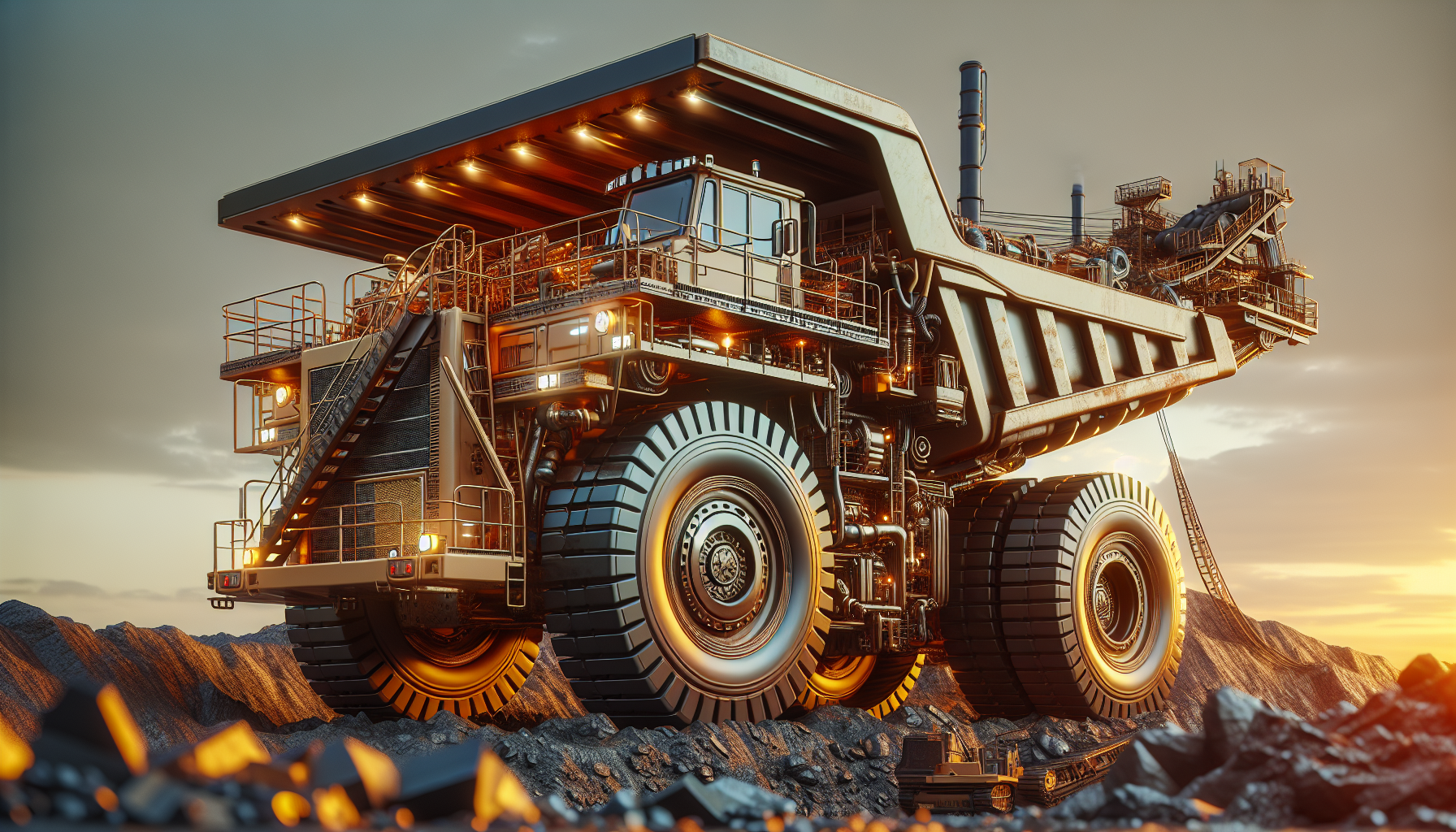
Mining trucks are large, heavy-duty vehicles designed specifically for transporting mined materials from the site to plants or stockpiles. These trucks are essential in the mining industry for efficiently moving vast quantities of ore, coal, or other valuable minerals. There are several types of mining trucks, each designed for specific mining applications and conditions. Here are some common types of mining trucks:
Haul Trucks
Haul trucks, also known as dump trucks, are a crucial component in mining and construction operations. These heavy-duty vehicles are designed for transporting large quantities of materials, debris, or other payloads from one location to another. Haul trucks come in various sizes and configurations, each optimized for specific tasks and operating conditions. Here, I’ll describe haul trucks in more detail:
- Purpose: Haul trucks are primarily used for the transportation of materials. Such as overburden, ore, coal, or waste, within mining and construction sites. They play a vital role in moving massive quantities of materials efficiently and safely.
- Variety of Sizes: Haul trucks come in a wide range of sizes, with different payload capacities. Some smaller models can carry several tons. Larger models are capable of transporting hundreds of tons of material in a single load.
- Rigid Frame Design: Most haul trucks feature a rigid frame construction. It is making them sturdy and well-suited for navigating uneven terrain commonly found in mining operations. The rigid frame provides stability and durability.
- Open Bed: The rear part of a haul truck is equipped with an open bed or cargo area. This bed can be tilted or hydraulically raised to dump the load. This is why these trucks are often called dump trucks. The ability to dump the load quickly and efficiently is essential for speeding up the material handling process.
- Engine Power: Haul trucks are equipped with powerful engines to ensure they can handle heavy loads and navigate challenging terrain. These engines can be diesel or, in some cases, electric, depending on the model and application.
- Tires: Haul trucks use large, heavy-duty tires designed to withstand the weight of the load and provide traction on rough and rocky terrain.
- Safety Features: Modern haul trucks are equipped with advanced safety features, including backup cameras, collision avoidance systems, and operator cabins with ergonomic designs to enhance the safety of operators.
- Autonomous Haulage: In recent years, some mining companies have introduced autonomous haul trucks into their operations. These self-driving trucks are equipped with advanced sensors and GPS technology, allowing them to operate without human intervention, increasing efficiency and safety.
- Maintenance: Regular maintenance is crucial for haul trucks to ensure they operate at peak performance. Maintenance tasks include tire replacement, engine servicing, and checking the hydraulic systems.
- Environmental Considerations: Some haul trucks are designed with environmental considerations in mind, incorporating technologies to reduce emissions and improve fuel efficiency.
Haul trucks are essential in the mining and construction industries, as they contribute significantly to the efficiency and productivity of these operations. Their design and capacity vary to suit the specific needs of different applications, making them versatile assets in heavy industries.
Articulated Dump Trucks
Articulated dump trucks, often referred to as ADTs, are specialized heavy-duty vehicles designed for off-road applications, such as construction, mining, quarrying, and earthmoving. These trucks are known for their unique articulated chassis, which allows them to navigate challenging terrain and carry heavy payloads. Here’s a detailed description of articulated dump trucks:
- Articulated Chassis: The defining feature of articulated dump trucks is their articulated chassis. Unlike traditional rigid-frame trucks, ADTs have a hinged joint or articulation point between the front and rear sections of the vehicle. This design enables the truck to articulate or pivot, enhancing maneuverability and stability on uneven and rough terrain.
- Payload Capacity: Articulated dump trucks come in various sizes, with different payload capacities ranging from 15 to 45 tons or more, depending on the model. The payload capacity is a crucial factor when selecting an ADT for a specific job.
- Off-Road Performance: ADTs are specifically designed for off-road use, making them well-suited for construction sites, quarries, and mining operations. Their large, heavy-duty tires provide excellent traction and flotation, allowing them to operate effectively in muddy, rocky, or otherwise challenging conditions.
- Dumping Mechanism: Similar to conventional dump trucks, ADTs have a large, open cargo bed at the rear. The cargo bed is hydraulically operated and can be raised to dump its load. The articulated design allows the truck to maintain stability even when the bed is tilted for dumping.
- Operator Cabin: ADTs typically feature spacious and comfortable operator cabins equipped with ergonomic controls and seating. These cabins often provide excellent visibility to ensure the operator can navigate safely.
- Engine Power: Articulated dump trucks are powered by robust diesel engines designed to deliver the necessary torque and horsepower for hauling heavy loads on steep grades and rugged terrain. Some models may have more environmentally friendly engine options, such as low-emission or Tier 4-compliant engines.
- Suspension System: ADTs are equipped with advanced suspension systems that help absorb shocks and vibrations, further enhancing ride comfort and load stability.
- Safety Features: Many modern ADTs come with advanced safety features, such as stability control systems, backup cameras, and telematics for monitoring vehicle performance and maintenance needs.
- Versatility: Articulated dump trucks are versatile and can be used for a wide range of applications. They are commonly used in tasks like hauling dirt, rocks, sand, gravel, or other materials, as well as for transporting heavy equipment within construction sites.
- Maintenance: Regular maintenance is essential to keep ADTs in optimal working condition, including tire maintenance, engine servicing, and hydraulic system checks.
Articulated dump trucks play a crucial role in industries that require efficient and reliable off-road material transport. Their ability to maneuver in challenging environments, combined with their substantial payload capacities, makes them valuable assets for various heavy-duty applications.
Off-Highway Trucks
Off-highway trucks, also known as off-road trucks or hauliers, carry heavy-duty vehicles designed for rugged terrain and off-road applications. Industries such as construction, mining, quarrying, and forestry rely on these trucks which transport heavy loads of materials or equipment across challenging landscapes.
Here’s a comprehensive overview of off-highway trucks:
- Purpose: Off-highway trucks are primarily designed for off-road use, as their name suggests. They excel at transporting large quantities of materials, including soil, rocks, ore, and timber, from one location to another within demanding work environments.
- Payload Capacity: Off-highway trucks come in a range of sizes and configurations, with varying payload capacities. Smaller models can handle loads of several tons, while larger ones can carry tens or even hundreds of tons of material.
- Rugged Construction: These trucks are built with heavy-duty frames, reinforced chassis, and robust axles to withstand the stresses of off-road conditions. Their rugged construction makes them durable and reliable in harsh environments.
- Tires: Off-highway trucks are equipped with large, high-flotation tires designed to provide traction and stability on rough terrain, including mud, rocks, and uneven surfaces.
- Engine Power: Off-highway trucks are powered by powerful diesel engines that generate substantial torque and horsepower. This engine power is necessary to move heavy loads and navigate steep grades and challenging terrain.
- Dump Beds: Like other haul trucks, off-highway trucks have large, hydraulically operated dump beds at the rear. The ability to raise and lower the bed allows for efficient loading and unloading of materials.
- Operator Cab: The operator cabin in off-highway trucks is designed for comfort and safety. It typically features ergonomic controls, climate control systems, and excellent visibility to enhance the operator’s working experience.
- Suspension System: These trucks are equipped with advanced suspension systems to provide a smoother ride, reduce vibrations, and maintain load stability while travelling over rough terrain.
- Safety Features: Modern off-highway trucks often include safety features such as stability control systems, backup cameras, and audible warning signals to enhance safety during operation.
- Versatility: Off-highway trucks are versatile and can be adapted for various applications. They are used in construction projects, open-pit mining, quarry operations, and forestry activities, among others.
- Maintenance: Regular maintenance is crucial to ensure the longevity and reliability of off-highway trucks. This includes checking tire condition, servicing the engine and hydraulic systems, and inspecting the overall vehicle for wear and tear.
Off-highway trucks are indispensable in industries that require the efficient and reliable movement of heavy materials and equipment across challenging terrains. Their robust design and powerful engines enable them to tackle demanding tasks and contribute significantly to the success of various heavy-duty operations.
Rigid Frame Trucks
Rigid frame trucks, also known as rigid hauliers, are heavy-duty vehicles designed for transporting large quantities of materials in mining, construction, and quarrying applications. These trucks are characterized by their sturdy, fixed chassis and are used for hauling heavy loads over relatively smooth and well-maintained surfaces. Here’s an in-depth look at rigid-frame trucks:
- Purpose: Rigid frame trucks are primarily designed for heavy-duty material transport within environments that do not require significant off-road capabilities. They are commonly used in open-pit mining operations, large construction sites, and quarrying activities.
- Fixed Frame: The most defining feature of rigid frame trucks is their fixed, non-articulated chassis. Unlike articulated dump trucks or off-highway trucks, rigid frame trucks do not have a pivot point between the front and rear sections.
- Payload Capacity: These trucks come in various sizes and configurations, offering a wide range of payload capacities. They can typically carry loads ranging from 20 to over 400 tons, depending on the model and application.
- Rugged Construction: Rigid frame trucks are built with robust frames and heavy-duty components to handle the rigours of hauling heavy materials. Their durability and structural integrity are essential for safely transporting large loads.
- Tires: Rigid frame trucks are equipped with large, high-capacity tires that provide traction and stability on well-maintained surfaces, such as haul roads within mining operations.
- Engine Power: These trucks are powered by powerful diesel engines that deliver the necessary torque and horsepower to move heavy loads efficiently. Engine options may vary depending on the specific truck model and manufacturer.
- Dump Beds: Rigid frame trucks have a spacious cargo bed at the rear that can be hydraulically raised for easy dumping of materials. This feature allows for efficient loading and unloading of bulk materials.
- Operator Cabin: The operator cabin is designed with operator comfort and safety in mind. It typically includes ergonomic controls, climate control systems, and excellent visibility to ensure the operator can work effectively.
- Safety Features: Modern rigid frame trucks often come equipped with advanced safety features, including stability control systems, backup cameras, and audible warning signals, to enhance safety during operation.
- Versatility: Rigid frame trucks are versatile and can be adapted for various material transport applications. They are commonly used in mining for transporting ore and overburden, as well as in construction and quarrying for moving aggregates and other materials.
- Maintenance: Regular maintenance is essential to ensure the reliability and longevity of rigid-frame trucks. This includes tire maintenance, engine servicing, and inspections of critical components.
Rigid frame trucks play a crucial role in industries that require efficient and high-capacity material transport on well-maintained surfaces. Their sturdy construction, substantial payload capacities, and reliability make them valuable assets in heavy-duty operations where articulated or off-road capabilities are not necessary.
Underground Mining Trucks
Underground mining trucks are specialized vehicles designed to operate in the confined and often challenging environments of underground mines. These trucks are crucial for transporting materials, ore, and waste from the mining face to processing or dumping areas within the mine. Here’s a detailed overview of underground mining trucks:
- Purpose: Underground mining trucks are specifically designed for use in underground mining operations. They are used to transport mined materials, equipment, and personnel within tunnels and confined spaces.
- Compact Design: To navigate the narrow tunnels and low ceilings of underground mines, these trucks are designed with a compact and low-profile configuration. This design ensures they can maneuver effectively in tight spaces.
- Payload Capacity: Underground mining trucks come in various sizes and capacities, typically ranging from a few tons to 35 tons or more, depending on the model and application.
- Rugged Construction: These trucks are built with durability in mind, featuring reinforced frames, heavy-duty components, and specialized engineering to withstand the harsh conditions of underground mining.
- Articulation: Many underground mining trucks have an articulated chassis, allowing them to navigate sharp turns and rough terrain within the mine. This articulation improves maneuverability in confined spaces.
- Engine Power: Underground mining trucks are equipped with powerful diesel engines that provide the necessary torque and horsepower to transport heavy loads through challenging underground conditions.
- Safety Features: Safety is a top priority in underground mining operations. As a result, these trucks are often equipped with features such as rollover protection systems, fire suppression systems, and ergonomic operator cabins with excellent visibility.
- Dumping Mechanism: Similar to surface mining trucks, underground mining trucks have a dumping mechanism for unloading materials. The dump bed may be hydraulically operated to ensure efficient material discharge.
- Operator Cabin: The operator cabin in underground mining trucks is designed to provide comfort and safety for the driver. It often includes ergonomic controls, air filtration systems to manage dust and contaminants, and noise-reducing features.
- Versatility: Underground mining trucks can be adapted for various tasks, including transporting ore, waste rock, equipment, and personnel. Some models may have specialized configurations for specific underground mining operations.
- Maintenance: Regular maintenance and inspection are crucial for the safe and efficient operation of underground mining trucks. Maintenance tasks include checking the hydraulic systems, engine servicing, and monitoring wear and tear.
- Environmental Considerations: In some cases, there is a growing emphasis on reducing emissions and improving environmental sustainability in underground mining operations. As a result, electric or hybrid underground mining trucks are being developed to minimize their environmental impact.
Underground mining trucks are indispensable in the extraction of valuable minerals and materials from underground mines. Their compact design, robust construction, and ability to operate in confined spaces make them essential for maintaining productivity and safety in underground mining operations.
Electric Mining Trucks
Electric mining trucks are a sustainable and innovative solution to reduce emissions and environmental impact in the mining industry. These trucks are powered by electric motors instead of traditional diesel engines, making them more energy-efficient and environmentally friendly. Here’s an overview of electric mining trucks:
- Purpose: Electric mining trucks are designed for the same purpose as their diesel counterparts, which is to transport large quantities of materials, ore, or waste within mining operations. However, they use electric power to achieve this goal.
- Electric Drive System: The most significant difference between electric mining trucks and traditional diesel trucks is their electric drive system. Instead of an internal combustion engine, they are equipped with electric motors to provide propulsion.
- Power Source: Electric mining trucks can be powered by various sources, including:
- Battery Electric: These trucks rely on rechargeable lithium-ion batteries for power. The batteries are charged during downtime and can provide energy for several hours of operation, depending on the truck’s size and battery capacity.
- Trolley Assist: In some mining operations, electric trucks are connected to overhead electric lines (catenary systems) similar to those used for electric trains. This trolley assist system supplies electricity to the trucks while they are moving, eliminating the need for large onboard batteries.
- Hybrid: Some electric mining trucks are hybrids that combine battery power with an onboard diesel generator or other power sources for extended range and flexibility.
- Zero Emissions: Electric mining trucks produce zero emissions at the point of use, making them an environmentally friendly option compared to diesel trucks. This is especially important in underground mining operations where ventilation can be challenging.
- Energy Efficiency: Electric trucks are known for their high energy efficiency, as electric motors can deliver power more efficiently compared to internal combustion engines. This results in reduced energy consumption and operating costs.
- Regenerative Braking: Electric mining trucks often incorporate regenerative braking systems, which capture and store energy during braking to recharge the batteries or reduce overall energy consumption.
- Operator Cabin: The operator’s cabin in electric mining trucks is typically designed with modern ergonomics, visibility enhancements, and advanced control systems for efficient and safe operation.
- Safety Features: Electric mining trucks may include advanced safety features such as collision avoidance systems, real-time monitoring, and remote operation capabilities to enhance safety in mining operations.
- Maintenance: Electric trucks generally require less maintenance than diesel trucks because they have fewer moving parts and don’t require oil changes or regular engine maintenance. Maintenance tasks typically focus on the electric drive components and batteries.
- Environmental Sustainability: The adoption of electric mining trucks aligns with the mining industry’s growing emphasis on sustainability and reducing its carbon footprint. These trucks help reduce greenhouse gas emissions and air pollution associated with mining activities.
Electric mining trucks are increasingly gaining popularity in the mining industry as companies seek more sustainable and efficient ways to transport materials. Their environmental benefits, energy efficiency, and potential for cost savings make them an attractive option for modern mining operations.
Autonomous Mining Trucks
Autonomous mining trucks represent a significant technological advancement in the mining industry. These self-driving vehicles are equipped with advanced technology, sensors, and artificial intelligence systems that allow them to operate without human intervention. Here’s a comprehensive overview of autonomous mining trucks:
- Purpose: Autonomous mining trucks are designed for the same purpose as traditional mining trucks, which is to transport materials, ore, and waste within mining operations. However, they do so with minimal or no human involvement.
- Automation Technology: Autonomous mining trucks rely on a combination of technologies to operate autonomously:
- GPS and Navigation Systems: These trucks use GPS and other navigation technologies to determine their exact position within the mine and navigate predefined routes.
- Sensors: Various sensors, including LiDAR, radar, cameras, and ultrasonic sensors, are used to detect obstacles, monitor road conditions, and ensure safe operation.
- Machine Learning and AI: Advanced artificial intelligence algorithms enable trucks to make real-time decisions, adapt to changing conditions, and avoid collisions or hazards.
- Communication Systems: Autonomous trucks are often equipped with communication systems that allow them to receive instructions from a central control centre and communicate with other mining equipment and vehicles.
- Safety Features: Safety is a top priority in autonomous mining operations. These trucks are equipped with an array of safety features, including collision avoidance systems, emergency braking, and obstacle detection to ensure safe operation in a mining environment.
- Efficiency: Autonomous mining trucks can operate continuously without the need for driver breaks, resulting in improved efficiency and productivity. They can also optimize speed, braking, and acceleration to reduce fuel consumption and minimize wear and tear.
- 24/7 Operation: Autonomous mining trucks can operate around the clock, contributing to increased productivity and reduced downtime in mining operations.
- Remote Monitoring and Control: Operators and mining personnel can remotely monitor and control autonomous trucks from a central command centre. This allows for real-time tracking, performance monitoring, and quick response to any issues.
- Environmental Benefits: Autonomous trucks are often programmed to operate more efficiently, which can lead to reduced fuel consumption and lower emissions, contributing to environmental sustainability in mining operations.
- Cost Savings: Over time, autonomous mining trucks can lead to cost savings through increased efficiency, reduced labour costs, and improved maintenance practices.
- Maintenance: While autonomous trucks can reduce the risk of accidents caused by human error, they still require regular maintenance to ensure their sensors, AI systems, and other components are functioning correctly. Maintenance tasks typically focus on the autonomous technology components.
- Transition Period: The transition to autonomous mining operations may require significant investments in technology, infrastructure, and training. Companies must carefully plan and execute the transition to ensure a smooth integration of autonomous trucks into their mining operations.
Autonomous mining trucks are revolutionizing the mining industry by increasing safety, efficiency, and productivity while reducing environmental impact and operational costs. As technology continues to advance, the adoption of autonomous mining equipment is expected to become more widespread in the years to come.
Water Trucks
Water trucks, also known as water tank trucks or water bowsers, are specialized vehicles designed to transport and distribute water for various applications, including construction, agriculture, road maintenance, dust control, firefighting, and more. These trucks are equipped with large water tanks and pumping systems to deliver water where it is needed. Here’s a detailed overview of water trucks:
- Purpose: Water trucks are primarily used for the storage and transportation of water to locations where a controlled and reliable water supply is required.
- Water Tank: The most prominent feature of a water truck is its water tank, which can vary in size from a few hundred gallons to several thousand gallons, depending on the truck’s design and intended application.
- Distribution Mechanisms: Water trucks are equipped with various mechanisms for distributing water, including:
- Spray Nozzles: Many water trucks have spray nozzles mounted on the rear, sides, or front of the vehicle. These nozzles can be adjusted to control the spray pattern and water flow rate.
- Water Cannons: Some water trucks are fitted with powerful water cannons that can project a high-pressure stream of water over long distances. These are often used in firefighting and dust suppression applications.
- Gravity Discharge: In some cases, water trucks may have a gravity discharge system that allows water to flow freely from the tank through a controlled valve or hydrant.
- Pumping System: Water trucks are equipped with pumps that can draw water from various sources, such as ponds, rivers, or hydrants, and transfer it into the tank. Some trucks may have high-capacity pumps to fill the tank quickly.
- Chassis: The chassis of a water truck can vary, with options ranging from smaller truck chassis to larger off-road or heavy-duty vehicles, depending on the intended use and terrain.
- Usage: Common applications of water trucks include:
- Dust Control: Water trucks are used to control dust on construction sites, unpaved roads, and in mining operations. They spray water to keep dust particles from becoming airborne.
- Road Maintenance: Water trucks help maintain dirt roads by compacting loose material and reducing erosion.
- Agriculture: They are used for irrigation and crop spraying in agricultural settings.
- Firefighting: Water trucks equipped with powerful water cannons are used in firefighting to deliver a high-volume stream of water to extinguish fires.
- Construction: Water trucks provide water for mixing concrete, compacting soil, and other construction-related tasks.
- Emergency Water Supply: In disaster relief efforts, water trucks can deliver clean drinking water to affected areas.
- Capacity: The capacity of water trucks varies widely, depending on their intended use. Smaller trucks may have tanks with capacities of a few hundred gallons, while larger ones can hold thousands of gallons.
- Safety Features: Water trucks may include safety features such as rear-view cameras, warning lights, and reflective markings to ensure safe operation.
- Maintenance: Regular maintenance is crucial to ensure the water truck’s components, including the water tank, pump, and distribution systems, are in good working condition.
Water trucks play a vital role in various industries and applications by providing a mobile and flexible source of water. Their ability to control dust, maintain roads, fight fires, and deliver water where it is needed makes them essential vehicles for a wide range of tasks.
Specialized Trucks
Specialized trucks encompass a wide range of vehicles designed for specific and niche applications across various industries. These trucks are customized or purpose-built to meet unique requirements that standard trucks cannot fulfil. Here’s an overview of some specialized truck types and their respective functions:
- Fire Trucks (Fire Apparatus): Fire trucks are equipped with firefighting equipment, water tanks, hoses, and ladders. They are specially designed to respond to fires and emergency situations, with various types such as pumper trucks, ladder trucks, and tankers.
- Ambulances: Ambulances are medical transport vehicles designed to carry injured or sick individuals to healthcare facilities. They are equipped with medical equipment and personnel to provide emergency medical care during transport.
- Garbage Trucks (Waste Collection Vehicles): Garbage trucks are designed for collecting, compacting, and transporting waste and recyclables. Types include rear-loaders, front-loaders, and side-loaders, each with a specific method of waste collection.
- Cement Mixers (Concrete Mixers): Cement mixers are specialized trucks used in the construction industry to transport and mix concrete materials. They have a rotating drum that continuously mixes the concrete during transit.
- Refrigerated Trucks (Reefers): Refrigerated trucks are insulated and equipped with refrigeration units to transport temperature-sensitive goods, such as perishable foods, pharmaceuticals, and medical supplies, at controlled temperatures.
- Tanker Trucks: Tanker trucks are designed to transport liquids or gases, including fuel, chemicals, water, and milk. They have cylindrical tanks with varying capacities and configurations.
- Tow Trucks (Wreckers): Tow trucks are used for roadside recovery and towing of vehicles that have broken down, been involved in accidents, or are illegally parked. They feature specialized equipment for vehicle recovery.
- Flatbed Trucks: Flatbed trucks have an open cargo area with no sides or roof. They are suitable for transporting oversized or irregularly shaped loads, such as construction equipment, vehicles, and large machinery.
- Bucket Trucks (Cherry Pickers): Bucket trucks are equipped with an extendable arm and a platform (bucket) at the end. They are used for tasks like tree trimming, power line maintenance, and other aerial work.
- Crane Trucks: Crane trucks have a crane mounted on the chassis and are used for lifting and transporting heavy loads. They are commonly employed in construction, material handling, and infrastructure projects.
- Vacuum Trucks: Vacuum trucks are used for various tasks, including cleaning sewer systems, septic tank maintenance, and hazardous material recovery. They use suction to remove liquids, sludge, and debris.
- Snow Plows and Salt Spreaders: These specialized trucks are used for snow and ice removal on roads and highways. Snow ploughs clear snow, while salt spreaders disperse de-icing agents.
- Military Trucks: Military trucks are designed for specific military applications, including troop transport, cargo transport, and specialized vehicles for combat and logistics.
- Off-Road Trucks: These trucks are built to operate in extreme off-road conditions, such as in mining, forestry, and agriculture. They include off-highway dump trucks and forestry trucks, among others.
- Airport Ground Support Vehicles: These vehicles serve various functions at airports, including aircraft towing (tug tractors), luggage handling (baggage tugs), and refuelling (fuel trucks).
Specialized trucks play crucial roles in specific industries and applications, enhancing efficiency, safety, and functionality. Their design and features are tailored to meet the unique demands of their respective tasks, ensuring they perform their functions effectively.
10 Different Mining Trucks
Certainly, here are descriptions of 10 different mining trucks used in various mining applications:
- Caterpillar 797F: The Caterpillar 797F is one of the largest haul trucks in the world, capable of carrying over 400 tons of material. It’s often used in large open-pit mining operations and is known for its immense hauling capacity.
- Komatsu 960E-1: Komatsu’s 960E-1 is another massive haul truck, designed for efficient material transport in open-pit mines. It’s equipped with advanced technology for optimal performance and safety.
- Volvo A60H: The Volvo A60H is a robust articulated dump truck designed for heavy-duty off-road mining tasks. Its articulated design allows it to maneuver easily on rough terrain.
- Terex MT 6300AC: The Terex MT 6300AC is a popular choice for hauling heavy loads in mining operations. It’s known for its durability and high payload capacity.
- Liebherr T 284: The Liebherr T 284 is a haul truck with a massive payload capacity and a focus on fuel efficiency. It’s often used in demanding mining environments.
- Sandvik TH663: Sandvik’s TH663 is an underground mining truck designed for transporting ore and other materials in underground mining tunnels. It’s compact and built for maneuverability in tight spaces.
- Atlas Copco MT42: The Atlas Copco MT42 is a reliable underground haul truck known for its performance in small to medium-sized mining operations. It’s designed for efficiency and safety in underground conditions.
- BelAZ 75710: The BelAZ 75710 is one of the largest mining trucks globally, capable of carrying a staggering 450 tons of material. It’s commonly used in coal and iron ore mining.
- Epiroc Minetruck MT65: Epiroc’s Minetruck MT65 is an electric mining truck designed for underground use. It’s environmentally friendly and well-suited for mines looking to reduce emissions.
- CAT AD45B: The Caterpillar AD45B is an underground articulated truck designed for moving materials in challenging underground mining environments. It’s equipped with features for operator comfort and safety.
These are just a few examples of the many mining trucks available in the industry, each tailored to specific mining needs, whether it’s hauling enormous loads in open-pit mines or efficiently transporting materials in underground tunnels.
Discover more from AllMinings
Subscribe to get the latest posts sent to your email.