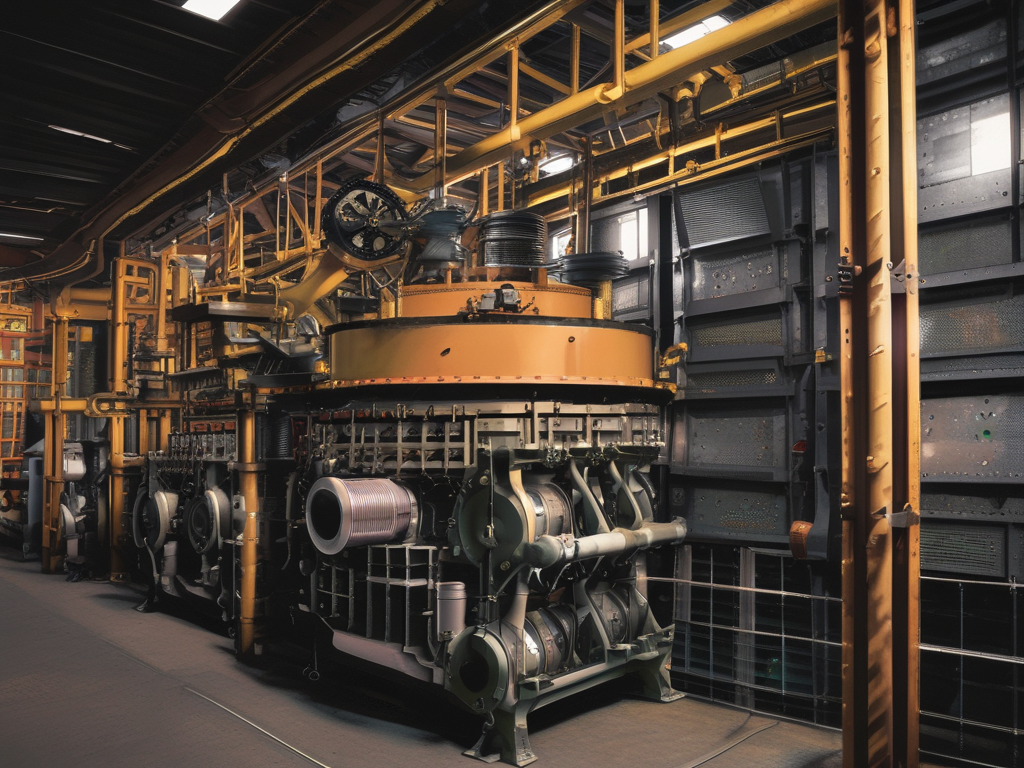
Magnetic separation is a widely used technique in the mining industry for separating magnetic materials from non-magnetic ones. This method is essential for the beneficiation of various ores and is applied in both mineral processing and waste management.
Principles
Magnetic separation is based on the differing magnetic properties of minerals and materials. It exploits these differences to separate magnetic materials from non-magnetic ones in various industrial applications, particularly in mineral processing.
1. Magnetic Properties of Minerals
- Ferromagnetic: Strongly attracted to magnetic fields. Examples include magnetite (Fe₃O₄) and pyrrhotite (FeₓS).
- Paramagnetic: Weakly attracted to magnetic fields. Examples include hematite (Fe₂O₃) and ilmenite (FeTiO₃).
- Diamagnetic: Repelled by magnetic fields. Examples include quartz (SiO₂) and calcite (CaCO₃).
2. Magnetic Separation Techniques
Magnetic separation techniques vary based on the magnetic susceptibility of the material and the intensity of the magnetic field applied. The primary methods include:
- Low-Intensity Magnetic Separation (LIMS):
- Used for ferromagnetic materials.
- Magnetic field intensity: < 1000 gauss.
- Equipment: Drum magnetic separators, cross-belt magnetic separators.
- High-Intensity Magnetic Separation (HIMS):
- Used for paramagnetic materials.
- Magnetic field intensity: 10,000 – 20,000 gauss.
- Equipment: Induced roll magnetic separators, high-gradient magnetic separators (HGMS).
- Wet Magnetic Separation:
- Suitable for fine particles and slurry materials.
- Equipment: Wet drum magnetic separators.
- Dry Magnetic Separation:
- Suitable for coarse particles and dry materials.
- Equipment: Dry drum magnetic separators, rare-earth roll separators.
3. Magnetic Field Gradient
The gradient of the magnetic field is crucial in magnetic separation. A high-gradient magnetic field exerts a stronger force on magnetic particles, enhancing separation efficiency, especially for fine and weakly magnetic materials.
4. Factors Affecting Magnetic Separation
Several factors influence the efficiency and effectiveness of magnetic separation:
- Magnetic Field Strength: The intensity of the magnetic field affects the force exerted on the magnetic particles. Stronger fields are needed for paramagnetic materials.
- Particle Size: The size of the particles impacts separation. Finer particles often require wet separation methods due to the difficulty in generating sufficient magnetic force in dry conditions.
- Feed Rate: The rate at which material is fed into the separator affects the separation efficiency. Optimal feed rates ensure maximum contact with the magnetic field.
- Material Composition: The proportion of magnetic to non-magnetic material in the feed influences the separation process. High concentrations of magnetic material improve separation efficiency.
- Matrix Design: The design and composition of the separation matrix (e.g., grid, rod, wire) can significantly impact the capture of magnetic particles.
5. Separation Mechanisms
Magnetic separation relies on different mechanisms to achieve separation, including:
- Magnetic Attraction: Magnetic particles are attracted to the source of the magnetic field and are separated from the non-magnetic particles.
- Magnetic Repulsion: In diamagnetic materials, particles are repelled by the magnetic field, although this is less commonly used in commercial separation processes.
6. Applications of Magnetic Separation
- Mineral Processing: Separation of valuable magnetic minerals from non-magnetic gangue.
- Recycling: Removal of ferrous contaminants from non-ferrous materials.
- Environmental Cleanup: Removal of magnetic contaminants from water and soil.
- Industrial Processes: Separation of magnetic materials in chemical production and food processing.
7. Advantages of Magnetic Separation
- High Efficiency: Effective for both coarse and fine particle separation.
- Cost-Effectiveness: Generally lower operating costs compared to other separation methods.
- Environmental Benefits: Reduces the need for chemical processing, minimizing environmental impact.
Conclusion
The principles of magnetic separation are fundamental to the efficient processing of minerals and materials with varying magnetic properties. By understanding and leveraging these principles, industries can optimize their separation processes, enhance product quality, and reduce environmental impact.
Types
Magnetic separators are crucial devices in the mining industry, designed to separate magnetic materials from non-magnetic ones. Various types of magnetic separators are used depending on the application, material characteristics, and the required separation efficiency. Here’s an overview of the main types of magnetic separators:
1. Low-Intensity Magnetic Separators (LIMS)
- Description: Used for the separation of ferromagnetic materials.
- Applications: Primarily used for the beneficiation of magnetite ores and removing tramp iron from processed materials.
- Types:
- Drum Magnetic Separators:
- Wet Drum Separators: Operate in a wet medium and are ideal for the recovery of magnetite or ferrosilicon in dense medium recovery processes.
- Dry Drum Separators: Operate in a dry medium, used for coarse materials and removing tramp iron.
- Cross-Belt Magnetic Separators:
- Use a continuously running belt to transport ferromagnetic material from the magnetic field.
- Suitable for removing larger ferrous contaminants from bulk materials.
2. High-Intensity Magnetic Separators (HIMS)
- Description: Designed to capture weakly magnetic and paramagnetic materials.
- Applications: Beneficiation of hematite, ilmenite, and other paramagnetic minerals.
- Types:
- Induced Roll Magnetic Separators:
- Use an electromagnetic field to generate a high-intensity magnetic field.
- Effective for separating fine, weakly magnetic particles.
- High-Gradient Magnetic Separators (HGMS):
- Utilize a matrix of fine stainless-steel wool to produce high gradient magnetic fields.
- Suitable for separating very fine particles and slurries.
3. Wet Magnetic Separators
- Description: Used for materials in slurry form.
- Applications: Ideal for fine particle separation in wet environments.
- Types:
- Wet Drum Magnetic Separators:
- Often used in the recovery of magnetic media in dense media separation processes.
- Suitable for the recovery of fine magnetic particles.
- Slurry High-Intensity Magnetic Separators (SHIMS):
- High-intensity fields generated in a slurry environment.
- Used for processing fine paramagnetic materials.
4. Dry Magnetic Separators
- Description: Used for dry materials and coarser particle separation.
- Applications: Beneficiation of dry mineral ores, removal of ferrous contaminants from bulk dry materials.
- Types:
- Dry Drum Magnetic Separators:
- Similar to wet drum separators but operate in a dry medium.
- Effective for large particle sizes and dry materials.
- Rare-Earth Roll Separators:
- Utilize rare-earth magnets to generate strong magnetic fields.
- Suitable for separating fine, weakly magnetic particles from dry materials.
5. Overband Magnetic Separators
- Description: Use a belt to remove magnetic materials from a continuous feed.
- Applications: Used in recycling, aggregate, and mining industries to remove tramp iron from conveyors.
- Types:
- Suspended Magnetic Separators:
- Positioned above conveyor belts to lift and remove ferrous contaminants.
- Electromagnetic Overband Separators:
- Utilize an electromagnetic coil to generate the magnetic field.
- Suitable for applications requiring higher magnetic strengths.
6. Magnetic Pulley Separators
- Description: Replace the head pulley of a conveyor system.
- Applications: Used for continuous removal of ferrous materials from product streams.
- Types:
- Permanent Magnetic Pulleys:
- Use permanent magnets to generate the magnetic field.
- Require no electrical power.
- Electromagnetic Pulleys:
- Use an electromagnetic coil to generate the magnetic field.
- Suitable for applications needing adjustable magnetic strength.
7. Magnetic Grate Separators
- Description: Consist of magnetic rods arranged in a grid pattern.
- Applications: Suitable for removing fine ferrous contaminants from granular or powdered materials.
- Types:
- Drawer Magnetic Grates:
- Installed in hoppers, chutes, and bins.
- Easy to clean and maintain.
- Tube Magnets:
- Individual magnetic tubes that can be placed in product streams.
- Effective for capturing fine ferrous particles.
Conclusion
The selection of a magnetic separator depends on the specific requirements of the application, including the type of material to be processed, particle size, and the degree of separation needed. Each type of magnetic separator offers unique advantages and is suited for different operational environments, ensuring efficient and effective separation of magnetic materials from non-magnetic ones in various industries.
Applications in Mineral Processing
Magnetic separation is a key technique in mineral processing, widely used to separate magnetic materials from non-magnetic ones. This technique is crucial for enhancing the quality and purity of minerals and is applied across various stages of mineral processing.
1. Iron Ore Beneficiation
- Objective: Increase the iron content and reduce impurities.
- Application: Magnetic separation is used to concentrate magnetite (Fe₃O₄) from gangue minerals, typically utilizing low-intensity magnetic separators.
- Processes:
- Wet Drum Magnetic Separation: Recovers fine magnetite from slurry.
- Dry Drum Magnetic Separation: Beneficiates coarse magnetite ores in a dry state.
2. Coal Processing
- Objective: Remove tramp iron and other ferromagnetic contaminants.
- Application: Ensures cleaner coal and prevents damage to processing equipment.
- Processes:
- Overband Magnetic Separators: Remove large ferrous pieces from the coal stream.
- Wet Drum Magnetic Separators: Recover magnetite used in dense medium separation processes.
3. Non-Ferrous Metal Ore Processing
- Objective: Separate valuable non-ferrous minerals from gangue.
- Application: Used for the beneficiation of weakly magnetic minerals like hematite (Fe₂O₃) and ilmenite (FeTiO₃).
- Processes:
- High-Intensity Magnetic Separation (HIMS): Recovers paramagnetic minerals.
- High-Gradient Magnetic Separation (HGMS): Effective for fine particle separation.
4. Industrial Minerals Processing
- Objective: Improve the quality and purity of industrial minerals.
- Application: Removal of iron contaminants from silica sand, feldspar, and other industrial minerals.
- Processes:
- Magnetic Grate Separators: Remove fine ferrous contaminants.
- Rare-Earth Roll Separators: Separate fine weakly magnetic contaminants from dry industrial minerals.
5. Rare Earth Minerals Processing
- Objective: Separate and concentrate rare earth elements (REEs).
- Application: Used to process monazite, bastnaesite, and other REE-bearing minerals.
- Processes:
- Induced Roll Magnetic Separators: Concentrate REEs from mixed ores.
- High-Intensity Magnetic Separators: Recover fine REE particles.
6. Gold and Precious Metals Recovery
- Objective: Enhance recovery of gold and other precious metals.
- Application: Magnetic separation helps remove magnetic minerals that may interfere with downstream processing.
- Processes:
- Wet High-Intensity Magnetic Separators (WHIMS): Remove magnetic impurities from gold concentrates.
- Magnetic Filters: Clean process water by removing fine magnetic particles.
7. Tungsten and Tin Processing
- Objective: Improve the concentration of tungsten (W) and tin (Sn) ores.
- Application: Separate magnetic minerals like scheelite (CaWO₄) and cassiterite (SnO₂).
- Processes:
- High-Intensity Magnetic Separators: Enhance the recovery of paramagnetic tungsten and tin minerals.
- Wet Magnetic Separation: Process fine-grained tungsten and tin ores in slurry form.
8. Chromite Ore Processing
- Objective: Separate chromite (FeCr₂O₄) from gangue minerals.
- Application: Used in the production of stainless steel and other alloys.
- Processes:
- Low-Intensity Magnetic Separation: Recover chromite from ore.
- High-Intensity Magnetic Separation: Separate fine chromite particles.
9. Environmental Applications
- Objective: Clean and purify environmental contaminants.
- Application: Remove magnetic contaminants from soil and water.
- Processes:
- Magnetic Filters: Purify water by removing iron and other magnetic contaminants.
- Magnetic Grates: Clean industrial effluents and wastewater.
10. Tailings Reprocessing
- Objective: Recover valuable minerals from tailings.
- Application: Extract remaining valuable minerals from mining waste.
- Processes:
- Wet Drum Magnetic Separators: Recover fine magnetite and other magnetic minerals from tailings slurry.
- High-Intensity Magnetic Separators: Reprocess tailings containing weakly magnetic minerals.
Conclusion
Magnetic separation plays a vital role in mineral processing by enhancing the quality and purity of mined materials. Its applications span across a wide range of mineral types and processing stages, making it an indispensable technique in the mining industry. By selecting the appropriate magnetic separation method, industries can achieve efficient separation, improve product quality, and optimize overall processing operations.
Process Variables
The efficiency and effectiveness of magnetic separation in mineral processing are influenced by various process variables. Understanding and optimizing these variables can significantly enhance the performance of magnetic separators and improve the quality of the separated materials.
1. Magnetic Field Strength
- Description: The intensity of the magnetic field generated by the separator.
- Impact:
- Stronger magnetic fields are required for separating weakly magnetic or paramagnetic materials.
- Low-intensity fields suffice for ferromagnetic materials.
- Optimization:
- Adjust the magnetic field strength based on the magnetic susceptibility of the target minerals.
- Use high-intensity separators for fine and weakly magnetic particles.
2. Particle Size
- Description: The size of the particles being processed.
- Impact:
- Fine particles may require wet magnetic separation to prevent air gaps and ensure uniform exposure to the magnetic field.
- Coarse particles can be effectively separated using dry methods.
- Optimization:
- Screen and classify the material to ensure uniform particle size before magnetic separation.
- Use appropriate separators designed for the specific particle size range.
3. Feed Rate
- Description: The rate at which material is fed into the magnetic separator.
- Impact:
- Higher feed rates may reduce separation efficiency due to insufficient exposure time to the magnetic field.
- Lower feed rates enhance separation efficiency but reduce throughput.
- Optimization:
- Balance feed rate to optimize both efficiency and throughput.
- Use adjustable feed systems to control and maintain the optimal feed rate.
4. Material Composition
- Description: The proportion and type of magnetic and non-magnetic materials in the feed.
- Impact:
- High concentrations of magnetic material can improve separation efficiency.
- Mixed materials with varying magnetic properties may require multiple separation stages.
- Optimization:
- Pre-concentrate the material to increase the proportion of magnetic minerals.
- Employ staged separation processes to handle complex mixtures.
5. Magnetic Field Gradient
- Description: The rate of change of the magnetic field intensity in the separator.
- Impact:
- High-gradient magnetic fields can capture finer and weakly magnetic particles.
- Low-gradient fields are sufficient for strongly magnetic and coarser particles.
- Optimization:
- Design the magnetic circuit to create the desired field gradient.
- Use high-gradient magnetic separators for fine particle applications.
6. Matrix Design
- Description: The structure and arrangement of the magnetic matrix in the separator.
- Impact:
- The matrix design affects the capture efficiency and capacity of the separator.
- Different matrix materials and configurations can enhance the separation of specific particle sizes and types.
- Optimization:
- Select matrix materials (e.g., stainless steel wool, grooved plates) suited to the target minerals.
- Optimize matrix design to maximize surface area and magnetic capture efficiency.
7. Slurry Density (for Wet Separation)
- Description: The concentration of solids in the slurry during wet magnetic separation.
- Impact:
- Higher slurry densities can improve magnetic particle capture but may increase viscosity and reduce flow rates.
- Lower slurry densities reduce capture efficiency due to decreased particle interactions.
- Optimization:
- Adjust slurry density to balance capture efficiency and flow rate.
- Use thickeners and dewatering equipment to control slurry density.
8. Flow Rate
- Description: The speed at which the material or slurry flows through the magnetic separator.
- Impact:
- Higher flow rates can lead to reduced exposure time and lower separation efficiency.
- Lower flow rates improve separation but may reduce overall throughput.
- Optimization:
- Control flow rates to ensure adequate exposure time for effective separation.
- Use adjustable flow control systems to maintain optimal flow conditions.
9. Temperature
- Description: The operating temperature of the magnetic separator.
- Impact:
- Extreme temperatures can affect the magnetic properties of the separator and the materials.
- Elevated temperatures may enhance the magnetic susceptibility of certain minerals.
- Optimization:
- Maintain consistent operating temperatures to ensure stable separation performance.
- Use temperature control systems in processes sensitive to temperature variations.
10. Magnetic Susceptibility of Minerals
- Description: The degree to which minerals can be magnetized in an external magnetic field.
- Impact:
- Higher magnetic susceptibility materials are easier to separate.
- Materials with low magnetic susceptibility require stronger magnetic fields and more sophisticated separators.
- Optimization:
- Characterize the magnetic properties of the feed material to select appropriate separation techniques.
- Use enhanced magnetic separators for low-susceptibility materials.
Conclusion
Optimizing the process variables in magnetic separation is crucial for achieving efficient and effective separation of magnetic from non-magnetic materials. By carefully controlling and adjusting these variables, mineral processing operations can maximize recovery rates, improve product quality, and enhance overall operational efficiency.
Advantages
Magnetic separation is a widely utilized technique in various industries, particularly in mineral processing. It offers several benefits that make it an essential component in the beneficiation and purification of ores and other materials. Here are some key advantages:
1. Efficiency
- High Separation Efficiency:
- Magnetic separation efficiently removes magnetic impurities and separates valuable magnetic minerals from non-magnetic materials.
- It can achieve high-purity products, especially with high-gradient and high-intensity magnetic separators.
2. Cost-Effectiveness
- Low Operating Costs:
- Magnetic separation systems typically have lower operating costs compared to other beneficiation techniques like flotation or chemical leaching.
- Minimal consumables are required, reducing ongoing expenses.
- Low Energy Consumption:
- Many magnetic separation processes consume less energy than thermal or chemical processing methods, leading to cost savings and reduced environmental impact.
3. Environmental Benefits
- Reduced Use of Chemicals:
- Magnetic separation does not rely on chemicals for separating minerals, minimizing the release of harmful substances into the environment.
- This makes it an environmentally friendly alternative to chemical-based separation methods.
- Waste Reduction:
- Effective magnetic separation can recover valuable minerals from waste streams, reducing the volume of waste material.
- This contributes to more sustainable mining practices and resource conservation.
4. Versatility
- Wide Range of Applications:
- Magnetic separation can be applied to a variety of minerals and materials, including ferrous and non-ferrous ores, industrial minerals, and recycled materials.
- It can handle different particle sizes, from coarse materials to fine particles and slurries.
- Adaptability to Different Conditions:
- Magnetic separators can be designed to operate in dry or wet conditions, making them suitable for different types of materials and processing environments.
5. Improved Product Quality
- High-Purity Products:
- Magnetic separation can produce high-purity products by efficiently removing magnetic contaminants.
- This is crucial for applications where high material purity is required, such as in the production of high-quality industrial minerals.
6. Operational Simplicity
- Ease of Installation and Operation:
- Magnetic separators are generally straightforward to install and operate, requiring minimal specialized training.
- They can be easily integrated into existing processing lines without extensive modifications.
- Low Maintenance Requirements:
- Magnetic separation equipment typically has fewer moving parts and simpler designs, leading to lower maintenance needs and costs.
- Regular maintenance mainly involves cleaning the magnetic elements and ensuring proper alignment.
7. Safety
- Reduced Risk of Chemical Exposure:
- Since magnetic separation does not use chemicals, it reduces the risk of worker exposure to hazardous substances.
- This enhances workplace safety and reduces the need for stringent chemical handling protocols.
8. Scalability
- Suitable for Small and Large-Scale Operations:
- Magnetic separation technology can be scaled to suit small laboratory applications as well as large industrial operations.
- This scalability makes it versatile and applicable to various stages of mineral processing and other industrial applications.
9. Selective Separation
- Targeted Removal of Specific Contaminants:
- Magnetic separation can be fine-tuned to selectively remove specific magnetic contaminants from a mixture, improving the quality and value of the end product.
- This selectivity is particularly beneficial in recycling and waste management applications.
Conclusion
Magnetic separation offers numerous advantages that make it a preferred method in mineral processing and other industrial applications. Its efficiency, cost-effectiveness, environmental benefits, and versatility contribute to its widespread use. By leveraging the strengths of magnetic separation, industries can achieve high-purity products, reduce operational costs, and minimize their environmental footprint.
Challenges and Limitations
While magnetic separation is a valuable technique in mineral processing and other industries, it has several challenges and limitations that can impact its effectiveness and applicability. Understanding these issues is crucial for optimizing the separation process and addressing potential drawbacks.
1. Magnetic Susceptibility Variations
- Limited to Magnetic Materials:
- Magnetic separation is only effective for materials with sufficient magnetic susceptibility. Non-magnetic or weakly magnetic materials cannot be separated using this method.
- For some materials, the difference in magnetic properties between the target mineral and the gangue may be too small to achieve efficient separation.
2. Particle Size Constraints
- Fine Particle Handling:
- Very fine particles can be difficult to separate due to their low mass and high surface area, which can lead to poor magnetic response and lower separation efficiency.
- Clumping or agglomeration of fine particles can reduce the effectiveness of the magnetic field.
- Coarse Particle Handling:
- Coarse particles require stronger magnetic fields and larger equipment, which can be more expensive and complex to design and operate.
3. Magnetic Field Strength and Gradient
- Field Strength Limitations:
- Generating extremely high magnetic fields and gradients can be technically challenging and costly.
- Equipment capable of producing high-intensity magnetic fields, such as superconducting magnets, may require significant investment and maintenance.
- Heat Generation:
- High-intensity magnetic fields can generate heat, which can affect the operation and efficiency of the separation process and may require cooling systems.
4. Material Handling Issues
- Feeding Consistency:
- Consistent feed rates and material flow are crucial for optimal separation. Variations can lead to inefficiencies and reduced separation quality.
- Handling slurry materials in wet magnetic separation requires proper management of slurry density and flow.
- Wear and Tear:
- Magnetic separators, especially those handling abrasive materials, can experience wear and tear. Regular maintenance and replacement of parts like magnetic drums or belts are necessary.
5. Interference from Other Materials
- Contaminant Interference:
- Presence of magnetic contaminants or tramp iron in the feed material can affect the performance of the magnetic separator and reduce the quality of the final product.
- Effective pre-screening and tramp iron removal systems are needed to prevent such interference.
6. Equipment and Operational Costs
- Initial Capital Investment:
- High-intensity magnetic separators and advanced equipment can require significant initial capital investment.
- Costs associated with installation, operation, and maintenance can be substantial.
- Energy Consumption:
- Some magnetic separation processes, particularly those using high-intensity fields, can consume considerable amounts of energy, increasing operational costs.
7. Environmental and Safety Concerns
- Heat and Radiation:
- High-intensity magnetic fields can generate heat and electromagnetic radiation, posing potential safety risks and requiring protective measures for workers.
- Proper shielding and safety protocols are necessary to mitigate these risks.
8. Selective Separation Limitations
- Non-Specific Separation:
- Magnetic separation may not be sufficiently selective for complex ores containing multiple valuable minerals with similar magnetic properties.
- Additional separation processes, such as flotation or chemical separation, may be needed to achieve the desired purity.
9. Chemical Interactions
- Interaction with Chemicals:
- In some cases, the presence of chemicals or reagents in the material can affect the magnetic properties and separation efficiency.
- Chemical compatibility needs to be considered when integrating magnetic separation with other processing steps.
Conclusion
Magnetic separation offers significant advantages but also presents several challenges and limitations. These include constraints related to magnetic susceptibility, particle size, magnetic field strength, material handling, and operational costs. Addressing these issues through careful process design, equipment selection, and operational management is essential for optimizing the effectiveness of magnetic separation in various industrial applications.
Technological Advancements
Magnetic separation, a critical process in various industries including mineral processing, recycling, and environmental cleanup, has seen significant advancements driven by technological innovation. These advancements have enhanced efficiency, expanded application possibilities, and improved overall performance. Here are key technological advancements in magnetic separation:
1. High-Gradient Magnetic Separators (HGMS)
- Description:
- HGMS utilize matrices of magnetic wires or steel balls to generate high-gradient magnetic fields.
- These separators can capture very fine or weakly magnetic particles that traditional magnetic separators struggle to handle.
- Advantages:
- Improved separation efficiency for fine particles.
- Enhanced recovery of valuable minerals from low-grade ores and industrial minerals.
2. Superconducting Magnetic Separators
- Description:
- Superconducting magnets produce exceptionally high magnetic fields using superconducting coils cooled with liquid helium.
- These magnets are used in high-intensity magnetic separators for processing fine and ultrafine particles.
- Advantages:
- Greater magnetic field strength and gradient compared to conventional magnets.
- Increased efficiency in separating weakly magnetic materials.
3. Magnetic Nanoparticles and Nanocomposites
- Description:
- Advances in nanotechnology have led to the development of magnetic nanoparticles (MNPs) and nanocomposites with tailored magnetic properties.
- These materials are used as magnetic adsorbents in environmental remediation and biomedical applications.
- Advantages:
- Higher surface area and magnetic responsiveness.
- Enhanced selectivity and efficiency in capturing contaminants from water and other fluids.
4. Automated Magnetic Separation Systems
- Description:
- Integration of automation, robotics, and sensor technologies into magnetic separation systems.
- Automated systems control feed rates, magnetic field strengths, and separation processes to optimize performance and reduce human intervention.
- Advantages:
- Improved consistency and reproducibility of separation processes.
- Enhanced operational efficiency and reduced labor costs.
5. High-Throughput Magnetic Separation Systems
- Description:
- Development of magnetic separators capable of processing large volumes of material in shorter time frames.
- These systems incorporate advanced design features to handle high throughputs while maintaining separation efficiency.
- Advantages:
- Increased productivity and throughput in industrial-scale operations.
- Suitable for processing bulk materials and handling continuous production demands.
6. Advanced Magnetic Circuit Design
- Description:
- Optimization of magnetic circuit configurations in separators to improve field uniformity, gradient control, and magnetic particle capture.
- Use of computer simulations and modeling techniques to refine magnetic circuit designs.
- Advantages:
- Enhanced magnetic field control and efficiency.
- Tailored designs for specific applications and material characteristics.
7. Application in Biotechnology and Medicine
- Description:
- Magnetic separation techniques adapted for biomedical and biotechnological applications, such as cell separation, drug delivery, and diagnostics.
- Utilization of magnetic nanoparticles and magnetic separation platforms in medical research and clinical diagnostics.
- Advantages:
- Precise and selective separation of biological entities.
- Potential for targeted therapies and medical diagnostics.
8. Integration with Other Separation Techniques
- Description:
- Combination of magnetic separation with other separation techniques like flotation, gravity separation, and electrostatic separation.
- Hybrid processes that capitalize on the strengths of each technique to improve overall separation efficiency.
- Advantages:
- Synergistic effects leading to enhanced purity and recovery rates.
- Expanded application scope for complex ore bodies and waste streams.
Conclusion
Technological advancements in magnetic separation have revolutionized the efficiency, versatility, and applicability of this critical process in various industries. From high-gradient magnetic separators to automated systems and nanotechnology applications, these innovations continue to drive improvements in separation efficiency, product quality, and environmental sustainability. Future developments are expected to further refine magnetic separation techniques and broaden their impact across new fields and applications.
Environmental and Safety Considerations
Magnetic separation is a valuable technique widely used in various industries for mineral processing, environmental remediation, recycling, and more. While it offers significant benefits, it is essential to address environmental and safety considerations to ensure responsible and sustainable implementation.
1. Environmental Impact
- Chemical-Free Process:
- One of the primary environmental advantages of magnetic separation is its reliance on physical properties rather than chemical processes.
- It reduces the use of chemicals, minimizing the generation of hazardous waste and pollutants.
- Resource Conservation:
- Magnetic separation helps in recovering valuable minerals from ore and industrial waste streams, thereby promoting resource conservation.
- It reduces the need for primary resource extraction, which can have significant environmental impacts.
- Energy Efficiency:
- Some magnetic separation processes are energy-efficient compared to alternative separation methods like flotation or chemical leaching.
- Reduced energy consumption lowers greenhouse gas emissions and overall environmental footprint.
- Waste Reduction:
- Effective magnetic separation can recover valuable materials from waste streams, reducing the volume of waste sent to landfills or disposal sites.
- This contributes to waste reduction and promotes circular economy practices.
2. Safety Considerations
- Magnetic Field Exposure:
- High-intensity magnetic separators can generate strong magnetic fields that pose safety risks to personnel.
- Adequate shielding and safety protocols are essential to minimize exposure and ensure worker safety.
- Equipment Handling:
- Handling of magnetic separators and associated equipment requires proper training to prevent accidents and injuries.
- Maintenance procedures should be followed to mitigate risks associated with equipment operation.
- Chemical Compatibility:
- Magnetic separation may involve the use of magnetic nanoparticles or magnetic fluids in some applications.
- Compatibility with environmental and health regulations should be ensured to prevent unintended environmental contamination or health hazards.
3. Water and Air Quality
- Effluent Discharge:
- Magnetic separation processes in water-based systems must comply with effluent discharge regulations.
- Effluent treatment systems may be required to remove residual contaminants before discharge.
- Air Emissions:
- Operations involving magnetic separation equipment should monitor and manage any potential emissions of particulate matter or dust.
- Dust control measures and emission monitoring can help minimize environmental impacts on air quality.
4. Regulatory Compliance
- Environmental Permits:
- Depending on the scale and nature of operations, magnetic separation facilities may require environmental permits and regulatory approvals.
- Compliance with local, national, and international environmental regulations is crucial to ensure legal operation.
5. Ecosystem Impacts
- Ecological Balance:
- Proper waste management practices and environmental monitoring are necessary to prevent adverse impacts on local ecosystems.
- Effluents and waste materials from magnetic separation processes should be managed to mitigate potential ecological risks.
Conclusion
Environmental and safety considerations are integral to the responsible deployment of magnetic separation technologies across various industries. By addressing these considerations through proper equipment design, operational practices, and regulatory compliance, stakeholders can maximize the environmental benefits and ensure safe working conditions. Continued innovation and adherence to best practices will further enhance the sustainability and effectiveness of magnetic separation in contributing to both economic prosperity and environmental stewardship.
Certainly! Here are a few case studies that illustrate the application of magnetic separation in the mining industry:
Case Studies (1 and 2)
Magnetic Separation in Iron Ore Beneficiation
Industry: Iron Ore Mining
Location: Pilbara region, Western Australia
Description: Magnetic separation is used extensively for the processing of iron ores in the Pilbara region of Western Australia, where magnetite-rich ores are concentrated using magnetic separators. One of the largest iron ore mining operations in the world employs magnetic separation to recover magnetite and other ferromagnetic minerals from the ore.
Benefits:
- Improved Grade: Magnetic separation enhances the grade of iron ore by separating magnetic minerals from non-magnetic material, improving the ore’s iron content.
- Reduced Processing Costs: Efficient separation reduces the amount of material that needs to be ground and processed, lowering overall processing costs.
- Environmental Impact: Minimizes environmental impact compared to traditional beneficiation methods like flotation or chemical leaching.
Magnetic Separation in Coal Processing
Industry: Coal Mining and Processing
Location: Queensland, Australia
Description: Magnetic separators are used in coal processing plants to separate paramagnetic and ferromagnetic minerals from the coal, ensuring cleaner and more efficient coal supply for power generation and industrial use. This process helps in improving coal quality and reducing environmental emissions during combustion.
Benefits:
- Quality Control: Ensures coal quality by removing ash-forming minerals and impurities through magnetic separation.
- Environmental Compliance: Helps meet environmental regulations by producing cleaner coal with lower ash content.
- Operational Efficiency: Improves operational efficiency in coal processing plants by reducing downtime and maintenance costs associated with equipment fouling.
Case Studies (3 and 4)
Magnetic Separation in Mineral Sands Processing
Industry: Mineral Sands Mining (Titanium and Zircon)
Location: Murray Basin, Australia
Description: Magnetic separation is employed in mineral sands processing to separate heavy mineral concentrates (e.g., ilmenite, rutile, zircon) from lighter sands (quartz and feldspar). Magnetic separators are crucial in producing high-quality mineral products for the ceramics, refractories, and chemical industries.
Benefits:
- Product Quality: Ensures high purity and quality of mineral sands products for downstream applications.
- Resource Efficiency: Maximizes recovery of valuable heavy minerals, optimizing resource utilization and profitability.
- Market Competitiveness: Produces marketable products with high titanium and zircon content, meeting stringent customer specifications.
Magnetic Separation in Gold Mining
Industry: Gold Mining
Location: Nevada, USA
Description: Magnetic separation is utilized in gold mining operations to recover magnetic minerals (e.g., magnetite) from gold-bearing ores. This process aids in maximizing gold recovery and reducing environmental impact by separating gold from other minerals and impurities.
Benefits:
- Gold Recovery: Enhances gold recovery by concentrating gold-bearing minerals through magnetic separation.
- Process Intensification: Increases process efficiency by concentrating valuable minerals prior to further processing (e.g., cyanide leaching).
- Environmental Sustainability: Reduces environmental footprint by minimizing the use of chemicals and optimizing resource extraction.
Conclusion
These case studies demonstrate the diverse applications and benefits of magnetic separation in the mining industry. From enhancing ore grade and quality in iron ore and coal mining to maximizing recovery of valuable minerals in mineral sands and gold mining, magnetic separation technologies play a crucial role in improving efficiency, reducing costs, and minimizing environmental impact. Continued innovation in magnetic separation processes will further enhance their applicability and sustainability across various mining operations worldwide.
Discover more from AllMinings
Subscribe to get the latest posts sent to your email.