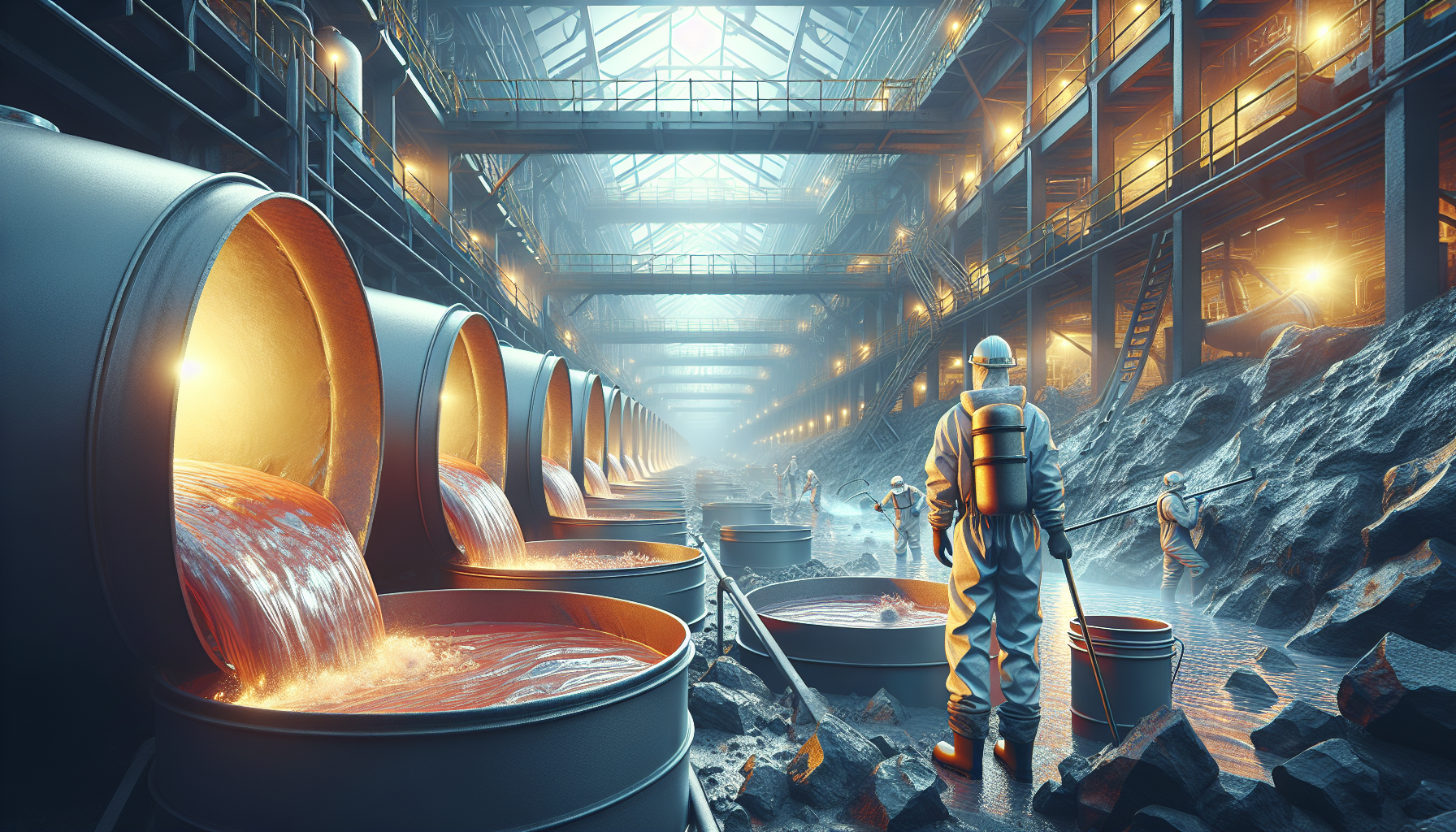
Extractive metallurgy in mining operations involves the processes used to extract valuable metals and minerals from their ore bodies. It is a crucial step in the production of metals that are essential for various industries, including construction, electronics, transportation, and energy. Here is an overview of the key steps involved in extractive metallurgy:
Exploration and Resource Assessment
Exploration and Resource Assessment is a critical phase in the mining industry that involves the systematic search for valuable minerals or metals in a given geological area. This phase is essential for identifying economically viable deposits and forms the foundation for subsequent mining operations. Here are the key steps involved in Exploration and Resource Assessment:
- Desk Study:
- The process typically begins with a thorough review of existing geological data, historical mining records, and any available information about the area of interest. This may include geological maps, reports, and aerial imagery.
- Geological Mapping:
- Geologists conduct fieldwork to create detailed geological maps of the area. This involves identifying rock types, structures, and mineralization patterns. Mapping helps in understanding the geological history and potential mineralization zones.
- Geophysical Surveys:
- Various geophysical techniques are used to detect anomalies or variations in the Earth’s subsurface. These include methods like magnetic surveys, gravity surveys, seismic surveys, and electrical resistivity surveys. These anomalies may indicate the presence of mineral deposits.
- Geochemical Surveys:
- Geochemical surveys involve collecting and analyzing soil, rock, water, or vegetation samples to detect trace amounts of minerals associated with valuable deposits. Anomalous concentrations of certain elements can be indicative of mineralization.
- Drilling:
- Once promising targets are identified through geological mapping, geophysical, or geochemical surveys, exploratory drilling is conducted. This involves extracting core samples from the subsurface for detailed analysis. Core logging provides critical information on the type, grade, and continuity of mineralization.
- Assaying:
- Assaying involves laboratory analysis of samples to determine the concentration of valuable minerals and metals. This information is crucial for estimating the economic potential of a deposit.
- Data Integration and Modeling:
- Data collected from various sources, including geological mapping, geophysical and geochemical surveys, and drilling, is integrated to create geological models. These models help in visualizing and understanding the subsurface geology and mineralization.
- Resource Estimation:
- Using statistical and geostatistical methods, geologists estimate the size, grade, and distribution of the mineral deposit. This estimation is categorized into different resource classes, such as inferred, indicated, and measured resources, based on the level of confidence in the data.
- Preliminary Economic Assessment (PEA):
- Based on the resource estimation, a Preliminary Economic Assessment is conducted to evaluate the potential economic viability of mining the deposit. This assessment includes preliminary cost estimates and revenue projections.
- Environmental and Social Impact Assessment (ESIA):
- Concurrently with resource assessment, environmental and social impact assessments are conducted to evaluate potential impacts and identify mitigation measures.
- Feasibility Study:
- If the preliminary assessments indicate economic viability, a detailed feasibility study is conducted. This study includes comprehensive engineering, financial, and environmental assessments to determine the technical and economic feasibility of developing the deposit.
Exploration and Resource Assessment is a dynamic process that requires interdisciplinary collaboration between geologists, geophysicists, geochemists, and engineers. It is a critical phase that informs the decision-making process for investment in mining operations.
Mining
Mining is the process of extracting valuable minerals or other geological materials from the earth. It has been a fundamental activity for human civilization for thousands of years and plays a crucial role in modern industrial processes. Here are some key aspects of mining:
- Types of Mining:
- Surface Mining: This method is used when the mineral or ore deposit is relatively close to the surface. It involves removing the overlying material (called overburden) to access the deposit. Common types of surface mining include open-pit mining, quarrying, and strip mining.
- Underground Mining: When the mineral deposit is located at a significant depth below the surface, underground mining methods are employed. This involves creating shafts, tunnels, and chambers to access and extract the ore. Types of underground mining include drift mining, shaft mining, and room and pillar mining.
- Placer Mining: This involves extracting minerals, often precious metals like gold, from loose deposits such as riverbeds and beaches. It relies on the natural sorting and accumulation of particles by water flow.
- Types of Minerals Mined:
- Mining operations extract a wide range of minerals, including metals (such as gold, silver, copper, and iron), non-metals (like salt, gypsum, and limestone), gemstones, and fossil fuels (like coal, oil, and natural gas).
- Mining Processes:
- Exploration and Resource Assessment: This phase involves the systematic search for valuable minerals in a given geological area. It includes geological mapping, geophysical surveys, drilling, and resource estimation.
- Extraction: Once a viable deposit is identified, mining operations begin. This involves physically removing the ore from the ground, either through surface or underground methods.
- Comminution: The extracted ore is crushed and ground into smaller particles to increase the surface area for further processing.
- Beneficiation: This step involves separating valuable minerals from the gangue (unwanted material) through processes like gravity separation, flotation, magnetic separation, and leaching.
- Smelting and Refining: Smelting involves extracting the desired metal from its ore through heating and chemical reactions. Refining processes are then used to further purify the metal.
- Casting or Forming: The refined metal is shaped into specific products through processes like casting, rolling, or forging.
- Environmental Considerations:
- Mining can have significant environmental impacts, including habitat disruption, water pollution, and air pollution. Responsible mining practices aim to minimize these effects through techniques like reclamation, water treatment, and waste management.
- Regulations and Safety:
- Mining operations are subject to local, national, and international regulations to ensure safety, environmental protection, and fair labour practices.
- Technological Advances:
- Advances in technology have revolutionized mining processes, leading to increased efficiency, safety, and environmental sustainability. This includes automation, remote sensing, and advanced extraction methods.
- Social and Economic Impact:
- Mining can have a profound impact on local communities and economies. It can provide employment opportunities and contribute to economic growth, but it can also lead to social and environmental challenges that need to be carefully managed.
- Sustainable Mining:
- Sustainable mining practices focus on minimizing negative environmental and social impacts while maximizing the benefits to local communities and economies. This includes practices like responsible resource management, land reclamation, and community engagement.
Mining is a complex industry that requires careful planning, technical expertise, and adherence to environmental and safety regulations. Balancing the economic benefits with environmental and social considerations is crucial for the long-term sustainability of mining operations.
Comminution
Comminution is a mechanical process that involves reducing the size of solid materials into smaller particles. This is an essential step in many industrial processes, particularly in mining, mineral processing, and materials manufacturing. The primary goal of comminution is to increase the surface area of the material, making it more accessible for subsequent processing steps. Here are some key aspects of comminution:
- Purpose of Comminution:
- The main objectives of comminution are:
- Liberation of Valuable Minerals: Many valuable minerals are locked within the structure of the ore. Comminution helps to break these minerals free from the surrounding rock or gangue.
- Increase Surface Area: Smaller particles have a larger surface area relative to their volume. This facilitates more effective interactions with chemicals or other processing agents in subsequent steps like leaching or flotation.
- Optimize Downstream Processes: Comminution can significantly affect the efficiency and economics of subsequent processes, such as beneficiation and smelting.
- The main objectives of comminution are:
- Methods of Comminution:
- Comminution can be achieved through various mechanical methods, including:
- Crushing: Involves applying pressure to the material to break it into smaller fragments. Common crushing equipment includes jaw crushers, cone crushers, and impact crushers.
- Grinding: Involves using mechanical forces to break material into finer particles. It’s typically used for finer grinding operations. Common grinding equipment includes ball mills, rod mills, and SAG (Semi-Autogenous Grinding) mills.
- Comminution can be achieved through various mechanical methods, including:
- Size Reduction Mechanisms:
- Comminution mechanisms vary depending on the type of material and the equipment used. They can include:
- Impact: High-speed impact forces are applied to break the material.
- Compression: Pressure is applied to the material to crush it.
- Attrition: Frictional forces between particles or between particles and the grinding media cause size reduction.
- Shear: Material is cut or sheared by forces applied parallel to the surface.
- Comminution mechanisms vary depending on the type of material and the equipment used. They can include:
- Energy Consumption:
- Comminution is an energy-intensive process. The amount of energy required depends on factors such as the material being processed, the desired final particle size, and the type of equipment used. Optimizing comminution processes can lead to significant energy savings.
- Particle Size Distribution:
- Controlling the particle size distribution after comminution is crucial for subsequent processing steps. This is often achieved through careful selection of equipment and adjusting operating parameters.
- Circuit Design:
- In large-scale operations, comminution is often part of a multi-stage process. The design of the comminution circuit considers the optimal combination of crushing and grinding stages to achieve the desired final product size efficiently.
- Wear and Maintenance:
- Comminution equipment is subject to significant wear due to the high-stress nature of the process. Regular maintenance and replacement of worn components are essential to maintain efficient operation.
- Environmental Considerations:
- Comminution processes can generate dust and noise, which can have environmental and health impacts. Proper ventilation, dust control measures, and noise abatement techniques are implemented to mitigate these effects.
Comminution is a fundamental step in various industries, including mining, mineral processing, cement production, and chemical processing. It plays a crucial role in unlocking the value of raw materials and is a focus area for continuous improvement in efficiency and sustainability.
Beneficiation
Beneficiation is a process used in the mining industry to improve the economic value of mined ore by removing impurities or upgrading the content of valuable minerals. The ultimate goal of beneficiation is to produce a marketable product that meets certain specifications for use in various industries. Here are some key aspects of beneficiation:
- Purpose of Beneficiation:
- The primary objectives of beneficiation are:
- Remove Gangue: Gangue refers to the unwanted minerals or materials that are associated with the valuable ore. By removing gangue, the concentration of valuable minerals in the ore is increased.
- Upgrade Mineral Content: Beneficiation processes aim to increase the concentration of valuable minerals, often by reducing the particle size or improving the mineral liberation.
- The primary objectives of beneficiation are:
- Methods of Beneficiation:
- Beneficiation can be achieved through various techniques, depending on the type of ore and the desired end product. Common beneficiation methods include:
- Gravity Separation: This method exploits the differences in specific gravity between minerals. It is particularly effective for separating dense minerals like gold, tin, and tungsten from lighter gangue materials.
- Flotation: Flotation relies on the differential surface properties of minerals. It involves the addition of chemicals (collectors, frothers, and modifiers) to create conditions for the selective attachment of minerals to air bubbles, allowing them to be separated from the gangue.
- Magnetic Separation: This method uses magnetic properties to separate magnetic minerals (like iron ore) from non-magnetic gangue materials.
- Electrostatic Separation: It relies on the difference in electrical conductivity between minerals. This method is used for separating conductive minerals like rutile and ilmenite from non-conductive gangue.
- Leaching: Leaching involves using chemicals (usually acids or bases) to dissolve the valuable minerals, leaving the gangue behind. The dissolved minerals can then be further processed to recover the desired metals.
- Beneficiation can be achieved through various techniques, depending on the type of ore and the desired end product. Common beneficiation methods include:
- Particle Size Reduction:
- Comminution (crushing and grinding) is often an essential pre-beneficiation step. Smaller particles have a larger surface area, which facilitates more effective interaction with beneficiation agents.
- Process Design and Optimization:
- The selection of beneficiation methods and the design of the beneficiation process depend on factors such as the mineralogy of the ore, particle size, liberation characteristics, and market requirements. Optimization aims to maximize the recovery of valuable minerals while minimizing processing costs.
- Environmental Considerations:
- Beneficiation processes can generate waste materials and may involve the use of chemicals. Environmental considerations include the management of tailings, water usage, and the proper disposal or treatment of waste products.
- Tailings Management:
- The leftover material after beneficiation, known as tailings, often needs to be managed properly to prevent environmental harm. This may involve constructing tailings dams, using thickening and dewatering techniques, or exploring alternative disposal methods.
- Product Handling and Transport:
- After beneficiation, the resulting product may need further handling, processing, and transport before it reaches end-users or downstream industries.
- Quality Control and Testing:
- Throughout the beneficiation process, quality control measures are implemented to ensure that the final product meets specified standards. This may involve various tests and analyses to verify the composition and properties of the product.
Beneficiation is a crucial step in the value chain of mining operations, as it enhances the economic viability of extracting and processing raw materials. It requires a deep understanding of the mineralogy of the ore, as well as expertise in various beneficiation techniques.
Smelting
Smelting is a metallurgical process used to extract a metal from its ore by heating it to high temperatures in the presence of a reducing agent. The goal of smelting is to separate the desired metal from the other components of the ore, such as impurities and gangue minerals. Here are some key aspects of smelting:
- Purpose of Smelting:
- The primary objectives of smelting are:
- Extract Metal: Smelting is used to extract metals like iron, copper, lead, zinc, and others from their respective ores. The process transforms the metal-containing minerals into a more refined and usable form.
- Remove Impurities: Smelting helps remove impurities and gangue materials that are mixed with the metal ore. This is achieved through chemical reactions that separate the metal from non-metallic components.
- The primary objectives of smelting are:
- High Temperatures:
- Smelting requires the application of very high temperatures, typically achieved in a furnace. The specific temperature depends on the metal being extracted and the type of ore being processed.
- Reduction Reactions:
- A reducing agent is used in the smelting process to remove oxygen or other elements from the ore. This is critical for separating the metal from its compounds. Common reducing agents include coke (carbon), charcoal, and various forms of carbon-rich materials.
- Formation of Slag:
- As the ore is heated, impurities and gangue materials react with the flux (a material added to facilitate the smelting process) to form a molten slag. The slag floats on top of the molten metal and can be easily separated.
- Matte and Metal Production:
- Depending on the specific smelting process, a semi-processed material called matte may form. Matte is an intermediate product that contains a mixture of metal and other elements. It is further processed to extract the final metal.
- Specific Smelting Methods:
- Different metals and ores require specific smelting methods. Some common smelting processes include:
- Blast Furnace: Used for smelting iron ore. It involves a continuous process where iron ore, coke, and limestone are fed into the top of the furnace, and molten iron is collected at the bottom.
- Flash Smelting: Used for copper ores, it involves blowing air or oxygen-enriched air through the molten mixture of ore, flux, and fuel. The process is fast and efficient.
- Electric Arc Furnace: Utilized for recycling metal scrap and producing high-quality steel. It involves melting metal in an electric arc created by electrodes.
- Lead Smelting: Involves heating lead ore with a reducing agent and a flux, resulting in the separation of lead from impurities.
- Gold and Silver Smelting: Typically involves processes like cupellation or fire assay, which use high temperatures to separate precious metals from impurities.
- Different metals and ores require specific smelting methods. Some common smelting processes include:
- Environmental Considerations:
- Smelting can release pollutants and emissions, including greenhouse gases, particulate matter, and potentially harmful metals. Environmental regulations and technologies aim to mitigate these impacts.
- Refining After Smelting:
- After smelting, the resulting metal may still contain impurities. Further refining processes, such as electrolysis or chemical methods, are employed to achieve a high level of purity.
Smelting is a critical step in the production of metals for various industries, including construction, transportation, electronics, and manufacturing. It requires careful control of temperature, chemical reactions, and environmental considerations to ensure efficient and sustainable metal production.
Refining
Refining is a process used in the metallurgical industry to further purify and improve the quality of metals that have been extracted from their ores through processes like smelting. The goal of refining is to produce a material with a higher level of purity, removing any remaining impurities or unwanted elements. Here are some key aspects of refining:
- Purpose of Refining:
- The primary objectives of refining are:
- Purity Enhancement: Refining aims to increase the purity of the metal, often to meet specific industry or application requirements.
- Removal of Impurities: Refining processes target the removal of any remaining impurities, including non-metallic elements, trace metals, and unwanted compounds.
- The primary objectives of refining are:
- Methods of Refining:
- Refining can be achieved through various techniques, depending on the type of metal and the level of purity required. Common refining methods include:
- Electrolysis: Electrolytic refining involves passing an electric current through a metal electrolyte to selectively dissolve and deposit metal ions, separating them from impurities.
- Chemical Refining: Chemical methods involve the use of specific chemical reactions to separate impurities from the metal. Common examples include processes like cupellation for gold and silver refining.
- Zone Refining: This technique involves passing a molten zone through a solid material, allowing impurities to move along with the zone, resulting in a more purified metal.
- Vapour Phase Refining: This process involves converting the metal to a gaseous state and then recondensing it, leaving impurities behind.
- Refining can be achieved through various techniques, depending on the type of metal and the level of purity required. Common refining methods include:
- Crucible and Ladle Refining:
- These are methods used for refining small quantities of metal in a controlled environment. The metal is melted in a crucible or ladle, and impurities are skimmed off or absorbed by additives.
- Distillation:
- Distillation is used for refining certain metals with low boiling points, such as zinc and mercury. It involves vaporizing the metal and then condensing it to separate it from impurities.
- Zone Melting:
- Zone melting is a refining technique that involves passing a molten zone through a solid material. This process can be used to purify materials like silicon for use in electronics.
- Environmental Considerations:
- Refining processes can generate waste materials and emissions. Environmental considerations include the management of by-products, the treatment of effluents, and the reduction of air pollutants.
- Quality Control:
- Throughout the refining process, quality control measures are implemented to ensure that the final product meets specified standards. This may involve various tests and analyses to verify the composition and properties of the refined material.
- Final Product Usage:
- The refined metal is then used in various industries, including manufacturing, construction, electronics, and transportation.
- Recycling:
- Recycling is an important aspect of sustainable refining. It involves recovering metals from discarded products and scrap materials, reducing the need for new extraction and refining processes.
Refining is a critical step in producing high-quality metals for various industries. It requires specialized knowledge, careful control of chemical and physical processes, and adherence to environmental and safety regulations. The choice of refining method depends on the type of metal, the impurities present, and the desired level of purity.
Casting or Forming
Casting and forming are two distinct processes used in manufacturing to create final products from various materials, including metals, plastics, and ceramics. Both methods have unique characteristics and applications. Here’s an overview of casting and forming:
Casting:
Casting is a manufacturing process where a material, typically a molten metal or alloy, is poured into a mold to create a specific shape as it cools and solidifies. Here are some key aspects of casting:
- Types of Casting:
- Sand Casting: Involves creating a mold from compacted sand around a pattern. It’s one of the most versatile and widely used casting methods, suitable for both small and large-scale production.
- Investment Casting: Also known as lost-wax casting, this process involves creating a wax pattern, coating it with a ceramic shell, and then melting out the wax to leave a hollow cavity. It’s used for intricate and high-precision parts.
- Die Casting: Utilizes a metal mold (die) into which molten metal is forced under high pressure. It’s suitable for high-volume production of complex parts with tight tolerances.
- Permanent Mold Casting: Uses reusable molds made of metal. This method is efficient for producing consistent and high-quality parts.
- Centrifugal Casting: Involves rotating the mold around a central axis while pouring molten metal. It’s used to create cylindrical or tubular shapes.
- Continuous Casting: Produces long, continuous shapes like bars, tubes, and strips. It’s commonly used in the production of metals like steel and aluminum.
- Advantages of Casting:
- Can produce complex and intricate shapes.
- Suitable for a wide range of materials, including metals, ceramics, and plastics.
- High production rates can be achieved, especially with methods like die casting.
- Limitations of Casting:
- May require post-casting operations like machining or finishing to meet dimensional and surface quality requirements.
- Can have limitations in achieving very fine details or tight tolerances, depending on the casting method.
Forming:
Forming, on the other hand, is a broad category of processes that involve shaping a material without melting it. This can include techniques like forging, rolling, extrusion, and bending. Here are some key aspects of forming:
- Types of Forming:
- Forging: Involves deforming a material through the application of compressive forces. This is typically done at elevated temperatures. It’s used to create strong and durable parts.
- Rolling: Uses rollers to shape a material by passing it between rotating rolls. This is often used to reduce thickness and create sheets or plates.
- Extrusion: Forces a material through a shaped die to create long, continuous shapes with a uniform cross-section. It’s used for producing items like pipes, rods, and profiles.
- Bending: Involves deforming a material by applying force, often using specialized tools like press brakes. It’s used to create curved or bent shapes.
- Drawing: Pulls a material through a die or opening to reduce its cross-section. It’s commonly used in processes like wire drawing.
- Advantages of Forming:
- Can achieve high levels of precision and tight tolerances.
- Generally, no post-forming operations like machining are needed.
- Can produce strong and durable parts, particularly in forging.
- Limitations of Forming:
- Limited to materials that can be deformed without melting.
- Complex and intricate shapes may be more challenging to achieve compared to casting.
In summary, casting involves pouring molten material into a mold to create a specific shape, while forming involves shaping a material without melting it. Each method has its own advantages and limitations, and the choice between casting and forming depends on factors like material, desired shape, production volume, and quality requirements.
Environmental Considerations
Environmental considerations are a critical aspect of any industrial process, including mining, refining, manufacturing, and various other activities. They involve assessing and mitigating the impacts that these processes can have on the environment, ecosystems, and human health. Here are some key aspects of environmental considerations:
- Regulatory Compliance:
- Industries are subject to a range of environmental regulations and standards set by local, national, and international authorities. These regulations often govern emissions, waste management, water usage, and other aspects of industrial operations.
- Air Quality:
- Industrial processes can release various pollutants into the atmosphere, including particulate matter, greenhouse gases, and volatile organic compounds. Monitoring and controlling air emissions are crucial for reducing environmental impacts and ensuring compliance with air quality standards.
- Water Usage and Quality:
- Many industries require significant amounts of water for processes like cooling, cleaning, and chemical reactions. Proper management of water resources, including recycling and treating wastewater, is essential for minimizing environmental impacts.
- Water Pollution Prevention:
- Industrial processes can potentially contaminate water bodies through the discharge of pollutants like heavy metals, chemicals, and organic compounds. Implementing measures to prevent water pollution is vital for protecting aquatic ecosystems and human health.
- Waste Management:
- Industrial operations generate various types of waste, including solid, liquid, and hazardous waste. Proper handling, storage, treatment, and disposal of waste are crucial to prevent environmental harm.
- Energy Efficiency:
- Improving energy efficiency in industrial processes helps reduce greenhouse gas emissions and the overall environmental footprint of operations. This can be achieved through measures like energy conservation, process optimization, and adopting renewable energy sources.
- Land Use and Habitat Protection:
- Industries often require land for operations, and this can impact natural habitats and biodiversity. Responsible land use planning, habitat restoration, and conservation efforts can help mitigate these impacts.
- Resource Efficiency and Conservation:
- Minimizing resource consumption, such as raw materials and water, through efficient processes and recycling initiatives, helps reduce environmental pressure and supports sustainable resource management.
- Climate Change Mitigation:
- Industries are significant contributors to greenhouse gas emissions. Implementing measures to reduce emissions, such as adopting cleaner technologies and implementing carbon capture and storage, is crucial for addressing climate change.
- Community Engagement and Social Responsibility:
- Engaging with local communities, addressing their concerns, and contributing to their well-being is an important aspect of responsible industrial practices. This includes initiatives like job creation, education, and supporting local economies.
- Environmental Impact Assessments (EIAs):
- Before initiating new industrial projects, conducting thorough EIAs helps identify potential environmental impacts and develop strategies to mitigate them.
- Technological Innovation and Best Practices:
- Embracing innovative technologies and adopting best practices in industrial processes can lead to more environmentally sustainable operations.
- Monitoring and Reporting:
- Regular monitoring of environmental parameters and reporting on compliance with environmental regulations are essential for transparency and accountability.
Overall, environmental considerations play a crucial role in ensuring that industrial activities are conducted in a responsible and sustainable manner, minimizing negative impacts on the environment and contributing to a more sustainable future.
Recycling
Recycling is a process of converting waste materials into new products, materials, or substances. It is a critical component of sustainable resource management and environmental conservation. Here are some key aspects of recycling:
- Waste Reduction:
- Recycling helps reduce the amount of waste sent to landfills or incinerators. By reusing materials, fewer new resources need to be extracted and processed.
- Types of Recyclable Materials:
- Metals: Including aluminium, steel, copper, and other metals from products like cans, appliances, and electronics.
- Paper and Cardboard: Including newspapers, magazines, cardboard boxes, and other paper products.
- Plastics: Including bottles, containers, and other plastic products.
- Glass: Including bottles, jars, and other glass containers.
- Organic Waste: Including food scraps and yard waste, which can be composted.
- Electronics (E-Waste): Including computers, phones, and other electronic devices.
- Textiles: Including clothing, linens, and fabrics.
- Construction and Demolition Waste: Including materials like wood, concrete, and metal from construction projects.
- Hazardous Waste: Certain hazardous materials can also be recycled through specialized processes.
- Collection and Sorting:
- Recyclable materials are collected from households, businesses, and industrial sources. They are then sorted to separate different types of materials.
- Processing and Manufacturing:
- After sorting, recyclables are processed to prepare them for manufacturing into new products. This can involve cleaning, shredding, melting, or other treatments, depending on the material.
- Manufacturing New Products:
- Processed recyclables are then used to manufacture new products. For example, recycled paper can be used to make new paper products, and recycled plastic bottles can be turned into new plastic containers.
- Energy Savings:
- Recycling often requires less energy than producing new materials from raw resources. For example, recycling aluminum uses significantly less energy than producing aluminum from bauxite ore.
- Reduction of Greenhouse Gas Emissions:
- Recycling helps reduce the emissions of greenhouse gases associated with the extraction, processing, and transportation of raw materials.
- Conservation of Natural Resources:
- By using recycled materials, industries can reduce their reliance on virgin resources like timber, ores, and petroleum.
- Job Creation and Economic Benefits:
- The recycling industry creates jobs in collection, processing, manufacturing, and related sectors. It also contributes to local economies.
- Circular Economy:
- Recycling is a key component of a circular economy, where resources are kept in use for as long as possible, and the value of products, materials, and resources is maintained in the economy for as long as possible.
- Public Awareness and Education:
- Educating the public about the benefits of recycling and proper waste management practices is crucial for maximizing recycling efforts.
- Innovation and Technological Advancements:
- Ongoing research and development in recycling technologies are leading to more efficient and sustainable recycling processes.
Recycling is a fundamental strategy for addressing environmental challenges, conserving resources, and mitigating the impacts of waste on ecosystems. It is a key component of sustainable living and is supported by policies and initiatives at local, national, and global levels.
Quality Control and Testing
Quality control and testing are essential processes in manufacturing and various industries to ensure that products meet specific standards of quality, safety, and performance. Here are some key aspects of quality control and testing:
Quality Control:
- Definition:
- Quality control (QC) is a systematic process used to ensure that products or services meet predefined quality standards and comply with specified requirements.
- Objectives of Quality Control:
- Consistency: Ensure that products meet consistent levels of quality from batch to batch or unit to unit.
- Conformance: Verify that products meet the established specifications and requirements.
- Customer Satisfaction: Ensure that products meet or exceed customer expectations.
- Compliance: Ensure that products meet legal and regulatory standards.
- Key Elements of Quality Control:
- Inspection: Physically examining products to verify that they meet specified criteria.
- Testing: Conducting specific tests or measurements to assess various attributes of the product.
- Documentation: Maintaining records of inspections, tests, and results for traceability and accountability.
- Sampling: Selecting a representative sample from a batch for inspection and testing.
- Feedback Loop: Providing feedback to the production process to improve quality and address any issues.
- Methods of Quality Control:
- Statistical Process Control (SPC): Uses statistical techniques to monitor and control production processes. It helps identify and address variations that may affect product quality.
- Six Sigma: A data-driven approach aimed at minimizing defects and variability in production processes.
- Lean Manufacturing: Focuses on reducing waste and improving efficiency in the production process, which indirectly contributes to improved quality.
- Total Quality Management (TQM): An integrated approach to quality that involves all employees and departments in a company working together to achieve high-quality products.
Testing:
- Definition:
- Testing involves subjecting a product or material to specific conditions or procedures to evaluate its characteristics, performance, and compliance with standards.
- Objectives of Testing:
- Product Verification: Ensure that a product meets the specified requirements and standards.
- Performance Evaluation: Assess how a product behaves under different conditions or stressors.
- Safety Assurance: Verify that products meet safety standards and pose no harm to users.
- Reliability Assessment: Determine the likelihood of a product’s failure over time.
- Types of Testing:
- Physical Testing: This involves evaluating the physical properties of a material or product, such as hardness, strength, elasticity, and density.
- Chemical Testing: Assesses the chemical composition and properties of a substance, including the presence of specific elements or compounds.
- Functional Testing: Evaluate the performance of a product or system under normal operating conditions.
- Non-Destructive Testing (NDT): Examines the properties of a material or product without causing damage, often used in industries like aerospace and construction.
- Environmental Testing: Subjects products to various environmental conditions (e.g., temperature, humidity, vibration) to assess their performance and durability.
- Safety Testing: Ensures that products meet safety standards and do not pose a threat to users or the environment.
- Testing Equipment:
- Testing requires specialized equipment and instruments, such as sensors, meters, analyzers, and testing machines.
- Certification and Compliance:
- Products may need to undergo specific testing and meet certification requirements to comply with industry or regulatory standards.
- Documentation and Reporting:
- Test results are documented, and reports are generated to provide evidence of compliance with quality standards.
Both quality control and testing play crucial roles in ensuring that products meet the required standards for safety, performance, and reliability. They are integral parts of the production process and are essential for building trust with customers and stakeholders.
Discover more from AllMinings
Subscribe to get the latest posts sent to your email.