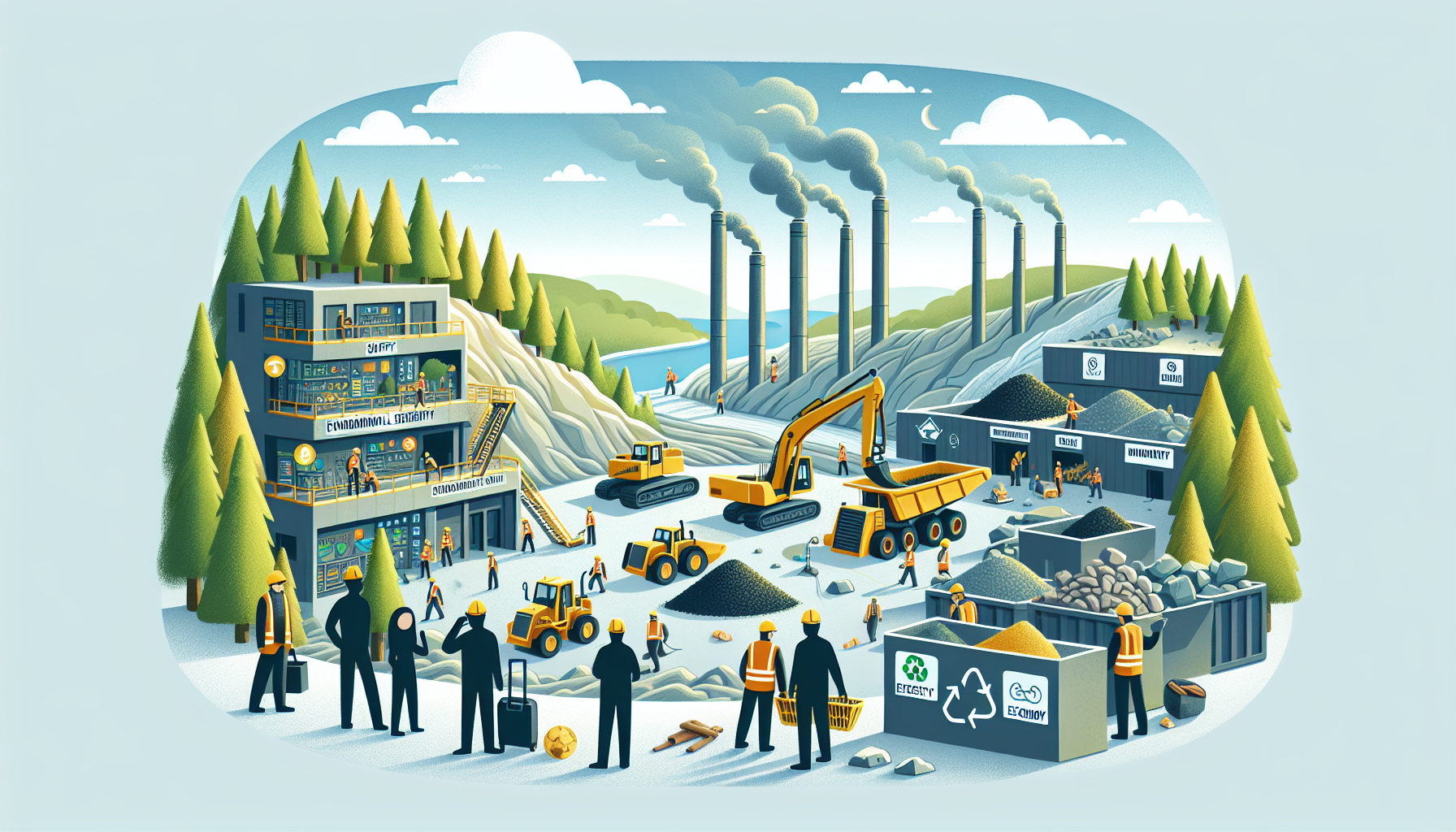
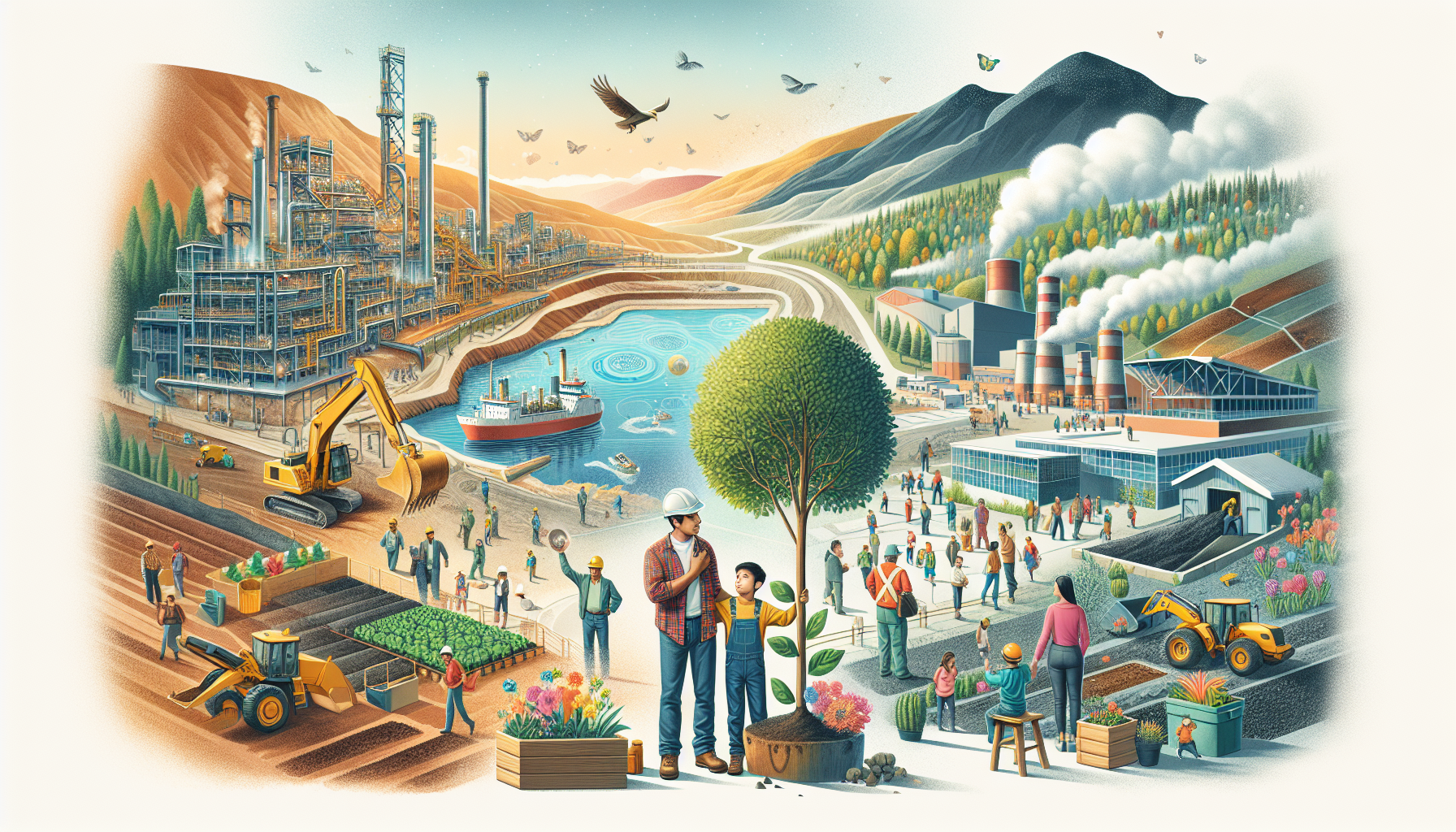
Creating a robust social plan is crucial for ensuring that mining operations are conducted in a manner that is both responsible and sustainable. As mining impacts a range of stakeholders, from workers to local communities, a well-developed social plan addresses the social dimensions of these operations, focusing on the well-being and rights of workers, community engagement, and overall societal impact. This plan is not just about compliance; it’s about integrating ethical considerations into every aspect of mining activities. By developing strategies and initiatives that promote safety, inclusivity, and respect for human rights, mining companies can enhance their social responsibility and foster a positive impact on both their workforce and the communities they operate in. Here’s a comprehensive outline for such a plan:
Introduction
The purpose of this Social Plan for Responsible Mining with a focus on Environmental, Social, and Governance (ESG) principles is to outline a comprehensive framework that guides our mining operations towards sustainable and socially responsible practices. At [Company Name], we recognize our duty to not only operate efficiently but also to be stewards of the environment, champions of social well-being, and advocates for ethical governance.
This plan underscores our commitment to ESG principles, reflecting our dedication to making a positive impact on the communities we operate in, the lives of our employees, and the broader ecosystem. By aligning our practices with these essential pillars, we aim to foster a culture of responsibility, inclusivity, and integrity within our organization.
Stakeholder engagement forms the cornerstone of our approach. We value the perspectives of our employees, the communities surrounding our operations, regulatory bodies, and advocacy groups. Their insights will shape our strategies, ensuring that our actions not only meet industry standards but also exceed them.
In this document, we will detail specific goals, initiatives, and performance metrics across four key areas of social responsibility: Occupational Health and Safety, Inclusivity and Diversity, Community Engagement and Development, and Respecting Human Rights and Indigenous Rights. Through these measures, we strive to build a mining operation that not only prospers economically but also enhances the well-being of all stakeholders involved.
We understand that achieving these goals will be a dynamic process, requiring continuous adaptation and innovation. This plan serves as a guiding beacon, illuminating our path towards a more sustainable and socially responsible future in mining.
Together, we embark on this journey, united in our commitment to ESG principles and the betterment of the communities we touch.
Social Responsibility Goals and Objectives
At [Company Name], our commitment to social responsibility is rooted in a vision of sustainable and inclusive mining operations. Through a set of clear and measurable goals, we aim to make a positive impact on our employees, the communities we operate in, and society at large. Our objectives are structured across four key pillars:
A. Promoting Safety and Well-being
Goal 1: Achieve and maintain a zero-harm work environment, where every employee returns home safely every day.
Objectives:
- Reduce lost-time injury frequency rate by [X]% within the next [timeframe].
- Implement regular safety training and drills, achieving [X]% participation rate by [date].
Goal 2: Enhance the overall well-being and mental health of our workforce.
Objectives:
- Establish wellness programs, targeting [specific areas] with a goal to reach [X]% participation rate by [date].
- Implement stress management and mental health support initiatives, with [X]% of employees utilizing these resources by [date].
B. Fostering Inclusivity and Diversity
Goal 3: Cultivate a diverse and inclusive workforce that reflects the richness of the communities we operate in.
Objectives:
- Increase the representation of underrepresented groups in our workforce by [X]% by [date].
- Establish mentoring and leadership development programs, aiming for [X]% participation rate of underrepresented employees by [date].
Goal 4: Ensure equal opportunities for career advancement and professional growth for all employees.
Objectives:
- Implement performance evaluation processes that mitigate bias and promote equal opportunities.
- Monitor and address any gender or diversity pay gaps, striving for parity by [date].
C. Community Engagement and Development
Goal 5: Actively engage with local communities to understand and address their needs and concerns.
Objectives:
- Conduct quarterly town hall meetings with local stakeholders, maintaining a participation rate of [X]%.
- Establish and support community-driven development projects, benefiting [X] communities by [date].
Goal 6: Create meaningful employment opportunities and skill development programs for local residents.
Objectives:
- Achieve [X]% local hiring rate for entry-level positions by [date].
- Offer skill development and vocational training programs to [X] individuals, leading to [X]% job placement rate.
D. Respecting Human Rights and Indigenous Rights
Goal 7: Uphold and protect the human rights of all individuals impacted by our operations.
Objectives:
- Conduct regular human rights impact assessments and audits, ensuring compliance with international standards.
- Establish effective grievance mechanisms, with [X]% of grievances resolved satisfactorily within [X] days.
Goal 8: Cultivate respectful and mutually beneficial relationships with Indigenous communities.
Objectives:
- Develop formal agreements and partnerships with Indigenous communities, outlining mutual expectations and benefits.
- Prioritize local hiring and procurement from Indigenous-owned businesses, aiming for [X]% of procurement budget by [date].
These goals and objectives represent our unwavering commitment to social responsibility. By striving to achieve these targets, we aim to not only meet industry standards but to set new benchmarks for responsible mining practices. This framework will guide our initiatives, ensuring that we make a positive and lasting impact on the lives of our employees and the communities we serve.
Strategies and Initiatives
The successful implementation of our Social Responsibility Goals and Objectives hinges on a set of well-defined strategies and initiatives. These strategies will form the backbone of our efforts to promote safety, inclusivity, community engagement, and respect for human rights within our mining operations.
A. Occupational Health and Safety
Strategy 1: Strengthening Safety Culture
- Initiative 1: Implement a comprehensive safety training program for all employees, with a focus on hazard recognition and prevention.
- Initiative 2: Establish a safety leadership program to empower supervisors and managers in promoting a safety-first culture.
Strategy 2: Continuous Improvement through Feedback
- Initiative 1: Implement a confidential incident reporting system to encourage employees to report near-misses and safety concerns.
- Initiative 2: Conduct regular safety surveys and focus groups to gather feedback and identify areas for improvement.
Strategy 3: Technological Advancements for Safety
- Initiative 1: Invest in advanced safety technologies, such as wearable devices and IoT sensors, to monitor and mitigate risks.
- Initiative 2: Implement predictive analytics to identify potential safety hazards and take proactive measures.
B. Inclusivity and Diversity
Strategy 1: Inclusive Hiring Practices
- Initiative 1: Collaborate with local educational institutions and vocational training centres to create pathways for underrepresented individuals to enter the mining industry.
- Initiative 2: Implement blind recruitment practices to minimize unconscious bias in the hiring process.
Strategy 2: Employee Development and Advancement
- Initiative 1: Establish mentorship programs that pair experienced employees with those seeking career growth, with a focus on diverse pairings.
- Initiative 2: Provide ongoing training and upskilling opportunities to all employees, ensuring equal access and opportunities for advancement.
Strategy 3: Fostering a Culture of Inclusion
- Initiative 1: Establish Employee Resource Groups (ERGs) focused on diversity and inclusion to provide a platform for open dialogue and support.
- Initiative 2: Organize diversity and inclusion awareness campaigns and workshops to foster understanding and empathy among employees.
C. Community Engagement and Development
Strategy 1: Proactive Communication and Listening
- Initiative 1: Conduct regular community meetings and open forums to facilitate transparent communication and address concerns.
- Initiative 2: Establish a dedicated community hotline for reporting concerns and feedback.
Strategy 2: Tailored Community Development Projects
- Initiative 1: Conduct comprehensive needs assessments in collaboration with local communities to identify priority areas for development projects.
- Initiative 2: Implement projects that align with community needs, such as infrastructure improvement, education, and healthcare initiatives.
Strategy 3: Local Employment and Skill Development
- Initiative 1: Establish partnerships with local educational institutions and vocational training centres to offer specialized training programs for community members.
- Initiative 2: Prioritize local hiring for entry-level positions and provide opportunities for career growth within the organization.
D. Respecting Human Rights and Indigenous Rights
Strategy 1: Due Diligence and Impact Assessments
- Initiative 1: Conduct regular human rights impact assessments to identify and address potential risks and violations.
- Initiative 2: Engage independent third-party auditors to verify compliance with human rights standards.
Strategy 2: Building Trust with Indigenous Communities
- Initiative 1: Establish formal agreements and Memoranda of Understanding (MOUs) with Indigenous communities, outlining mutual expectations and benefits.
- Initiative 2: Provide cultural sensitivity training to employees to foster respectful interactions with Indigenous communities.
These strategies and initiatives serve as the blueprint for our commitment to responsible mining practices. Through their implementation, we aim to not only meet but exceed the expectations of our stakeholders, fostering a culture of social responsibility and sustainable growth within our organization.
Performance Metrics and KPIs
To effectively monitor and measure the progress of our social responsibility initiatives, it is essential to establish clear performance metrics and Key Performance Indicators (KPIs). These metrics will serve as tangible benchmarks, allowing us to track our achievements and identify areas for improvement.
A. Occupational Health and Safety
1. Lost-Time Injury Frequency Rate (LTIFR)
- Definition: The number of lost-time injuries per million hours worked.
- Target: Achieve a [X]% reduction in LTIFR annually.
2. Safety Training Participation Rate
- Definition: The percentage of employees who participate in safety training programs.
- Target: Maintain a minimum participation rate of [X]% per quarter.
3. Near-Miss Reporting Rate
- Definition: The number of reported near-miss incidents per month.
- Target: Encourage employees to report at least [X] near-miss incidents monthly.
B. Inclusivity and Diversity
4. Workforce Diversity Index
- Definition: The representation of different demographics within the workforce.
- Target: Increase the diversity index by [X]% annually.
5. Employee Satisfaction with Inclusivity
- Definition: Percentage of employees indicating satisfaction with inclusivity efforts in internal surveys.
- Target: Achieve a minimum satisfaction rate of [X]% in inclusivity surveys.
6. Promotion and Advancement Equality
- Definition: Measure of equal opportunities for career advancement across all demographic groups.
- Target: Eliminate any disparities in promotion rates based on demographics.
C. Community Engagement and Development
7. Community Satisfaction Index
- Definition: Percentage of surveyed community members expressing satisfaction with our engagement efforts.
- Target: Maintain a minimum satisfaction rate of [X]% in community surveys.
8. Number of Community Development Projects Implemented
- Definition: Total count of community development projects initiated and completed annually.
- Target: Complete at least [X] projects annually.
9. Local Employment Rate
- Definition: The percentage of local residents employed by our organization.
- Target: Maintain a minimum local employment rate of [X]% at all times.
D. Respecting Human Rights and Indigenous Rights
10. Human Rights Due Diligence Score
- Definition: A score based on the effectiveness of our human rights due diligence processes and outcomes.
- Target: Achieve a score of [X] or higher on regular audits.
11. Indigenous Procurement Percentage
- Definition: The percentage of procurement budget spent on Indigenous-owned businesses.
- Target: Increase Indigenous procurement to [X]% of the total procurement budget.
12. Indigenous Community Engagement Index
- Definition: Measure the quality and effectiveness of our engagement with Indigenous communities.
- Target: Maintain a minimum engagement index score of [X]% in annual assessments.
These performance metrics and KPIs will be regularly tracked, analyzed, and reported to assess the effectiveness of our social responsibility initiatives. They serve as quantifiable indicators of our progress and provide valuable insights for continuous improvement.
Monitoring, Reporting, and Transparency
Effectively monitoring our social responsibility initiatives, transparently reporting progress, and engaging stakeholders are critical components of our commitment to responsible mining. This section outlines the mechanisms and practices we will employ to ensure transparency and accountability.
A. Regular Monitoring
1. Data Collection and Management
- Establish a centralized system for collecting, storing, and analyzing data related to social responsibility initiatives.
- Ensure data integrity and accuracy through regular audits and verification processes.
2. Key Performance Indicators (KPIs) Tracking
- Continuously track and analyze performance metrics and KPIs to evaluate progress against established targets.
- Implement real-time monitoring systems for immediate response to any deviations from targets.
3. Incident and Feedback Handling
- Implement a standardized incident reporting and feedback handling process to promptly address any concerns raised by employees, communities, or stakeholders.
- Conduct thorough investigations and provide timely resolutions, ensuring transparency in communication.
B. Transparent Reporting
4. Periodic ESG Reports
- Publish regular ESG reports, providing comprehensive updates on our social responsibility initiatives, progress, and performance against established goals and targets.
- Reports will be made available to all stakeholders through various channels, including our website and public forums.
5. Stakeholder Engagement Platforms
- Utilize digital platforms, such as dedicated web portals and social media channels, to share updates, achievements, and relevant information with stakeholders.
- Solicit feedback and input from stakeholders to enhance transparency and responsiveness.
6. Annual Sustainability Reports
- Develop and release annual sustainability reports, highlighting our social responsibility efforts alongside environmental and governance achievements.
- Ensure these reports align with international reporting frameworks and standards.
C. Independent Verification and Audits
7. Third-Party Audits
- Engage independent third-party auditors to conduct regular assessments of our social responsibility initiatives and performance.
- Ensure audits are thorough, objective, and transparent, with results shared in both summary and detailed formats.
8. Certification and Compliance
- Pursue relevant certifications and adhere to industry-specific compliance standards to validate our commitment to responsible mining.
- Publish certifications and compliance status in our public reports.
D. Stakeholder Engagement
9. Open Dialogue and Consultation
- Establish formal channels for ongoing dialogue with employees, local communities, regulatory bodies, and advocacy groups.
- Actively seek input, address concerns, and incorporate feedback into decision-making processes.
10. Annual Stakeholder Meetings
- Hold annual stakeholder meetings to provide a platform for direct engagement and exchange of information between leadership and key stakeholders.
- Publish meeting summaries and action items for transparency and accountability.
Through these practices, we aim to foster a culture of transparency, accountability, and open communication. We are committed to providing stakeholders with a clear view of our social responsibility efforts and progress, while actively seeking their input to continually improve our initiatives.
Continuous Improvement and Adaptation
Continuous improvement is at the core of our commitment to responsible mining. By actively seeking opportunities for enhancement and adaptation, we ensure that our social responsibility initiatives remain effective and aligned with evolving standards. This section outlines our approach to ongoing improvement.
A. Feedback Loops and Employee Input
1. Employee Feedback Mechanisms
- Establish regular channels for employees to provide feedback on social responsibility initiatives, processes, and workplace conditions.
- Actively review and address suggestions and concerns to drive positive change.
2. Continuous Improvement Forums
- Conduct periodic forums or workshops dedicated to brainstorming and implementing improvements in safety, inclusivity, community engagement, and human rights practices.
- Encourage cross-functional participation to gather diverse perspectives.
B. Innovation for Sustainable Practices
3. Research and Development Initiatives
- Allocate resources to research and development projects focused on innovative technologies and practices that enhance safety, environmental sustainability, and social impact.
- Collaborate with industry partners and academic institutions to stay at the forefront of sustainable mining practices.
4. Pilot Programs and Case Studies
- Implement pilot programs to test new approaches and technologies in specific operational areas.
- Evaluate results and scale successful initiatives for broader implementation.
C. Stakeholder Collaboration
5. Collaborative Partnerships
- Establish partnerships with industry associations, NGOs, governmental agencies, and local communities to leverage collective expertise and resources for sustainable mining practices.
- Jointly develop and implement initiatives that benefit all stakeholders involved.
6. Advisory Boards and Expert Panels
- Form advisory boards or panels comprised of external experts and stakeholders to provide insights and recommendations on improving social responsibility practices.
- Leverage their expertise to shape our approach to responsible mining.
D. Flexibility in Strategy Execution
7. Agility in Response to Change
- Remain agile in adapting our social responsibility strategies and initiatives in response to changing regulatory, technological, and societal landscapes.
- Regularly assess and recalibrate our approach to ensure relevance and effectiveness.
8. Scenario Planning and Risk Assessment
- Conduct scenario planning exercises to anticipate potential future challenges and assess their impact on our social responsibility efforts.
- Develop contingency plans to mitigate risks and ensure continuity in responsible mining practices.
Through these continuous improvement and adaptation strategies, we aim to not only meet current social responsibility standards but also set new benchmarks for responsible mining in the industry. By embracing change and actively seeking opportunities for enhancement, we will remain at the forefront of sustainable and socially responsible mining practices.
Risk Management and Contingency Plans
Effectively identifying and mitigating risks is crucial to maintaining the integrity of our social responsibility initiatives. This section outlines our approach to risk management and the contingency plans we have in place to address potential challenges.
A. Identification of Social Risks
1. Comprehensive Risk Assessment
- Conduct regular assessments to identify potential social risks associated with our mining operations, including safety hazards, community concerns, and human rights issues.
2. Stakeholder Engagement in Risk Identification
- Engage with employees, local communities, regulatory bodies, and advocacy groups to gather insights on potential social risks and concerns.
3. Scenario Planning for Emerging Risks
- Anticipate and prepare for emerging social risks, such as shifts in community expectations, changes in regulatory frameworks, or technological advancements impacting workforce dynamics.
B. Mitigation and Contingency Measures
4. Proactive Mitigation Strategies
- Implement proactive measures to mitigate identified social risks, including enhanced safety protocols, community engagement initiatives, and robust human rights due diligence processes.
5. Incident Response Protocols
- Establish clear and well-defined incident response protocols to address social risks promptly and effectively. This includes reporting mechanisms, escalation procedures, and crisis communication plans.
6. Cross-Functional Response Teams
- Form cross-functional teams with representatives from various departments to ensure a coordinated and swift response to social risks.
C. Crisis Communication Protocols
7. Transparent Communication
- Maintain open and transparent communication channels with stakeholders in the event of a social risk incident, ensuring accurate and timely information is provided.
8. Spokesperson and Media Training
- Provide training for designated spokespersons to effectively communicate with the media, stakeholders, and the public during a crisis situation.
9. Community Engagement During Crisis
- Intensify community engagement efforts during a crisis to address concerns, provide support, and work collaboratively towards resolution.
D. Continual Monitoring and Evaluation
10. Post-Incident Analysis and Learning
- Conduct thorough post-incident analyses to understand root causes, assess the effectiveness of response measures, and identify areas for improvement.
11. Risk Register and Reporting
- Maintain a comprehensive risk register that documents identified social risks, mitigation measures, and contingency plans. Regularly report on risk status and mitigation progress.
12. Adaptation of Contingency Plans
- Continuously review and update contingency plans based on lessons learned from past incidents and changes in the operating environment.
By proactively identifying, mitigating, and planning for social risks, we are committed to maintaining the safety and well-being of our employees, fostering positive relationships with communities, and upholding human rights standards. These contingency plans serve as a critical framework to ensure the resilience and sustainability of our social responsibility initiatives.
Budgeting and Resource Allocation
Effective budgeting and resource allocation are essential to support our social responsibility initiatives. This section outlines how we allocate resources to ensure the success and sustainability of our responsible mining practices.
A. Allocated Budget for ESG Initiatives
1. Dedicated ESG Budget
- Allocate a specific budget for Environmental, Social, and Governance (ESG) initiatives, reflecting our commitment to responsible mining practices.
2. Resource Allocation Committee
- Establish a cross-functional committee responsible for overseeing the allocation of resources to ESG initiatives, ensuring alignment with strategic objectives.
3. Flexible Budgeting Approach
- Adopt a flexible budgeting approach that allows for adjustments based on emerging priorities, feedback from stakeholders, and changing operational conditions.
B. Resource Allocation for Training and Development
4. Employee Training Programs
- Allocate resources for comprehensive training programs focused on safety, inclusivity, diversity, and other key aspects of social responsibility.
5. Professional Development Opportunities
- Provide funding for continuous learning and skill development opportunities for employees, fostering a culture of growth and empowerment.
6. Wellness and Mental Health Resources
- Allocate resources for wellness programs, mental health support services, and initiatives aimed at promoting employee well-being.
C. Investment in Community Development Projects
7. Community Engagement Budget
- Allocate funds specifically dedicated to community engagement efforts, including development projects, education initiatives, and healthcare support.
8. Local Employment and Skill Development Programs
- Allocate resources to support local hiring efforts, vocational training programs, and skill development initiatives to empower and uplift local communities.
9. Indigenous Relations and Partnerships
- Allocate resources for building and maintaining respectful and mutually beneficial relationships with Indigenous communities, including funding for collaborative projects and agreements.
D. Environmental Stewardship Initiatives
10. ESG-Driven Environmental Projects
- Allocate resources for environmental initiatives focused on minimizing environmental impact, conservation efforts, and sustainable practices.
11. Research and Development for Sustainability
- Allocate funding for research and development projects that focus on innovative technologies and practices for environmental sustainability.
12. Compliance and Certification Costs
- Allocate resources to ensure compliance with environmental regulations and standards, including costs associated with obtaining and maintaining relevant certifications.
By carefully allocating resources to support our social responsibility initiatives, we aim to drive meaningful and sustainable impact within our organization and the communities we serve. This budgeting framework enables us to effectively execute our responsible mining practices while maintaining financial stability and accountability.
Legal and Regulatory Compliance
Adherence to local and international laws, as well as industry-specific regulations, is fundamental to our commitment to responsible mining. This section outlines our approach to legal and regulatory compliance.
A. Compliance with Local and International Laws
1. Legal Compliance Committee
- Establish a dedicated committee responsible for monitoring and ensuring compliance with all applicable local, regional, and national laws governing mining operations.
2. Ongoing Legal Audits
- Conduct regular audits and assessments to verify compliance with relevant laws and regulations, addressing any identified gaps or areas of non-compliance promptly.
3. Legal Advisory Support
- Maintain a network of legal advisors and consultants with expertise in mining and related regulations to provide timely guidance and updates on legal requirements.
B. Adherence to Industry Standards and Certifications
4. Industry Association Memberships
- Actively participate in industry associations and organizations that set standards and best practices for responsible mining, leveraging their resources and expertise.
5. Certification Programs
- Pursue and maintain relevant certifications that validate our commitment to responsible mining practices, such as ISO standards and industry-specific certifications.
6. Continuous Improvement in Compliance
- Implement processes for regular review and enhancement of compliance measures, ensuring alignment with evolving industry standards and best practices.
C. Environmental Compliance
7. Environmental Impact Assessments (EIAs)
- Conduct thorough EIAs in accordance with local and international regulations to assess and mitigate potential environmental impacts of mining activities.
8. Pollution Prevention and Control Measures
- Implement measures to prevent and control pollution in accordance with environmental regulations, including waste management and emissions controls.
9. Biodiversity Conservation Efforts
- Develop and implement programs to protect and preserve local biodiversity, aligning with environmental conservation regulations.
D. Health and Safety Regulations
10. Occupational Health and Safety Standards
- Establish and maintain rigorous health and safety protocols in compliance with local and international regulations, ensuring the well-being of our workforce.
11. Emergency Response and Preparedness
- Develop and implement comprehensive emergency response plans that align with regulatory requirements, ensuring a swift and effective response to incidents.
12. Regular Training and Certification
- Provide ongoing training to employees to ensure compliance with health and safety regulations, and maintain certifications and licenses as required.
Through a robust approach to legal and regulatory compliance, we aim to not only meet the minimum requirements but to exceed them, setting a standard for responsible mining practices in the industry. This commitment is foundational to our mission of ensuring the safety, well-being, and sustainability of our operations.
Stakeholder Engagement and Feedback
Engaging with stakeholders and valuing their input is integral to our commitment to responsible mining. This section outlines our approach to stakeholder engagement and the mechanisms in place for gathering feedback.
A. Open Dialogue and Consultation
1. Stakeholder Identification
- Identify key stakeholders, including employees, local communities, regulatory bodies, advocacy groups, and industry partners, to ensure comprehensive engagement.
2. Regular Engagement Forums
- Conduct regular stakeholder meetings, town hall sessions, and open forums to facilitate open and transparent communication channels.
3. Advisory Committees
- Establish advisory committees comprised of representatives from diverse stakeholder groups to provide valuable insights and recommendations.
B. Feedback Mechanisms for Employees and Communities
4. Anonymous Reporting Systems
- Implement confidential reporting systems for employees and community members to raise concerns, share feedback, and report incidents.
5. Dedicated Communication Channels
- Provide easily accessible channels, such as hotlines, emails, and dedicated web portals, for stakeholders to communicate their feedback and concerns.
6. Surveys and Focus Groups
- Conduct regular surveys and focus groups to gather specific feedback on various aspects of our operations, including safety, inclusivity, community engagement, and environmental practices.
C. Response Mechanisms for Grievances and Concerns
7. Grievance Handling Protocols
- Establish clear protocols for receiving, documenting, and responding to grievances from stakeholders, ensuring timely and appropriate resolutions.
8. Escalation Procedures
- Define escalation procedures to address high-priority or complex grievances, ensuring they are addressed by the appropriate levels of management.
9. Follow-Up and Closure
- Ensure that all grievances and concerns are followed up with, and that closure is communicated to the stakeholder, providing transparency in the resolution process.
D. Continuous Improvement through Feedback
10. Feedback Integration into Decision-Making
- Actively incorporate stakeholder feedback into our decision-making processes, demonstrating our commitment to responsiveness and adaptability.
11. Transparent Reporting of Feedback Outcomes
- Share summaries of stakeholder feedback and actions taken in response through regular reporting mechanisms, demonstrating accountability.
12. Feedback Recognition and Appreciation
- Acknowledge and appreciate stakeholders for their contributions and feedback, reinforcing our commitment to a collaborative and inclusive approach.
By actively engaging with stakeholders and valuing their feedback, we aim to build trust, enhance transparency, and strengthen our responsible mining practices. This continuous dialogue ensures that we are responsive to the needs and concerns of our stakeholders, ultimately contributing to the success and sustainability of our operations.
Discover more from AllMinings
Subscribe to get the latest posts sent to your email.