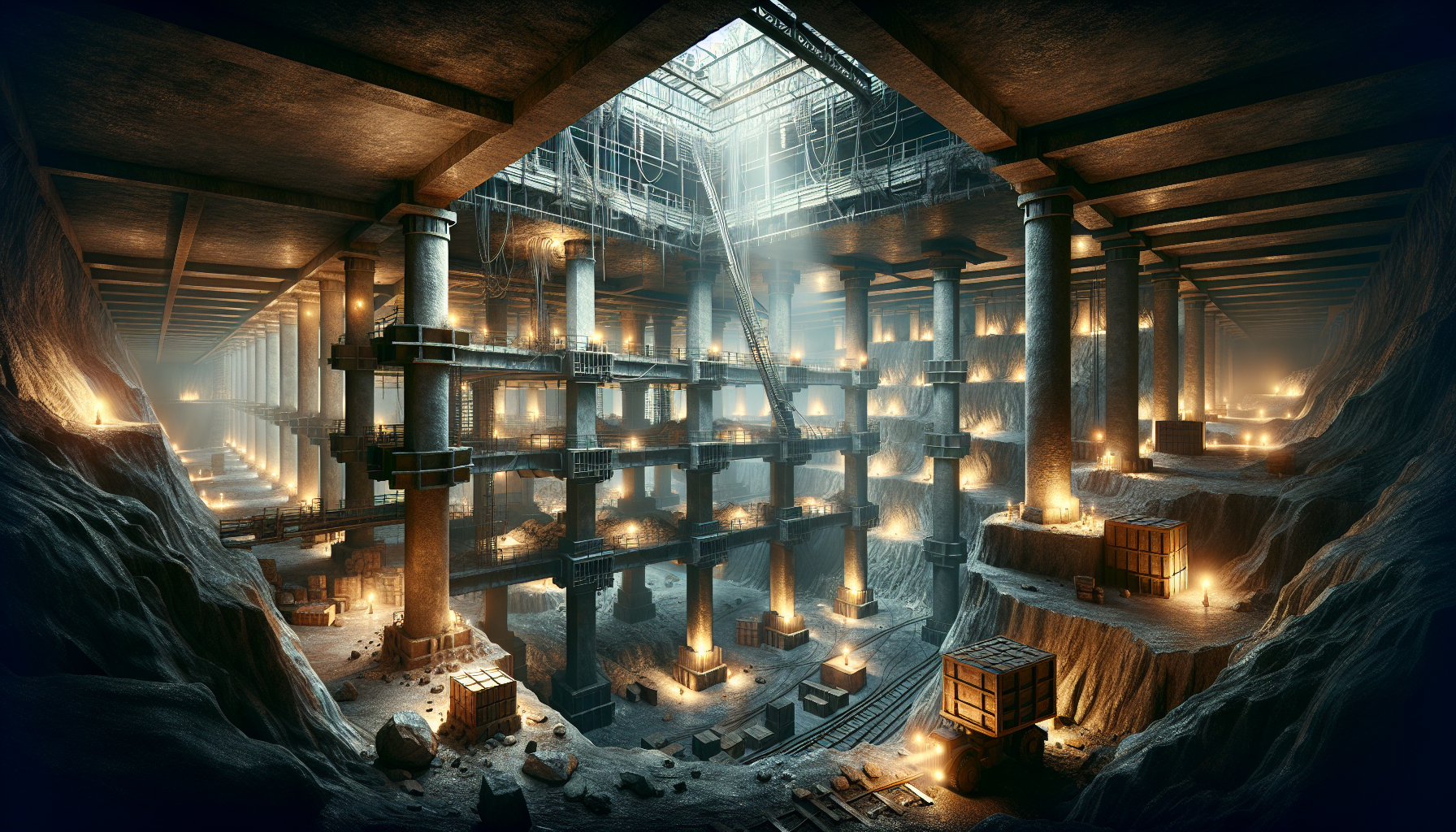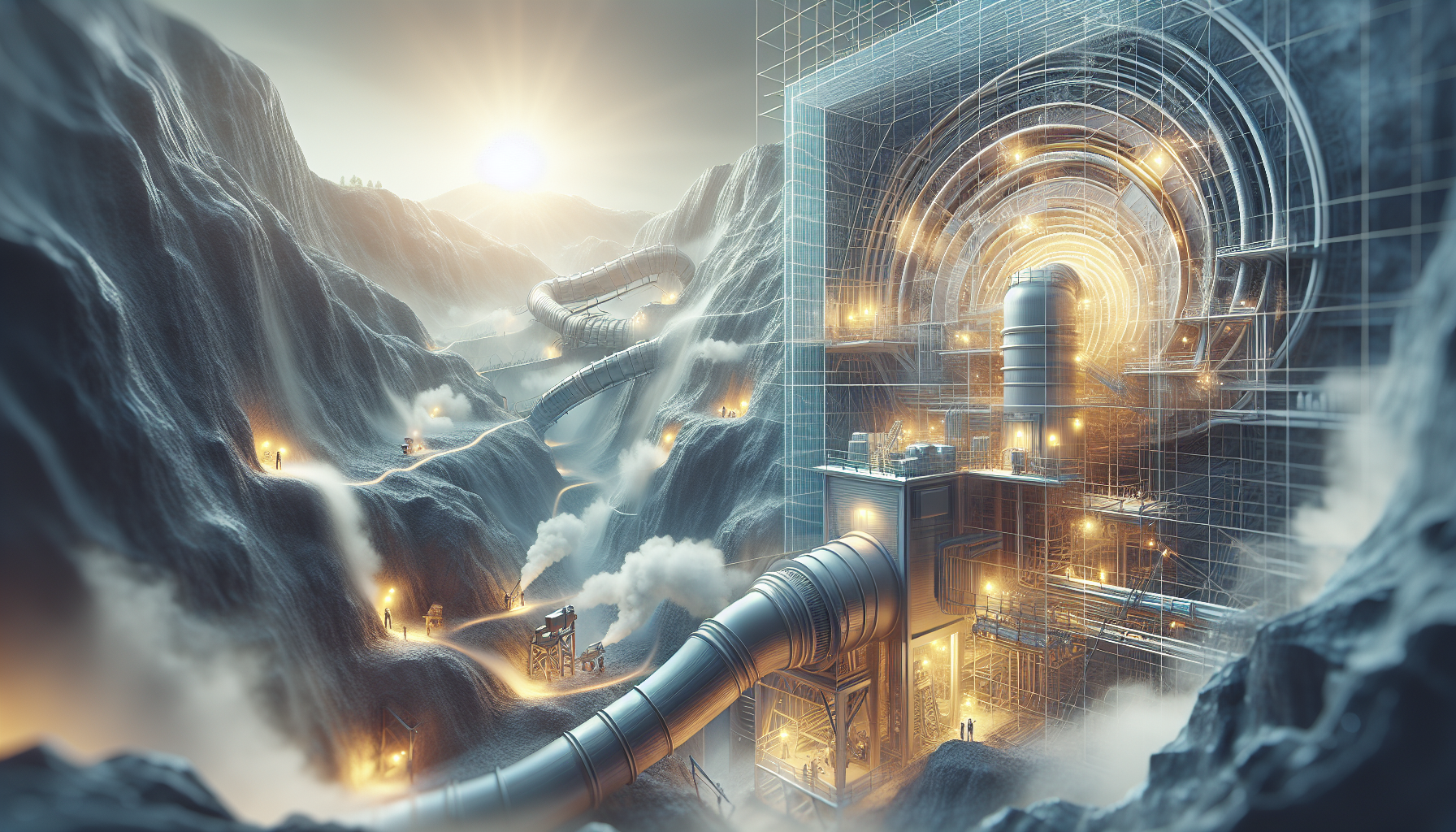
Mine ventilation is a crucial aspect of underground mining operations, aimed at providing a safe and healthy environment for miners. It is controlling the quality and quantity of the air within a mine. It involves the circulation of fresh air into the mine workings while simultaneously removing contaminated or stale air. Here are the key components and principles of mine ventilation:
Primary Ventilation
Primary ventilation in mining refers to the initial supply of fresh air into the underground workings of a mine. This crucial aspect of mine ventilation aims to provide a continuous and controlled flow of clean air to the working areas, ensuring a safe and healthy environment for miners. There are two primary methods of achieving this: forced draft ventilation and natural draft ventilation.
- Forced Draft Ventilation:
- Mechanical Systems: This method involves the use of mechanical equipment such as fans, blowers, or compressors to actively force fresh air into the mine.
- Positive Pressure: By creating a positive pressure zone at the surface entry points, the air is pushed into the mine, displacing the potentially hazardous or contaminated air already present.
- Ductwork and Shafts: The forced air is typically directed through specially designed ventilation ducts or shafts that distribute it to various parts of the mine.
- Regulators and Controls: Various controls are employed to regulate the volume and direction of the airflow to ensure it reaches all necessary areas.
- Variable Speed Drives: These allow for adjustments in fan speed to adapt to changing conditions within the mine, optimizing airflow as needed.
- Natural Draft Ventilation:
- Passive Airflow: This method relies on natural pressure differentials between the surface and underground to facilitate airflow. It takes advantage of the principle that warm air rises and creates a flow from areas of higher pressure to lower pressure.
- Ventilation Shafts: Natural draft ventilation often utilizes shafts that connect the surface to the underground workings. These shafts facilitate the movement of air due to the temperature and pressure differentials.
- Intake and Exhaust Openings: These are strategically located to take advantage of prevailing wind directions and thermal gradients to encourage the movement of fresh air into the mine and the expulsion of contaminated air.
- Chimneys and Air Passages: Natural ventilation systems may incorporate features like chimneys or specially designed air passages to enhance the natural flow of air.
- Mine Layout Considerations: The design and layout of the mine are critical for natural draft ventilation to be effective. It’s essential to consider the positioning of entry and exit points in relation to the prevailing airflow patterns.
Both forced draft and natural draft ventilation methods have their advantages and are often used in combination, depending on the specific geological and operational characteristics of the mine. A well-designed and maintained primary ventilation system is fundamental to ensuring the safety, health, and productivity of miners working underground.
Secondary Ventilation
Secondary ventilation in mining refers to the additional airflow control measures implemented within the underground workings of a mine, following the provision of primary ventilation. Its purpose is to ensure that fresh air reaches all areas of the mine, especially those that may not receive adequate airflow from the primary ventilation system alone. Secondary ventilation plays a crucial role in maintaining safe and healthy working conditions for miners.
Here are key components and methods of secondary ventilation:
- Auxiliary Fans:
- These are additional fans strategically placed throughout the mine to supplement the airflow provided by the primary ventilation system. They help ensure that fresh air reaches all working areas, even those located at a distance from the primary ventilation source.
- Ventilation Ducting:
- Ducting is used to channel and distribute the airflow from auxiliary fans to specific locations within the mine. Well-designed ductwork ensures that fresh air is delivered efficiently to areas where it is needed most.
- Ventilation Controls:
- This includes various devices and systems used to regulate the direction, volume, and distribution of airflow within the mine. Regulators, doors, and ventilation partitions are examples of controls used to direct air to specific working areas.
- Ventilation Curtains and Stoppings:
- These are physical barriers made of cloth, plastic, or other materials that are used to isolate certain sections of the mine. They help direct airflow and prevent the spread of contaminants from one area to another.
- Air Crossings:
- These are specially designed passages that allow airflow to move from one part of the mine to another. They are constructed to minimize resistance and facilitate the efficient distribution of fresh air.
- Overcasts and Undercasts:
- Overcasts are structures built above travelways to allow airflow to pass over them. Undercasts perform a similar function below travel-ways. Both are designed to maintain airflow continuity throughout the mine.
- Ventilation Doors and Regulators:
- These are movable barriers that can be adjusted to control the flow of air in specific passages or areas of the mine. They are critical for directing airflow to where it is needed most.
- Ventilation Controls and Monitoring Systems:
- Modern mines often employ advanced technologies for real-time monitoring and control of ventilation systems. These systems can automatically adjust airflow based on real-time conditions, ensuring optimal ventilation.
- Emergency Ventilation Systems:
- Backup ventilation systems are put in place to ensure continued airflow in the event of a primary ventilation failure. These systems are critical for maintaining a safe environment during emergencies.
Secondary ventilation is a vital aspect of mine safety and productivity. Supplementing the primary ventilation system ensures that fresh air is delivered to all working areas, reducing the risk of hazardous conditions due to poor air quality. Properly designed and maintained secondary ventilation systems are essential for the well-being of miners and the overall success of mining operations.
Ventilation Controls
Ventilation controls in mining refer to the various devices and systems used to regulate the flow, direction, and distribution of air within a mine. These controls are essential for ensuring that fresh air is delivered to the working areas while removing contaminated or stale air. Proper ventilation controls are crucial for maintaining safe and healthy conditions for miners.
Here are some key types of ventilation controls used in mining:
- Regulators:
- Regulators are adjustable devices that control the flow of air through a ventilation passage. They can be manually adjusted to increase or decrease the volume of airflow as needed.
- Doors:
- Ventilation doors are movable barriers that can be opened or closed to control the movement of air within the mine. They are often used to direct airflow to specific areas or to isolate sections of the mine.
- Ventilation Partitions:
- These are physical barriers, often made of cloth or other materials, used to separate different sections of the mine. They help to control the airflow and prevent the spread of contaminants.
- Air Crossings:
- Air crossings are specially designed passages that allow airflow to move from one part of the mine to another. They are constructed to minimize resistance and facilitate the efficient distribution of fresh air.
- Ventilation Curtains and Stoppings:
- These are temporary or semi-permanent barriers made of cloth, plastic, or other materials. They are used to direct airflow and prevent the spread of contaminants from one area to another.
- Pressure Relief Devices:
- These devices are used to relieve excessive pressure build-up in ventilation systems. They ensure that air flows at a safe and controlled rate.
- Dampers:
- Dampers are adjustable plates or vanes used to control the airflow in ducts or passages. They can be manually or automatically adjusted to regulate the volume of air.
- Variable Speed Drives (VSDs):
- VSDs are used in conjunction with fans or blowers to control their speed. This allows for precise adjustment of airflow based on real-time conditions within the mine.
- Emergency Ventilation Controls:
- These are specialized controls and systems designed to activate in emergency situations. They may include backup ventilation systems or the ability to quickly close off certain ventilation pathways in the event of a crisis.
- Automated Ventilation Controls:
- Modern mines often employ automation and monitoring systems that can adjust ventilation controls based on real-time data. This ensures that airflow is optimized for safety and efficiency.
Properly designed and maintained ventilation controls are essential for creating a safe and healthy working environment in mines. They help to ensure that fresh air is distributed efficiently, reducing the risk of hazardous conditions due to poor air quality. Additionally, emergency ventilation controls play a critical role in ensuring the safety of miners in unforeseen situations.
Air Quality Monitoring
Air quality monitoring in mining is the process of systematically assessing the composition of the air within a mine to ensure that it meets specific safety and health standards. This practice is crucial for protecting the well-being of miners and preventing exposure to harmful gases and particulates. Here are the key aspects of air quality monitoring in mining:
- Gas Detection Systems:
- Gas detectors are specialized instruments that measure the concentration of various gases in the mine atmosphere. Common gases monitored include methane, carbon monoxide, hydrogen sulphide, and other potentially hazardous substances.
- Dust and Particle Monitors:
- These devices measure the concentration and size distribution of airborne particles in the mine atmosphere. They are important for assessing the level of dust exposure, which can have significant health implications for miners.
- Continuous Monitoring:
- Many mines employ continuous monitoring systems that provide real-time data on air quality. This allows for immediate response in the event of dangerous conditions.
- Sampling and Analysis:
- Air samples are collected at specific locations and analyzed to determine the concentration of gases and particulates. This information is used to assess compliance with regulatory standards.
- Alarm Systems:
- Monitoring equipment is often integrated with alarm systems that provide audible or visual alerts when air quality levels deviate from safe thresholds. This ensures that miners are promptly alerted to potential hazards.
- Calibration and Maintenance:
- Regular calibration and maintenance of monitoring equipment are essential to ensure accurate and reliable measurements. This helps prevent false alarms and ensures the effectiveness of the monitoring system.
- Data Logging and Reporting:
- Monitoring systems typically include data logging capabilities that record and store air quality data over time. This information is valuable for trend analysis, compliance reporting, and making informed decisions about ventilation and safety protocols.
- Personal Gas Detectors:
- Miners often carry personal gas detectors that continuously monitor the air immediately around them. These devices provide instant warnings if they detect dangerous levels of gases.
- Integration with Ventilation Systems:
- In some advanced systems, air quality data may be integrated with ventilation controls. This allows for automated adjustments to the ventilation system in response to changing air quality conditions.
- Regulatory Compliance:
- Mines are typically subject to specific air quality regulations set by government agencies. Monitoring data is crucial for demonstrating compliance with these standards.
- Training and Education:
- Miners are trained in the use of monitoring equipment and educated about the potential hazards associated with different gases and particulates. They also learn how to respond in the event of an alarm.
Air quality monitoring is a critical component of mine safety. It helps to identify potential hazards early, allowing for timely intervention to protect the health and well-being of miners. Additionally, accurate monitoring data is essential for regulatory compliance and maintaining a safe working environment in mining operations.
Ventilation Planning
Ventilation planning in mining is the process of designing and implementing a system to ensure a controlled flow of air throughout the underground workings of a mine. It is a critical aspect of mine safety and operations, aimed at providing a safe and healthy environment for miners by regulating the quantity and quality of the air. Here are the key components of ventilation planning:
- Ventilation Network Design:
- This involves the layout and arrangement of ventilation pathways, including shafts, drifts, raises, and tunnels, to facilitate the efficient distribution of fresh air to all working areas of the mine.
- Mine Layout Considerations:
- The arrangement of mining activities, including development and stopping, is crucial in determining how airflow will circulate within the mine. Proper layout ensures that fresh air reaches all necessary areas.
- Surveying and Mapping:
- Accurate surveys and maps of the mine, including ventilation pathways and working areas, are essential for effective ventilation planning. This information helps in designing an optimal ventilation network.
- Fan Sizing and Placement:
- Determining the appropriate size and location of ventilation fans is crucial. This involves considering factors such as the depth and extent of the mine, the number of working areas, and the resistance to airflow in different sections.
- Airflow Modeling:
- Computational Fluid Dynamics (CFD) and other modelling techniques are used to simulate airflow patterns within the mine. This allows for the optimization of ventilation designs and helps predict how airflow will behave in different scenarios.
- Ventilation Surveys:
- Regular surveys are conducted to assess the effectiveness of the ventilation system. This involves measuring air velocities, pressures, and gas concentrations at various locations to ensure that the intended airflow is being achieved.
- Environmental Considerations:
- Ventilation planning must take into account environmental factors, such as the potential for air pollution or the release of contaminants. Measures may be implemented to minimize the impact on the surrounding environment.
- Emergency Ventilation Planning:
- Contingency plans are developed to address situations where primary ventilation systems may fail or be compromised. This includes the provision of backup ventilation and refuge stations with independent ventilation systems.
- Regulatory Compliance:
- Ventilation planning must adhere to specific regulatory standards and guidelines set forth by government agencies. Compliance ensures that the mine operates within safe and legal limits.
- Heating and Cooling Considerations:
- Ventilation planning also takes into account the temperature conditions within the mine. Systems may be put in place to regulate and control the temperature to ensure a comfortable working environment.
- Integration with Other Systems:
- Ventilation planning may be integrated with other mine systems, such as air quality monitoring and gas detection, to create a comprehensive safety and health management program.
- Training and Education:
- Miners and ventilation personnel are trained in proper ventilation procedures and safety measures. They learn how to respond in emergency situations and understand the importance of maintaining proper airflow.
Effective ventilation planning is essential for the safety, health, and productivity of miners. It requires careful consideration of the specific geological and operational conditions of the mine, as well as regular maintenance and monitoring to ensure optimal performance.
Airflow Modeling
Airflow modelling in mining refers to the use of mathematical and computational techniques to simulate and predict the movement of air within a mine environment. It is a crucial tool for designing and optimizing ventilation systems, ensuring that fresh air reaches all working areas while removing contaminated or stale air. Here are the key aspects of airflow modelling:
- Computational Fluid Dynamics (CFD):
- CFD is a powerful simulation technique that uses numerical methods to solve complex fluid flow and heat transfer problems. In mining, it is used to model the airflow patterns, temperature distributions, and contaminant dispersion within the mine.
- Geometry and Boundary Conditions:
- A detailed three-dimensional model of the mine, including shafts, drifts, stopes, and other structures, is created. Boundary conditions, such as fan characteristics, ventilation controls, and physical properties of the rock and air, are defined.
- Fan and Ventilation Network Representation:
- The model includes representations of fans, ductwork, regulators, doors, and other components of the ventilation system. These elements are used to simulate the flow of air through the network.
- Rock Mass Properties:
- The characteristics of the rock mass, including porosity, permeability, and thermal conductivity, are considered in the model. These properties affect how air flows through the geological formations.
- Thermal Considerations:
- Airflow modelling can account for heat exchange between the ventilation air and the surrounding rock. This is important for understanding temperature distributions within the mine.
- Gas Dispersion Modeling:
- In addition to airflow, models may also simulate the dispersion of gases within the mine. This is crucial for assessing the spread of potentially hazardous gases.
- Dynamic Simulations:
- Some models can simulate dynamic scenarios, such as emergency situations or changes in ventilation controls. This helps assess how the ventilation system responds to different conditions.
- Steady-State and Transient Simulations:
- Models can be run in steady-state mode, assuming a constant airflow pattern, or in transient mode, allowing for the simulation of changing conditions over time.
- Optimization and Design Evaluation:
- Airflow modelling allows for the evaluation of different ventilation system designs and configurations. It helps determine the most effective layout and equipment specifications to achieve desired airflow patterns.
- Sensitivity Analysis:
- Airflow models can be used to perform sensitivity analyses, assessing how changes in parameters or boundary conditions affect ventilation performance.
- Validation and Verification:
- Models are typically validated against real-world measurements of airflow and air quality within the mine. This ensures that the model accurately represents the actual conditions.
- Scenario Analysis:
- Airflow modelling can be used to simulate different scenarios, such as changes in mining activity, equipment placement, or emergency situations. This helps in planning for various contingencies.
Airflow modelling is a valuable tool in mine ventilation planning. It allows engineers and safety experts to predict and optimize ventilation systems, ensuring a safe and healthy working environment for miners. Additionally, it aids in compliance with regulatory standards and the development of contingency plans for emergency situations.
Heating and Cooling
Heating and cooling in mining refer to the processes of regulating the temperature within a mine environment to ensure a safe, comfortable, and productive working environment for miners. These processes are essential for preventing extreme temperature conditions that could pose risks to health and safety. Here are the key aspects of heating and cooling in mining:
- Heating:
- Purpose: Heating is employed to raise the temperature within the mine, particularly in colder climates or during winter months. It helps prevent the freezing of equipment, water, and other critical components.
- Methods:
- Electric Heaters: Electrical heating systems are commonly used to provide localized heating in specific areas of the mine.
- Steam Heaters: These systems use steam as a medium to distribute heat throughout the mine workings.
- Hot Water Systems: Hot water is circulated through pipes to provide warmth.
- Localized Heating:
- In some cases, heating may be concentrated in specific areas where it is needed most, such as near machinery or in refuge stations.
- Safety Considerations:
- It is important to use heating systems that do not produce harmful emissions or contaminants, as poor air quality can be a risk to miners’ health.
- Cooling:
- Purpose: Cooling is implemented to lower the temperature within the mine, especially in regions with high ambient temperatures or in deep underground mines where geothermal heat may be a factor.
- Methods:
- Air Conditioning Systems: These systems use a combination of cooling units, fans, and ductwork to circulate conditioned air throughout the mine.
- Cooling Water Systems: Chilled water may be circulated to absorb heat from the environment.
- Localized Cooling:
- Cooling systems may be strategically placed to target specific areas or equipment that generate excess heat.
- Dehumidification:
- In addition to lowering the temperature, cooling systems can also help control humidity levels, which is important for preventing the growth of mould and ensuring a comfortable working environment.
- Safety Considerations:
- Cooling systems should be designed to prevent condensation and maintain proper ventilation to avoid the accumulation of harmful gases.
- Thermal Comfort Standards:
- Designing heating and cooling systems involves considering thermal comfort standards to ensure that miners can work safely and effectively. These standards take into account factors like air temperature, humidity, air movement, and clothing.
- Energy Efficiency:
- It is important to implement heating and cooling systems that are energy-efficient to minimize environmental impact and reduce operating costs.
- Integration with Ventilation:
- Heating and cooling systems must be integrated with the overall ventilation plan to ensure that conditioned air reaches all working areas effectively.
- Emergency Cooling:
- Contingency plans should include provisions for emergency cooling in the event of a ventilation failure or other crisis.
Heating and cooling are critical aspects of mine safety and productivity. They contribute to a safe and comfortable working environment, which is essential for the well-being of miners and the efficient operation of the mine. Additionally, effective heating and cooling systems help to prolong the lifespan of equipment and infrastructure.
Ventilation Safety Devices
Ventilation safety devices in mining are specialized equipment and systems designed to ensure the continuous and safe supply of fresh air to underground workers. These devices play a crucial role in maintaining a safe and healthy environment for miners, especially in the event of emergencies or ventilation system failures. Here are some key ventilation safety devices commonly used in mining:
- Emergency Refuge Stations:
- These are designated safe havens within the mine equipped with independent ventilation systems. They provide a secure location for miners to seek shelter in the event of an emergency, such as a fire or a ventilation failure.
- Backup Ventilation Systems:
- Backup ventilation systems are designed to activate automatically or manually in the event of a primary ventilation failure. They ensure that a continuous supply of fresh air is maintained even when the primary system is compromised.
- Emergency Stop Buttons:
- These are strategically placed throughout the mine and are connected to the ventilation system controls. They allow miners to quickly shut down ventilation fans in the event of an emergency to prevent the spread of contaminants.
- Airlocks and Air Doors:
- Airlocks are double-doored chambers designed to maintain a pressure barrier between different parts of the mine. They help prevent the spread of contaminants and maintain the integrity of ventilation zones.
- Isolation Devices:
- These can include physical barriers or valves that can be activated to isolate specific sections of the mine in the event of a ventilation emergency. This prevents the spread of contaminants to unaffected areas.
- Oxygen Supply Systems:
- In the event of a ventilation failure or an emergency, oxygen supply systems may be deployed to ensure that miners have access to breathable air until ventilation is restored.
- Portable Ventilation Units:
- These are compact, mobile ventilation systems that can be deployed in specific areas of the mine where ventilation is temporarily compromised. They provide a localized source of fresh air.
- Escape Respirators:
- These are personal protective devices that provide a short-term supply of clean breathing air in case of an emergency where the mine atmosphere is compromised.
- Communication Systems:
- Effective communication systems are crucial for coordinating responses to ventilation emergencies. They allow miners to relay information about the situation and receive instructions for action.
- Gas Detection Systems (as a safety device):
- While primarily used for monitoring air quality, gas detection systems also serve as safety devices by providing early warning of potential hazards, allowing miners to take appropriate action.
- Emergency Response Plans:
- Well-defined emergency response plans outline procedures for dealing with ventilation-related emergencies. They include specific protocols for using safety devices and seeking refuge in designated areas.
- Training and Drills:
- Regular training sessions and emergency drills are conducted to familiarize miners with the operation of safety devices and the appropriate actions to take in the event of a ventilation emergency.
Ventilation safety devices are critical for ensuring the safety and well-being of miners. They provide essential measures to protect miners during emergencies or unexpected ventilation system failures, ultimately contributing to a safer working environment in underground mines.
Mine Ventilation Plans
A mine ventilation plan is a comprehensive document that outlines the strategies, systems, and procedures for maintaining a safe and healthy atmosphere within a mine. It is a crucial component of mine safety management and is required by regulatory agencies to ensure that proper ventilation practices are followed. Here are the key elements typically included in a mine ventilation plan:
- Introduction and Purpose:
- This section provides an overview of the purpose and importance of the ventilation plan, emphasizing its role in ensuring the safety and health of miners.
- Regulatory Compliance:
- Details the specific legal requirements and regulations that the ventilation plan adheres to. This section may include references to relevant government agencies and their guidelines.
- Mine Description:
- Provides an overview of the mine’s layout, including the location and dimensions of shafts, drifts, stopes, and other workings. This section may also include geological information that impacts ventilation.
- Ventilation Network Design:
- Describes the layout of ventilation pathways, including primary and secondary ventilation systems, shafts, drifts, raises, and other ventilation infrastructure.
- Fan and Ventilation Equipment Specifications:
- Details the specifications of ventilation equipment, including fan types, sizes, capacities, and locations. This section may also include information on backup and emergency ventilation systems.
- Airflow Quantification:
- Provides data on the volume of air entering and exiting the mine, including information on air velocity, pressure differentials, and flow rates.
- Ventilation Controls:
- Describes the various controls used to regulate airflow within the mine, including regulators, doors, partitions, and other devices.
- Emergency Ventilation Procedures:
- Outlines specific procedures to be followed in the event of a ventilation failure or emergency. This may include instructions for using refuge stations and activating backup ventilation systems.
- Air Quality Monitoring:
- Details the procedures and equipment used to monitor air quality, including gas detection systems and dust/particulate monitors. This section may also include thresholds for acceptable air quality parameters.
- Contingency Plans:
- Outlines the steps to be taken in the event of unexpected conditions, such as fires, explosions, or cave-ins, that may impact ventilation.
- Training and Education:
- Describes the training programs and educational materials provided to miners regarding ventilation practices, safety procedures, and emergency response protocols.
- Maintenance and Inspection:
- Outlines the schedule and procedures for inspecting and maintaining ventilation equipment to ensure optimal performance.
- Record Keeping:
- Details the documentation and records that must be maintained, including airflow measurements, air quality data, equipment inspections, and emergency response drills.
- Review and Revision:
- Specifies how and when the ventilation plan will be reviewed, updated, and revised to account for changes in mine operations, regulations, or other relevant factors.
A well-documented and regularly updated ventilation plan is essential for the safe and efficient operation of a mine. It serves as a vital reference for miners, supervisors, and regulatory agencies, ensuring that proper ventilation practices are consistently followed to protect the health and safety of all personnel working underground.
Automation and Monitoring Systems
Automation and monitoring systems in mining involve the use of advanced technology to enhance safety, efficiency, and productivity in underground operations. These systems utilize sensors, data analytics, and automated processes to gather real-time information and control various aspects of mining operations. Here are the key components and benefits of automation and monitoring systems in mining:
- Remote Monitoring:
- Remote monitoring systems allow operators and supervisors to access and oversee various aspects of the mining operation from a centralized control room or even off-site locations. This includes monitoring ventilation, equipment status, air quality, and more.
- Real-Time Data Acquisition:
- Sensors and monitoring devices are deployed throughout the mine to continuously collect data on factors like air quality, temperature, humidity, equipment status, and more. This data is transmitted in real-time to a central control system.
- Ventilation Control:
- Automated systems can adjust ventilation controls based on real-time conditions. This ensures that airflow is optimized for safety and efficiency, responding to changes in underground conditions or mining activity.
- Fan Control Systems:
- These systems automatically adjust fan speeds and airflow based on real-time data, ensuring that fresh air is delivered to all areas of the mine as needed.
- Gas Detection and Monitoring:
- Advanced gas detection systems continuously monitor for hazardous gases, providing immediate alerts in the event of elevated concentrations. Automation can trigger responses such as ventilation adjustments or emergency protocols.
- Equipment Monitoring and Control:
- Sensors on mining equipment collect data on factors like engine performance, temperature, and load conditions. This information is used to optimize equipment operation and schedule maintenance.
- Automated Ventilation Controls:
- Based on predefined criteria and real-time data, automated systems can adjust ventilation controls, such as regulators and doors, to direct airflow where it is needed most.
- Predictive Maintenance:
- Automation systems can analyze data from equipment sensors to predict when maintenance is needed. This allows for proactive maintenance, reducing the risk of unexpected breakdowns and improving equipment lifespan.
- Energy Efficiency:
- Automation can optimize energy usage by adjusting ventilation and equipment operation based on real-time conditions. This helps reduce energy costs and environmental impact.
- Emergency Response Systems:
- Automation can trigger emergency response procedures in the event of critical situations, such as ventilation failures or the detection of hazardous gases.
- Data Analytics and Reporting:
- Advanced software processes the data collected, providing insights, trends, and reports to support decision-making and improve operational efficiency.
- Integration with Ventilation Models:
- Automation systems can be integrated with airflow modelling to dynamically adjust ventilation controls based on predicted airflow patterns.
- Security and Safety Systems:
- Automation can control access to certain areas of the mine and trigger safety protocols, like evacuation alerts or refuge station activation, in the event of emergencies.
Automation and monitoring systems play a vital role in enhancing safety, productivity, and efficiency in mining operations. By leveraging technology and real-time data, these systems empower mining companies to make informed decisions, respond swiftly to changing conditions, and ensure the well-being of miners. They also contribute to sustainable mining practices by optimizing resource utilization and reducing environmental impact.
Discover more from AllMinings
Subscribe to get the latest posts sent to your email.