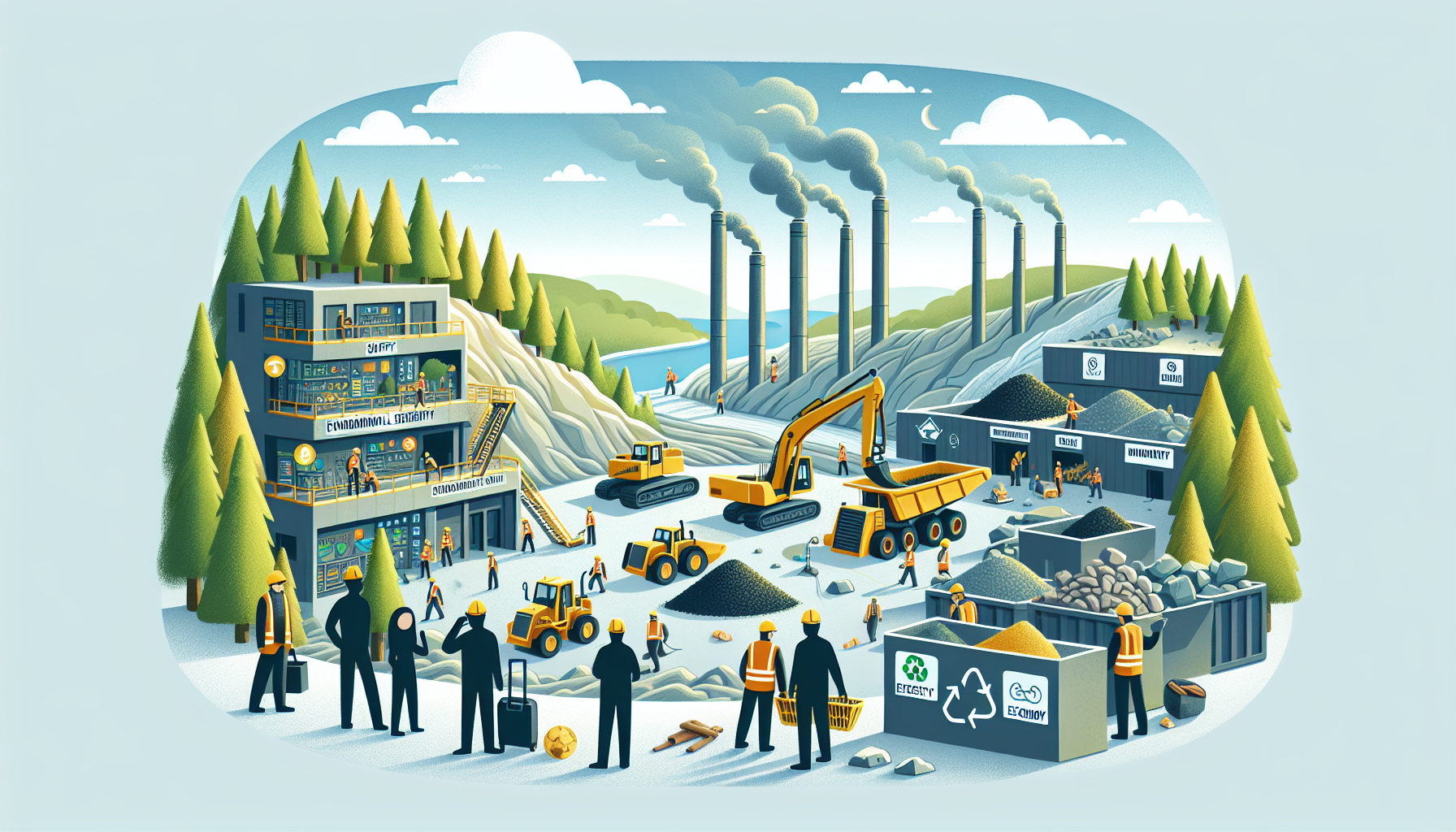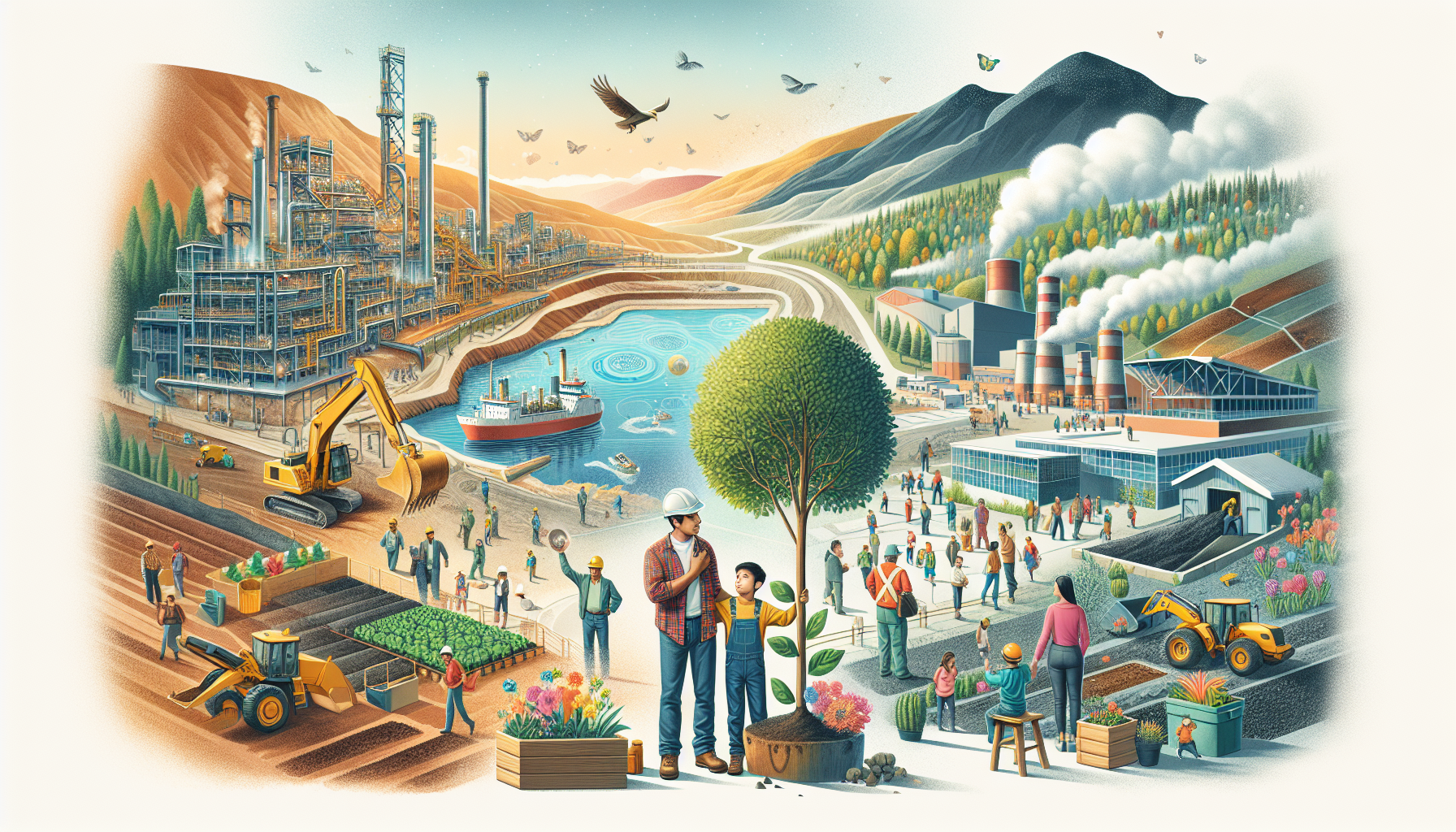
Mining Governance is the implementation of environmental regulations and standards to ensure responsible and sustainable mining practices. Mining, as a critical component of global industrial development, plays a pivotal role in economic prosperity, job creation, and resource supply. However, the industry’s activities often intersect with environmental, social, and economic concerns, necessitating a robust framework of governance to mitigate potential negative impacts. This abstract outlines key considerations and approaches for establishing effective mining governance systems that harmonize industry growth with environmental stewardship. Here are the main topics related to mining governance:
Regulatory Frameworks and Policy Development
Regulatory frameworks and policy development form the cornerstone of effective mining governance, providing the legal and administrative structures that govern the exploration, extraction, and management of mineral resources. This process involves the creation and enforcement of rules, guidelines, and standards to ensure that mining operations align with broader societal goals, including environmental sustainability, social equity, and economic prosperity.
Key Components:
- Legislative Frameworks:
- Drafting and enacting laws that govern the entire mining lifecycle, from exploration to closure and rehabilitation.
- Defining ownership rights, licensing procedures, and permitting requirements for mining activities.
- Environmental Regulations:
- Establishing guidelines for conducting environmental impact assessments (EIAs) and mitigating potential harm to ecosystems.
- Implementing pollution control measures and setting standards for air, water, and soil quality.
- Social and Community Considerations:
- Incorporating provisions to engage with affected communities, address their concerns, and share benefits.
- Ensuring mechanisms for informed consent, participatory decision-making, and equitable resource distribution.
- Health and Safety Standards:
- Prescribing protocols and safety measures to protect the well-being of workers in mining operations.
- Enforcing occupational health and safety regulations to prevent accidents and occupational illnesses.
- Transparency and Reporting Requirements:
- Mandating regular reporting of mining activities, including production volumes, financial disclosures, and environmental impact assessments.
- Promoting transparency in revenue flows and royalty payments to government entities.
- Fiscal and Royalty Regimes:
- Defining taxation structures, royalty rates, and other fiscal policies to ensure a fair return on mineral resources for the state.
- Balancing revenue generation with incentivizing responsible and sustainable mining practices.
- Compliance and Enforcement Mechanisms:
- Establishing regulatory bodies, agencies, or authorities responsible for overseeing compliance with mining laws and regulations.
- Implementing inspection, monitoring, and enforcement mechanisms to penalize non-compliance and encourage adherence.
- Adaptive Management and Flexibility:
- Allowing for periodic reviews and updates of regulatory frameworks to adapt to evolving industry practices, technological advancements, and changing societal expectations.
- Providing flexibility to address emerging challenges and opportunities in the mining sector.
- International Standards and Agreements:
- Aligning regulatory frameworks with international best practices, conventions, and agreements related to mining and resource management.
- Facilitating collaboration and information exchange with other countries to ensure global compatibility.
- Conflict Resolution and Dispute Mechanisms:
- Establishing processes for resolving conflicts among stakeholders, including governments, mining companies, local communities, and environmental organizations.
- Providing accessible and fair mechanisms for arbitration and mediation.
A well-crafted regulatory framework and robust policy development process are vital for establishing a balanced and sustainable mining sector that maximizes economic benefits while safeguarding the environment and promoting social well-being.
Environmental Impact Assessment and Mitigation
Environmental Impact Assessment (EIA) and mitigation strategies are crucial components of responsible mining governance. They provide a structured approach to evaluate and address the potential environmental effects of mining activities. By identifying and mitigating adverse impacts, these processes aim to promote sustainable resource extraction while safeguarding ecosystems and communities.
Key Components:
- Baseline Data Collection:
- Conducting comprehensive surveys to establish the existing environmental conditions in and around the proposed mining area.
- Gathering data on soil quality, water resources, biodiversity, air quality, and other relevant factors.
- Impact Identification and Assessment:
- Identifying potential direct and indirect impacts of mining activities on the environment, including habitat disruption, water pollution, and air emissions.
- Evaluating the magnitude, duration, and spatial extent of these impacts.
- Stakeholder Engagement and Consultation:
- Engaging with local communities, indigenous groups, environmental organizations, and other stakeholders to gather input and address concerns.
- Incorporating local knowledge and perspectives into the assessment process.
- Alternative Site Selection and Design:
- Exploring alternative locations or mining methods that may have lower environmental impacts.
- Designing mining plans and infrastructure layouts to minimize disruption to sensitive areas.
- Mitigation Measures and Best Practices:
- Developing a comprehensive plan to mitigate identified impacts through engineering, operational, and procedural measures.
- Implementing best practices and innovative technologies to minimize negative effects.
- Monitoring and Compliance:
- Establishing a monitoring program to track environmental parameters and assess the effectiveness of mitigation measures.
- Ensuring ongoing compliance with environmental standards and regulatory requirements.
- Contingency and Emergency Response Planning:
- Formulating protocols and strategies to address unforeseen environmental incidents or emergencies, such as spills, leaks, or natural disasters.
- Rehabilitation and Closure Planning:
- Developing a detailed plan for post-mining rehabilitation and restoration of the site.
- Implementing measures to stabilize and revegetate disturbed areas, and to address long-term water quality concerns.
- Financial Assurance and Liability:
- Establishing mechanisms to ensure that adequate financial resources are available for environmental restoration and closure activities.
- Holding mining operators accountable for environmental liabilities.
- Public Reporting and Transparency:
- Providing accessible and clear information about the environmental impacts, mitigation measures, and monitoring results to the public and relevant stakeholders.
The Environmental Impact Assessment process, when integrated into mining governance, helps to strike a balance between resource exploitation and environmental protection. It ensures that mining activities are conducted in a manner that minimizes harm to ecosystems and local communities while allowing for responsible resource extraction.
Stakeholder Engagement and Community Relations
Effective stakeholder engagement and positive community relations are essential aspects of responsible mining governance. These processes acknowledge the interests and concerns of various stakeholders, including local communities, indigenous groups, environmental organizations, and government agencies. By fostering collaboration and addressing the needs of these stakeholders, mining operations can contribute to sustainable development and minimize conflicts.
Key Components:
- Stakeholder Identification and Mapping:
- Identifying and categorizing all relevant stakeholders, including those directly and indirectly affected by mining activities.
- Mapping the interests, concerns, and roles of each stakeholder group in the mining context.
- Communication and Information Sharing:
- Establishing transparent and open channels of communication to share information about mining plans, impacts, and benefits.
- Providing clear, accessible, and culturally appropriate information to ensure stakeholders are well-informed.
- Community Engagement and Consultation:
- Initiating regular dialogues and consultations with affected communities to solicit input on mining activities, environmental concerns, and potential benefits.
- Incorporating community feedback into decision-making processes, where feasible.
- Benefit Sharing and Local Development:
- Developing mechanisms to ensure that mining benefits, such as jobs, revenue, and infrastructure improvements, are equitably distributed among local communities.
- Investing in local education, healthcare, and economic diversification to enhance the well-being of affected populations.
- Conflict Resolution and Grievance Mechanisms:
- Establishing clear and accessible procedures for addressing conflicts and grievances that may arise between stakeholders, mining companies, and regulatory authorities.
- Ensuring impartial and fair resolution processes.
- Cultural and Social Sensitivity:
- Respecting the cultural heritage and traditions of indigenous communities and other local groups.
- Mitigating cultural impacts and collaborating on cultural preservation efforts.
- Capacity Building and Training:
- Providing training and capacity-building programs to empower local communities and stakeholders to participate effectively in the mining process.
- Promoting entrepreneurship and skills development.
- Environmental and Social Impact Assessment (ESIA) Consultation:
- Engaging stakeholders in the ESIA process, allowing them to contribute to impact assessment and mitigation strategies.
- Addressing concerns raised during the assessment and ensuring that mitigation measures are responsive to community needs.
- Long-Term Engagement and Legacy Planning:
- Committing to sustained engagement throughout the mining lifecycle, including closure and post-mining activities.
- Developing plans for the transition of affected communities and areas once mining operations cease.
- Transparency and Reporting:
- Providing regular updates and reports on community engagement efforts, benefit-sharing initiatives, and progress in addressing stakeholder concerns.
- Promoting accountability and trust through transparent practices.
Effective stakeholder engagement and community relations can foster a cooperative and mutually beneficial relationship between mining companies, governments, and local communities. This collaborative approach is instrumental in achieving responsible and sustainable resource extraction, while also ensuring that the social and environmental impacts of mining are minimized and managed effectively.
Transparency, Accountability, and Anti-Corruption Measures
Transparency, accountability, and anti-corruption measures are critical pillars of responsible mining governance. They establish a framework for ethical conduct, open communication, and fair practices within the mining industry. By promoting integrity and trust, these measures help ensure that mining activities benefit society as a whole and are conducted in a manner that upholds the public interest.
Key Components:
- Open Access to Information:
- Providing public access to relevant information about mining operations, including permits, licenses, environmental assessments, and financial disclosures.
- Creating platforms for stakeholders to easily access and scrutinize pertinent data.
- Clear Regulatory Frameworks:
- Establishing well-defined and transparent rules and regulations governing the mining industry leaves little room for ambiguity or interpretation.
- Ensuring that regulatory processes are easily understood and accessible to all stakeholders.
- Ethical Conduct and Code of Ethics:
- Implementing a code of conduct that outlines ethical standards and behaviours expected of all parties involved in mining operations.
- Setting a strong tone at the top to promote a culture of integrity and compliance.
- Whistleblower Protection:
- Instituting mechanisms to protect individuals who report unethical practices, corruption, or violations of regulations within the mining sector.
- Offering confidential reporting channels and safeguards against retaliation.
- Financial Transparency and Reporting:
- Requiring mining companies to disclose financial information, including revenues, taxes paid, and royalties, in a clear and standardized manner.
- Enabling independent audits of financial statements to verify compliance.
- Conflict of Interest Management:
- Implementing policies and procedures to identify, disclose, and manage conflicts of interest among stakeholders, including government officials, industry representatives, and regulatory authorities.
- Preventing situations where personal interests may unduly influence decision-making.
- Anti-Corruption Policies and Training:
- Developing and enforcing anti-corruption policies that explicitly prohibit bribery, extortion, and other corrupt practices.
- Providing training and awareness programs to educate stakeholders about the risks associated with corruption and the importance of compliance.
- Independent Oversight and Regulatory Bodies:
- Establishing independent agencies or bodies tasked with overseeing compliance with mining regulations and ethical standards.
- Ensuring that these entities have the authority and resources to effectively carry out their functions.
- Due Diligence and Risk Assessment:
- Conducting thorough due diligence on business partners, suppliers, and contractors to identify and mitigate potential corruption risks.
- Implementing risk assessment processes to evaluate and address corruption vulnerabilities within the supply chain.
- Enforcement and Sanctions:
- Implementing robust enforcement mechanisms to hold violators of mining regulations and anti-corruption policies accountable.
- Imposing appropriate sanctions, including fines, penalties, and legal actions, for non-compliance.
By emphasizing transparency, accountability, and anti-corruption measures, mining governance can create an environment of trust and integrity. This, in turn, fosters a sustainable and responsible mining industry that benefits both the economy and society at large.
Health and Safety Regulations
Health and safety regulations in mining governance are paramount for safeguarding the well-being of workers and mitigating potential risks associated with mining operations. These regulations are designed to ensure that mining activities are conducted in a manner that prioritizes the health, safety, and welfare of all individuals involved.
Key Components:
- Risk Assessment and Hazard Identification:
- Conducting thorough assessments to identify potential risks, hazards, and dangers associated with mining activities.
- Categorizing and prioritizing identified risks based on severity and likelihood of occurrence.
- Personal Protective Equipment (PPE):
- Mandating the use of appropriate personal protective equipment, including helmets, gloves, eye protection, respiratory devices, and safety clothing.
- Ensuring that PPE is readily available, properly fitted, and regularly maintained.
- Safety Training and Education:
- Providing comprehensive training programs to equip workers with the knowledge and skills necessary to perform their tasks safely.
- Conduct regular safety drills and workshops to reinforce best practices and emergency procedures.
- Emergency Response and Evacuation Plans:
- Establishing detailed plans and procedures for responding to emergencies, accidents, and natural disasters.
- Conduct regular drills to ensure that all personnel are familiar with evacuation routes and emergency protocols.
- Ventilation and Air Quality Control:
- Implementing measures to control and monitor air quality within mining operations, especially in underground environments.
- Ensuring adequate ventilation systems to minimize exposure to harmful gases, dust, and pollutants.
- Ground Control and Stability:
- Conducting geotechnical assessments to evaluate the stability of mine workings, tunnels, and excavation sites.
- Implementing measures to control ground movements and prevent collapses.
- Equipment Safety and Maintenance:
- Establishing protocols for the safe operation, inspection, and maintenance of mining equipment and machinery.
- Conducting regular checks to identify and address potential mechanical failures or safety hazards.
- Fatigue Management and Work Hours:
- Regulating work hours and scheduling practices to prevent fatigue-related accidents and injuries.
- Providing adequate rest periods and ensuring that workers are not overexerted.
- Health Surveillance and Monitoring:
- Conduct regular health assessments and medical examinations to monitor the well-being of workers, particularly in environments with potential occupational health hazards.
- Tracking exposure to harmful substances and implementing measures to mitigate health risks.
- Reporting and Investigation of Incidents:
- Mandating the reporting of all accidents, incidents, and near misses, along with thorough investigations to determine root causes and prevent future occurrences.
- Implementing a no-blame culture to encourage open reporting and learning from incidents.
By establishing and enforcing comprehensive health and safety regulations, mining governance ensures that workers are provided with a safe and secure working environment. This proactive approach not only protects individuals but also contributes to the long-term sustainability and success of the mining industry.
Technology and Innovation in Mining
Technology and innovation play a pivotal role in modernizing and optimizing mining operations. Their integration into mining governance is essential for enhancing efficiency, safety, and sustainability within the industry. By leveraging cutting-edge technologies, mining activities can be conducted in a more responsible and environmentally conscious manner.
Key Components:
- Automation and Robotics:
- Implementing autonomous vehicles, drones, and robotic systems for tasks such as exploration, drilling, hauling, and maintenance.
- Reducing reliance on manual labour and improving safety in hazardous environments.
- Data Analytics and Artificial Intelligence (AI):
- Utilizing advanced data analytics and AI algorithms to analyze vast amounts of geological, operational, and environmental data.
- Enhancing decision-making, predicting equipment failures, and optimizing resource extraction processes.
- Digital Twin and Modeling:
- Creating digital replicas of mining operations to simulate and analyze various scenarios, improving planning and operational efficiency.
- Enabling real-time monitoring and visualization of mining activities.
- Remote Sensing and Geospatial Technologies:
- Employing satellite imagery, LiDAR, and GIS (Geographic Information Systems) for accurate mapping, exploration, and resource assessment.
- Enhancing the precision of mineral targeting and reducing environmental impacts.
- Sensors and IoT (Internet of Things):
- Deploying sensors on equipment and in the environment to monitor parameters like temperature, vibration, air quality, and water quality.
- Providing real-time data for predictive maintenance, safety, and environmental compliance.
- Virtual Reality (VR) and Augmented Reality (AR):
- Utilizing VR and AR technologies for training, simulation, and immersive visualization of mining processes.
- Enhancing training programs and improving situational awareness for operators.
- Clean Mining Technologies:
- Developing and deploying technologies that minimize environmental impacts, such as water recycling systems, emissions reduction, and sustainable energy integration.
- Promoting responsible resource extraction practices.
- Blockchain and Digital Transactions:
- Implementing blockchain technology for secure and transparent recording of transactions related to mineral rights, royalties, and supply chain traceability.
- Enhancing transparency and accountability in financial transactions.
- Energy Efficiency and Renewable Energy Integration:
- Incorporating renewable energy sources like solar, wind, and hydropower to power mining operations and reduce reliance on fossil fuels.
- Implementing energy-efficient technologies to minimize carbon footprint.
- Cybersecurity and Data Protection:
- Establishing robust cybersecurity measures to safeguard sensitive data related to mining operations and technologies.
- Preventing unauthorized access, data breaches, and cyber threats.
By embracing technology and innovation, mining governance can drive sustainable practices and improve the industry’s overall performance. This not only enhances operational efficiency but also contributes to reducing environmental impacts and ensuring the well-being of communities affected by mining activities.
Resource Management and Reserves Estimation
Resource management and reserve estimation are crucial components of responsible mining governance. They involve the systematic assessment, allocation, and sustainable use of mineral resources. Accurate estimation of reserves ensures that mining operations are conducted efficiently, while also addressing environmental and social concerns.
Key Components:
- Geological Surveys and Exploration:
- Conducting comprehensive geological surveys and explorations to identify and characterize mineral deposits.
- Utilizing advanced technologies like geophysics, geochemistry, and remote sensing for accurate data collection.
- Resource Classification and Categorization:
- Categorizing mineral resources into inferred, indicated, and measured categories based on the level of geological confidence and data availability.
- Applying standardized classification systems (e.g., JORC, NI 43-101) for consistent reporting.
- Reserves Estimation:
- Employing geological modelling and statistical methods to estimate economically viable mineral reserves.
- Considering factors like commodity prices, extraction costs, and technical constraints in reserve calculations.
- Optimization and Mine Planning:
- Integrating reserves estimation data into mine planning processes to optimize the sequence of mining activities.
- Balancing production rates with economic feasibility and sustainable resource management.
- Reconciliation and Auditing:
- Conducting regular reconciliations between predicted and actual production to validate the accuracy of reserves estimates.
- Engaging independent auditors to review and verify reserve calculations.
- Lifecycle Planning and Sustainability:
- Developing long-term mine plans that encompass exploration, extraction, processing, closure, and rehabilitation phases.
- Ensuring that resource management practices align with sustainability goals and environmental stewardship.
- Responsible Tailings Management:
- Implementing safe and environmentally sound tailings storage and management practices to minimize risks of dam failures and water pollution.
- Utilizing innovative technologies for tailings dewatering and reprocessing.
- Mineral Inventory and Reporting:
- Maintaining accurate records of mineral inventory, production, and depletion throughout the mining lifecycle.
- Complying with regulatory requirements for transparent and standardized reporting of reserves.
- Continuous Monitoring and Evaluation:
- Implementing monitoring systems to track changes in resource conditions, geological structures, and extraction parameters.
- Conducting periodic evaluations to update reserves estimates based on new data and technological advancements.
- Rehabilitation and Post-Mining Land Use:
- Planning for post-mining land use, including reclamation, reforestation, or repurposing for other sustainable activities.
- Ensuring that land is restored to a condition that supports natural ecosystems or alternative land uses.
Resource management and reserve estimation are fundamental to responsible mining governance. By employing rigorous assessment methodologies and adhering to best practices, mining operations can optimize resource utilization while minimizing environmental impacts and contributing to sustainable development.
Revenue Management and Benefit Distribution
Efficient revenue management and equitable benefit distribution are pivotal aspects of responsible mining governance. They involve the transparent handling and allocation of financial gains generated from mining activities, ensuring that the benefits are shared among stakeholders, including governments, local communities, and industry participants.
Key Components:
- Royalties and Taxation Frameworks:
- Establishing clear and fair royalty and taxation systems to ensure a portion of mining revenues is directed towards public funds.
- Determining royalty rates based on the value of extracted minerals and in alignment with industry standards.
- Transparent Financial Reporting:
- Requiring mining companies to provide accurate and comprehensive financial statements, including revenue figures, taxes paid, and other financial disclosures.
- Ensuring regular audits and independent verification of financial reports.
- Benefit Sharing Agreements:
- Formulating formal agreements between governments, mining companies, and affected communities to outline how mining benefits will be distributed.
- Defining the specific benefits, such as employment opportunities, infrastructure development, and revenue sharing.
- Local Procurement and Supplier Development:
- Encouraging or mandating mining companies to prioritize local procurement, thus stimulating economic activity within host communities.
- Supporting the development of local businesses and suppliers through training, capacity-building, and market access.
- Social Investment and Community Development:
- Directing a portion of mining revenues towards community development projects, such as education, healthcare, infrastructure, and skills training.
- Engaging affected communities in identifying their priorities and needs.
- Sovereign Wealth Funds and Trusts:
- Establishing sovereign wealth funds or trusts to manage and invest mining revenues for long-term economic stability and development.
- Ensuring transparent governance and accountability mechanisms for these funds.
- Education and Skills Development Programs:
- Investing in education and skills development initiatives to enhance the employability and economic opportunities of local populations.
- Providing training programs aligned with the needs of the mining industry and other sectors.
- Environmental Conservation and Restoration:
- Allocating funds for environmental conservation, rehabilitation, and restoration efforts to mitigate the ecological impact of mining activities.
- Supporting initiatives that promote biodiversity, habitat preservation, and sustainable land use.
- Infrastructure Development and Service Provision:
- Directing revenue towards the construction and maintenance of essential infrastructure, such as roads, water supply, and electricity, to benefit both mining operations and surrounding communities.
- Ensuring that communities have access to basic services and amenities.
- Public Consultation and Oversight:
- Engaging affected communities and stakeholders in discussions about revenue management and benefit distribution.
- Establishing mechanisms for independent oversight and audits to verify that revenues are allocated appropriately.
By effectively managing mining revenues and ensuring equitable benefit distribution, mining governance can contribute to sustainable economic development, poverty reduction, and improved quality of life for affected communities and regions. This fosters a more inclusive and mutually beneficial relationship between the mining industry and society at large.
Compliance and Enforcement Mechanisms
Compliance and enforcement mechanisms are essential components of responsible mining governance. They establish the framework for ensuring that mining operations adhere to established laws, regulations, and best practices. By holding stakeholders accountable for their actions, these mechanisms help mitigate potential environmental, social, and economic risks associated with mining activities.
Key Components:
- Regulatory Oversight and Authorities:
- Designating competent regulatory bodies with the authority to enforce mining laws, regulations, and standards.
- Empowering these bodies with the necessary resources, expertise, and legal jurisdiction to carry out their functions effectively.
- Permitting and Licensing Procedures:
- Implementing clear and transparent processes for obtaining the necessary permits, licenses, and approvals for mining activities.
- Establishing criteria and conditions that operators must meet to secure and maintain these permits.
- Inspection and Monitoring Protocols:
- Conducting regular inspections of mining operations to assess compliance with environmental, safety, and operational standards.
- Utilizing advanced monitoring technologies and tools for accurate and efficient data collection.
- Compliance Audits and Reviews:
- Conducting periodic audits and reviews of mining activities to verify compliance with regulatory requirements.
- Evaluating adherence to approved plans and the effectiveness of implemented measures.
- Enforcement Actions and Penalties:
- Defining a range of penalties and sanctions for non-compliance, including fines, suspensions, revocation of permits, and legal action.
- Ensuring that penalties are proportionate to the severity of the violation and act as a deterrent to future non-compliance.
- Whistleblower Protection:
- Establishing mechanisms to protect individuals who report violations, malpractices, or non-compliance within the mining industry.
- Offering safeguards against retaliation or discrimination for whistleblowers.
- Environmental and Social Impact Assessment (ESIA) Compliance:
- Ensuring that mining operations adhere to the conditions outlined in approved ESIA reports and mitigation plans.
- Conducting regular assessments to verify the effectiveness of implemented measures.
- Community Feedback and Grievance Mechanisms:
- Providing accessible channels for affected communities and stakeholders to report concerns, complaints, or grievances related to mining activities.
- Establishing procedures for investigating and resolving these issues in a transparent and fair manner.
- Capacity Building and Training:
- Providing training and capacity-building programs for regulatory personnel, enforcement agencies, and stakeholders involved in compliance oversight.
- Ensuring that those responsible for enforcement have the necessary skills and knowledge to carry out their duties effectively.
- Public Reporting and Transparency:
- Requiring mining companies to disclose information related to their compliance efforts, including inspection results, corrective actions taken, and any sanctions imposed.
- Promoting transparency and accountability in the enforcement process.
By establishing robust compliance and enforcement mechanisms, mining governance ensures that industry participants operate responsibly and in accordance with established standards. This helps to safeguard the environment, protect communities, and uphold the integrity of the mining sector.
International Collaboration and Best Practices
International collaboration and the sharing of best practices are vital components of responsible mining governance. They facilitate knowledge exchange, promote harmonized standards, and address global challenges associated with the mining industry. Collaboration allows countries to learn from one another, adopt successful strategies, and collectively work towards sustainable and responsible resource management.
Key Components:
- Information Sharing and Knowledge Transfer:
- Establishing platforms for countries and stakeholders to share information, research findings, and lessons learned related to mining governance.
- Promoting open-access databases and repositories for best practices and case studies.
- Harmonizing Regulatory Frameworks:
- Working towards aligning mining laws, regulations, and standards across borders to create a consistent and predictable operating environment for industry participants.
- Facilitating mutual recognition of compliance efforts to streamline cross-border operations.
- Joint Research and Development Initiatives:
- Collaborating on research projects and technological innovations that address common challenges in the mining sector, such as environmental impact reduction and sustainable resource management.
- Co-funding and participating in collaborative research programs.
- Capacity Building and Training Programs:
- Coordinating efforts to provide training, workshops, and educational programs to build the capacity of regulatory bodies, industry stakeholders, and affected communities.
- Facilitating technical exchanges and secondments between countries to foster cross-pollination of expertise.
- Environmental and Social Standards:
- Working together to establish and promote international best practices in environmental stewardship, social responsibility, and community engagement within the mining industry.
- Developing guidelines for responsible sourcing and supply chain management.
- Transparency and Anti-Corruption Initiatives:
- Collaborating on initiatives to enhance transparency, accountability, and anti-corruption measures in the mining sector.
- Sharing experiences and methodologies for combating corruption and promoting ethical conduct.
- Dispute Resolution and Conflict Prevention:
- Establishing mechanisms for cross-border dispute resolution to address conflicts that may arise from transboundary mining activities.
- Promoting early intervention and conflict prevention strategies.
- Exchange Programs and Site Visits:
- Facilitating site visits and technical tours to allow representatives from different countries to observe mining operations and governance practices firsthand.
- Encouraging cross-cultural exchanges to foster mutual understanding and cooperation.
- Collaborative Environmental Impact Assessment (EIA):
- Coordinating cross-border EIA processes to evaluate and mitigate the potential transboundary environmental impacts of mining projects.
- Sharing methodologies and experiences in conducting EIAs for cross-border projects.
- International Conventions and Agreements:
- Ratifying and adhering to international conventions and agreements related to mining governance, environmental protection, and responsible resource management.
- Participating in forums and working groups that address global mining challenges.
By engaging in international collaboration and adopting best practices, mining governance can transcend national boundaries and work towards a more sustainable and responsible mining industry on a global scale. This collaborative approach benefits all stakeholders, including governments, industry participants, communities, and the environment.
Discover more from AllMinings
Subscribe to get the latest posts sent to your email.